
The Centralization of Power in AI - MLOps Podcast Episode 181
Explore AI power centralization, language limitations, and open-source initiatives. Gain insights on AI transparency, accountability, and the evolving landscape of machine learning frameworks.
Pioneering AI Models for Regional Languages - MLOps Podcast
Explore AI models for regional languages with Aleksa Gordić, focusing on YugoGPT for Balkan dialects. Gain insights on multilingual AI development, challenges, and opportunities in the evolving field of machine learning and MLOps.
Retrieval Augmented Generation (RAG) - Tutorial 4
Explore Retrieval Augmented Generation (RAG) techniques to enhance AI models' knowledge and responses using external data sources, improving accuracy and relevance in various applications.
CS 201: Introduction to Natural Language Processing - Lecture 11/17/2022
Explore natural language processing with Dan Jurafsky in this UCLA Computer Science lecture, covering key concepts and applications in computational linguistics.

The Revolution of Small Language Models - Phi-2 and the Future of AI
Explore the revolutionary Phi-2 small language model, its efficient performance, and impact on AI development. Uncover the evolution, applications, and future of compact language models.
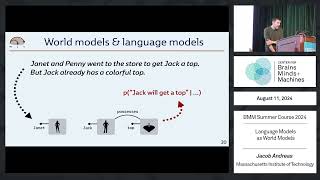
Language Models as World Models
Explore how language models can serve as world models, offering insights into their potential applications and implications for artificial intelligence.
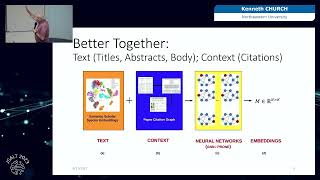
Text and Context in Natural Language Processing - JSALT 2023 Team Presentation
Explore text and context in language processing with Kenneth Church's JSALT 2023 team presentation, delving into cutting-edge research and insights.
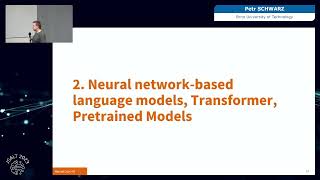
Neural Conversational AI - JSALT 2023 Team Presentation
Explore cutting-edge neural conversational AI techniques in this comprehensive JSALT 2023 presentation, covering advanced topics and latest research in the field.

Prompt Engineering Simplified - A Guide to Best Practices and Advanced Techniques
Master essential prompt engineering concepts, from basic principles to advanced techniques, including system messages, model-specific approaches, and meta prompting strategies.
Hardware-aware Algorithms for Language Modeling - FlashAttention and Mamba Architectures
Delve into advanced hardware optimizations for language models, exploring FlashAttention-3's improvements and Mamba's efficient architecture for enhanced performance and linear scaling capabilities.
Compositional Approaches to Modelling Language and Concepts
Explore the integration of compositional and neural approaches in language modeling, examining their strengths, limitations, and potential for improving AI systems' performance and interpretability.
Probabilistic Thinking in Language and Code
Explore the intersection of Bayesian models and LLMs, examining how natural and programming languages serve as languages-of-thought for human-like cognitive representations and reasoning.
Different Approaches in Detection of Machine-Generated Texts
Explore various methods and challenges in detecting AI-generated content, including solution demonstrations and performance analysis of different detection approaches.
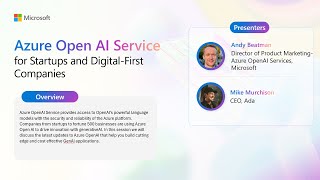
Azure OpenAI Service for Startups and Digital-First Companies - OD839
Discover how to leverage Azure OpenAI's language models to build innovative and cost-effective generative AI applications with enterprise-grade security and reliability on the Azure platform.

Breaking Down Language Barriers with AI Translation - Session 107
Discover how to implement real-time AI translation capabilities across text, speech, and images in your applications, with deployment options for both cloud and edge devices.

Optimizing Phi and Small Language Models Performance Through Customization
Master fine-tuning techniques for Phi and Small Language Models (SLMs), exploring optimization strategies and customization approaches to enhance AI performance for specific use cases.

NVIDIA HYMBA: A Hybrid-Head Architecture for Small Language Models with MetaTokens
Explore NVIDIA's Hymba hybrid architecture combining transformer attention and state-space models, featuring innovative meta tokens and memory optimizations for enhanced language model performance and efficiency.
Probabilistic Inference in Language Models via Twisted Sequential Monte Carlo
Explore advanced probabilistic inference techniques for Large Language Models using Sequential Monte Carlo methods, focusing on safety, capability enhancement, and evaluation frameworks.

Google Gemini vs GPT-4: Understanding the LMSYS Arena Leaderboard and Gemini-exp-1121
Discover how Google's Gemini-exp-1121 model competes with GPT-4 on the LMsys Arena leaderboard, including ELO calculation methods and basic performance testing insights.
Why Diverse Data is Essential for Inclusive Generative AI
Explore how diverse datasets in generative AI development can create more equitable and inclusive systems, addressing bias mitigation and accessibility across different cultures and languages.
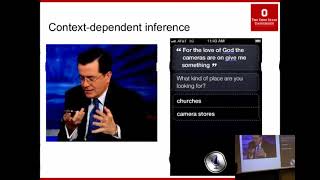
Automatically Deriving Adjectival Scales from Neural Network Language Models - 2013
Discover how computational linguistics can derive meaning from adjective scales, using web data and neural networks to understand gradable modifiers in everyday language and medical contexts.