Writing Your Own Kubernetes Operator from Scratch - Part 1
Comprehensive tutorial on creating a Kubernetes Operator from scratch, covering key concepts, libraries, and implementation steps with practical coding examples and explanations.

Batch Scheduling Across Multiple Kubernetes Clusters - Mirantis Labs Tech Talks
Explore Armada, an open-source solution for batch scheduling across multiple Kubernetes clusters. Learn about its features, real-world applications, and see a live demo of multi-cluster batch processing.
Rapid Recovery from Failure - Kubernetes Clusters with Continuous Restoration - Mirantis & Trilio
Explore Kubernetes cluster resilience with Mirantis and Trilio. Learn about continuous restoration, multi-cloud application recovery, and efficient disaster response strategies for critical business applications.

Introducing Helm-Dashboard - The Missing UI for Helm by Komodor
Explore Helm-Dashboard, an open-source GUI for Helm that visualizes chart changes, simplifies operations, and aids both beginners and experienced users in Kubernetes deployments.
Self-Hosting Kubernetes With Plural
Explore self-hosting on Kubernetes with Plural, discussing challenges, use cases, and practical insights for efficient deployment and management of open-source applications.
Hacking & Protecting Kubernetes With Teleport
Learn best practices for securing Kubernetes environments, including RBAC vs. attribute-based access control, and discover how Teleport enhances visibility and protection in this informative discussion.

Monitor K8s Applications Effortlessly at Scale With Groundcover + EBPF
Explore effortless Kubernetes monitoring with groundcover and eBPF. Learn to simplify application management, troubleshoot issues, and leverage intuitive dashboards for enhanced visibility and control.
Azure Kubernetes Service On-Premises - Latest Innovations and Future Developments
Explore latest innovations in Azure Kubernetes Service for on-premises and hybrid cloud, including customer stories, best practices, new features, and demos for managing production workloads.
Six Reasons to Migrate to Open Source Kubernetes
Explore six compelling reasons to adopt open source Kubernetes, including economic benefits, enhanced production capabilities, and developer-centric solutions for improved productivity and flexibility.
Integrations 101
Learn essential Snyk integrations for IDE setup, reporting, CLI usage, Git onboarding, and Jira ticket creation. Ideal for new users, administrators, and those seeking to enhance their Snyk experience.
How to Stop Your Organization's Kubernetes Costs from Spinning Out of Control
Discover strategies to monitor, optimize, and control Kubernetes costs in enterprise environments. Learn about different cost types, implementation considerations, and practical solutions for effective K8s spend management.
Exploring Kubernetes Observability with OpenTelemetry - Tech Talks
Explore OpenTelemetry for Kubernetes observability, including tracing capabilities for components and apps. Learn integration with Grafana and get an in-depth walkthrough of this powerful open-source toolkit.
Migrating Applications to Open Source Private Cloud
Explore strategies for migrating legacy applications to open-source private clouds, including VM and container-oriented approaches, partner-provided services, and concrete examples to enhance ROI and future development.
Powering Smart Homes at Scale - Challenges and Architecture for IoT Cloud Systems
Explore the challenges and architectural considerations for building a secure, responsive, and scalable IoT cloud connecting millions of smart homes, focusing on performance, security, and system stability.
Kyverno - Deep Dive - Tech Talks
Deep dive into Kyverno 1.9 features: mutation, generation, image verification, cleanup policies, and policy exceptions. Includes demos and best practices for secure software supply chain.
GitOps - Automatic Deployments and Updates with Flux and k0s
Explore GitOps with Flux and k0s, learning its benefits, deployment approaches, and practical implementation through a live demo for streamlined Kubernetes application management.
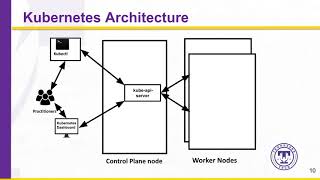
Security Attacks in Kubernetes Cluster Due to Security Best Practices Violation
Explore Kubernetes security vulnerabilities, attacks, and best practices. Learn about threat models, misconfigurations, and potential risks in cluster deployments.
GitOps Deployments from VS Code With Little to No Kubernetes Knowledge
Learn to deploy from VS Code using GitOps and Kubernetes without extensive expertise. Discover how to set up safe, reliable, and automated systems for efficient app development and deployment.
From Kubernetes to PaaS to Golden Paths - The Evolution of Developer Platforms
Explore the evolution of Kubernetes platforms, focusing on developer experience, workflows, and tooling interoperability. Learn about the emerging concept of developer control planes and their role in modern application development.
Kubernetes SIG Storage Deep Dive
Explore Kubernetes SIG Storage's projects, current status, and future plans for managing file and block storage, capacity, scheduling, and operations in container environments.
Threat Modeling Kubernetes - A Lightspeed Introduction
Discover threat modeling for Kubernetes: Learn to identify risks, understand adversarial techniques, and implement preventive measures to enhance cloud-native system security and delivery velocity.