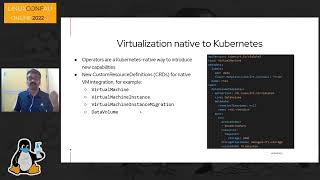
VMs + Containers - The Perfect Wedding
Explore Kubevirt's integration of VMs and containers, enabling seamless modernization of legacy applications alongside cloud-native technologies in Kubernetes environments.
A Hitchhikers Guide to Observe Java Applications in Kubernetes
Explore techniques for monitoring and observing Java applications deployed in Kubernetes environments, enhancing performance and troubleshooting capabilities.

Devspace vs Skaffold - Simplify Java Development in the Kubernetes World
Explore tools for streamlining Java development in Kubernetes environments, comparing DevSpace and Skaffold to enhance productivity and simplify deployment processes.
Deploying Applications to Kubernetes - Never Send a Human to Do a Machine's Job
Explore automated Kubernetes deployment strategies, emphasizing efficiency and reliability. Learn to streamline application deployment processes using machine-driven approaches for optimal results.
Kubernetes Bill Shock
Explore strategies to manage and optimize Kubernetes costs, preventing unexpected expenses and ensuring efficient resource utilization in cloud-native environments.
How to Build CI - CD Pipelines for a Microservices Application
Explore microservices architecture advantages, challenges, and best practices. Learn container orchestration with Kubernetes/OpenShift and implement CI/CD pipelines for efficient deployment and operations.
How to Secure Your Node.js Containers on Kubernetes With Best Practices
Discover best practices for securing Node.js containers on Kubernetes, covering cluster protection, OIDC implementation, and application-specific security measures for robust DevOps deployments.
Deploying Python at Scale with Dask
Explore scaling Python with Dask on distributed systems, focusing on deployment challenges and solutions for cluster resource managers like Kubernetes, Yarn, and cloud platforms.
Localize Your Open Source Documentation - A Kubernetes Case Study
Scaling open source documentation localization: Kubernetes' journey from zero to eleven languages, covering tools, workflows, standards, and community conduct for successful project localization.
Supercharging Pipeline Efficiency with ML Performance Prediction
Optimizing data pipeline efficiency using machine learning to predict task duration and resource requirements, enabling dynamic queue allocation and autoscaling for improved performance and cost-effectiveness.
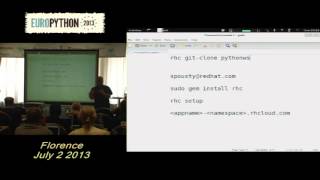
Python in the Cloud with PaaS - Part 1
Learn to deploy Python applications on cloud platforms using Platform as a Service (PaaS), focusing on OpenShift's free tier and practical demonstrations.
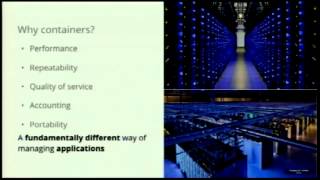
So, I Have All These Docker Containers, Now What?
Explore Kubernetes for efficient container orchestration and cluster management. Learn to simplify deployment, scaling, and maintenance of Docker-based applications across multiple machines.

Managing Kubernetes from Python using Kube
Learn to manage Kubernetes clusters using Python with Kube, a wrapper for the Kubernetes API. Explore key concepts, perform operations, and leverage advanced features for efficient cluster management.
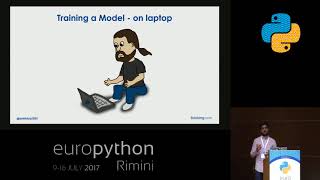
How Booking.com Serves Deep Learning Model Predictions
Discover Booking.com's approach to deploying deep learning models in production, covering training, automated retraining, deployment, and optimization for latency and throughput.
Cloud Native Python in Kubernetes
Explore cloud-native Python in Kubernetes: containerization, scaling, logging, health checks, and monitoring. Learn to optimize applications for dynamic cloud environments and improve operational efficiency.
Python, Docker, Kubernetes, and Beyond
Journey through deploying Python applications: from standalone to Docker containers, and finally to Kubernetes. Learn about CI implementation, image storage, and efficient deployment using YAML and templating.
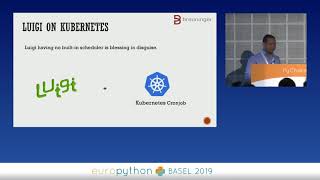
Building Data Workflows with Luigi and Kubernetes
Learn to build complex data pipelines using Luigi, package them as Docker images, and deploy on Kubernetes for scalable Big Data workflows with on-demand scaling and cost reduction.
How We Run GraphQL APIs in Production on Our Kubernetes Cluster
Explore deploying and operating GraphQL APIs on Kubernetes, covering workflow, tools, and lessons learned from transitioning from REST APIs to containerized GraphQL services.
How We Run GraphQL APIs in Production on Our Kubernetes Cluster
Discover the workflow and tools for building, deploying, and operating GraphQL APIs on Kubernetes. Learn from Numberly's transition experience and gain insights into cluster design and developer processes.
Modern Continuous Delivery for Python Developers
Explore modern deployment techniques for Python, focusing on avoiding vendor lock-in and creating flexible, future-proof setups for seamless transitions between cloud platforms.
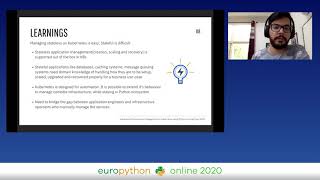
Advanced Infrastructure Management in Kubernetes Using Python
Explore automating Kubernetes infrastructure management using Python, focusing on creating a Celery Operator to streamline cluster setup, configuration, and autoscaling in production environments.