Fast and Easy Traffic Mirroring and SLO Validation with Iter8
Explore Iter8 for efficient traffic mirroring and SLO validation in Kubernetes environments. Learn about benchmarking GCP services and discover the roadmap for this powerful tool.
Secure Container Deployments - Time for Refresh
Explore modern container security practices, focusing on pod security, policy implementation, and admission controllers for enhanced protection in Kubernetes environments.
Debugging at Scale in Production - Deep into Your Containers with Kubectl Debug, KoolKits and Continuous Observability
Explore advanced techniques for debugging containerized applications in production environments using Kubectl Debug, KoolKits, and continuous observability tools.
Stop Sharing Your Kubernetes Cluster Credentials - Sharing is Not Caring
Learn best practices for securing Kubernetes cluster credentials, protecting against unauthorized access, and implementing robust authentication methods for enhanced cluster security.
Getting Started with Kubernetes
Learn Kubernetes fundamentals, including container orchestration, deployment strategies, and cluster management, with hands-on exercises and expert guidance.
Kubernetes Network Policy Enforcement in XDP without IP Translation
Explore advanced Kubernetes network policy enforcement using XDP and eBPF, focusing on IP-based and label-based approaches for efficient traffic management and security.
Kubernetes Risk Assessment - Going One Level Deeper
Explore Kubernetes security risks, dynamic components, and assessment methodologies using MITRE ATT&CK framework to enhance cluster protection and mitigate vulnerabilities.
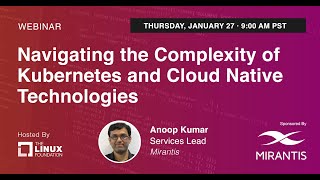
Navigating the Complexity of Kubernetes and Cloud Native Technologies
Insights on Lens Autopilot's capabilities for managing cloud-native applications, including monitoring, security, and CI/CD automation to streamline Kubernetes adoption and enhance developer productivity.
Minimizing Blast Radius of Chained Kubernetes Misconfigurations and Image Vulnerabilities
Explore strategies to minimize security risks in Kubernetes deployments, focusing on misconfigurations, image vulnerabilities, and balancing security with usability in cloud-native environments.
Kubernetes and Linux Base Disaggregation: From CPU-Centric Compute Across Edge and Core
Explore Kubernetes and Linux base disaggregation from CPU-centric compute across edge and core environments, enhancing distributed system efficiency and scalability.
Implementing Observability for Microservice Applications on Kubernetes
Learn to implement observability in Kubernetes microservices using Open Telemetry, exploring tracing libraries, distributed systems, and deployment patterns for enhanced application monitoring.
Use Kubernetes to Automatically Manage Your On-Premises Infrastructure
Learn to leverage Kubernetes for automated on-premises infrastructure management, exploring key concepts, Cluster API, and practical implementation with MetaCube IO.
Resource Management in Kubernetes - Navigating Cloud Efficiency
Explore efficient Kubernetes resource management, from basic concepts to advanced automation techniques, for optimized containerized application performance and infrastructure utilization.
Hands-on with Red Hat OpenShift - Building and Deploying a Microservice-based Web Application
Build and deploy a microservice-based web application using Red Hat OpenShift, covering database creation, schema setup, and AppID integration for a hands-on learning experience.
Live Hack: Exploiting and Securing Mis-Configured Kubernetes Clusters
Explore key Kubernetes security vulnerabilities through live hacking, understanding their implications, potential attack vectors, and remediation strategies for robust cluster protection.
High Performance Databases in Containerized Environments
Explore high-performance databases in containerized environments, focusing on Kubernetes architecture, challenges, and best practices for optimizing database performance and scalability.
Load Balancing 101 in Kubernetes
Explore Kubernetes load balancing essentials, covering CNI, network communication, services, and kube-proxy modes. Learn practical ways to expose applications externally in this comprehensive overview.
Multi-Cluster Federation - Should Networking Impact the Solution?
Explore multi-cluster federation challenges, solutions, and networking considerations for effective Kubernetes deployment across distributed environments.
Managing Kubernetes Edge Fleets Prone to Network Fault Tolerance
Explore strategies for managing Kubernetes edge fleets in challenging network environments, focusing on fault tolerance and utilizing K3S for efficient container orchestration.
From Legacy to Kubernetes Securely and Quickly
Migrate legacy apps to Kubernetes with Docker Desktop. Learn basics, containerization, security best practices, and implementation techniques for secure orchestration and limited attack surface.
Depend on Docker for Self-Managed Predictive Modeling
Explore Docker's potential for developing and deploying scalable predictive modeling applications, from local development to production-ready Digital Twins on Kubernetes.