DSPy Combined with Graph Optimizer in PyG - Multi-Hop RAG Implementation
Explore DSPyG's innovative approach to multi-hop RAG implementation, combining DSPy with graph optimization for enhanced AI research capabilities using minimal computational resources.
SciAgents and AI Research Idea Generation - Comparing Stanford and MIT Approaches
Explore groundbreaking research from Stanford and MIT on AI agents' capabilities in scientific discovery, idea generation, and knowledge graph reasoning, with practical Python implementations.
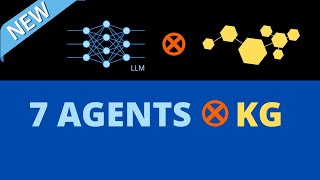
AGENTiGraph: Integrating LLM-based Multi-Agent Systems with Knowledge Graphs
Explore how AGENTiGraph combines seven specialized AI agents with knowledge graphs to enhance LLM capabilities, focusing on entity mapping, reasoning, and complex query handling.

KGARevision: A Knowledge Graph-Based Agent for Medical AI Question Answering
Discover how Harvard's KGARevion agent combines knowledge graphs with LLMs to enhance medical AI reasoning, focusing on complex medical interactions and improved retrieval methods.
Neuro-Symbolic Graph Reasoning and Knowledge Graph Analysis - From Theory to Implementation
Explore neuro-symbolic AI frameworks and graph-based reasoning through practical examples, from biomedical research applications to Python implementations and logical rule learning.
Comparing GraphRAG and SpeculativeRAG Systems for Knowledge Integration
Explore the latest advancements in RAG systems, comparing GraphRAG and SpeculativeRAG frameworks for optimal performance in knowledge integration and response generation.

Graph Inspired Veracity Extrapolation (GIVE) - Integrating LLMs with Knowledge Graphs
Discover how GIVE framework enhances LLM reasoning by combining knowledge graphs with internal model knowledge, enabling more accurate responses through structured, step-by-step logical inference processes.
Building Trustworthy AI with Common Sense - Lecture
Explore building trustworthy AI with common sense for robust decision-making, discovery, and misinformation tackling. Learn about CARE principles and neuro-symbolic architectures for explainable, adaptive AI systems.
From NLP to NLU: Why We Need Varied, Comprehensive, and Stratified Knowledge - Neuro-Symbolic AI
Explore the importance of knowledge in AI systems for improved language understanding, addressing challenges in generative AI, and enhancing neuro-symbolic approaches for safer, more explainable AI.
Train GPT-3 on Any Corpus of Data with ChatGPT and Knowledge Graphs - SCOTUS Opinions Part 1
Learn to create knowledge graphs from Supreme Court decisions, enhancing GPT-3's understanding of legal concepts for improved AI applications in law and research.
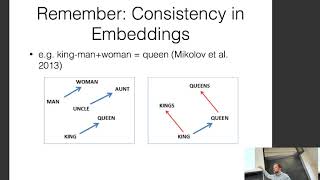
Neural Nets for NLP 2018 - Learning from-for Knowledge Graphs
Explore neural network techniques for knowledge graph construction, relation extraction, and embedding refinement in natural language processing.
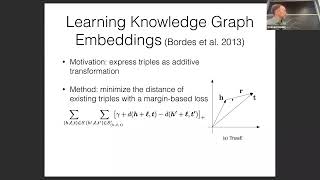
CMU Advanced NLP: Information Extraction and Knowledge-Based QA
Explore advanced NLP techniques for knowledge extraction, relation modeling, and question answering. Learn to leverage embeddings, knowledge graphs, and language models for information retrieval and analysis.
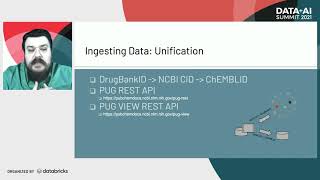
Drug Repurposing Using Deep Learning on Knowledge Graphs
Explore deep learning on knowledge graphs for drug repurposing, covering graph building, latent relationship prediction, and application to existing drugs for new treatments.
Supercharge Your LLM Applications with RAG
Explore Retrieval-Augmented Generation (RAG) for LLM applications, covering design patterns, knowledge embedding, vector databases, and practical insights for technical architects and business leaders.
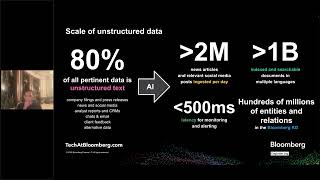
Search and Discovery in News and Research - Dr. Anju Kambadur
Explore Bloomberg's AI-driven search and discovery system for financial news, leveraging machine learning and NLP to parse unstructured data and provide valuable insights for clients.
ConceptNet: Teaching Machines Common Sense
ConceptNet: Enhancing machine learning with common sense knowledge. Explores multilingual knowledge graph for natural language understanding, focusing on Japanese data and commercial applications in enterprise feedback management.
Building Knowledge Graphs
Explore the power of knowledge graphs in data management, their applications, and strategies for successful implementation in semantic search, recommendation systems, and data fabric.
Learning for Never-before-seen Biomedicine
Exploring machine learning methods for predicting never-before-seen biomedical scenarios, focusing on novel class and cohort situations using ontologies and multiscale knowledge graphs.
The GenAI Stack - From Zero to Database-Backed Support Bot
Build a GenAI support bot using Docker, Neo4j, LangChain, and Ollama. Learn to create vector embeddings, integrate LLMs with knowledge graphs, and develop natural language Q&A systems.
Streamlining Distributed Graph-based LLM and AI Infrastructure with Docker Extension
Explore graph databases, NebulaGraph, and LLM integration to enhance AI infrastructure. Learn how Docker optimizes development, deployment, and efficiency in AI projects.
Empowering Open-Source Generative AI by Integrating the Wikidata Knowledge Graph
Explore integrating Wikidata's open-source knowledge graph into generative AI applications for automated content creation, data augmentation, and semantic analysis, fostering collaborative development.