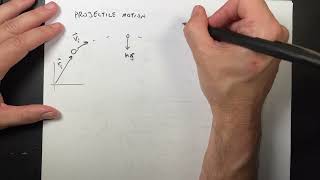
College Physics: Motion with Constant Acceleration - Chapter 4 Summary
Master constant acceleration concepts, including kinematics, projectile motion, and apparent weight. Apply Newton's second law to solve physics problems.
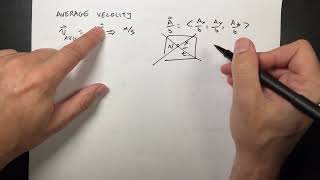
College Physics: Acceleration and Newton's Second Law - Chapter 3 Summary
Explore acceleration and Newton's laws through key physics concepts, including position, velocity, and graphical representations of motion.
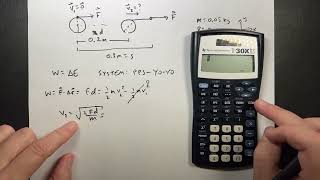
Velocity and Rotational Speed of a Sliding Yo-Yo
Explore the physics of a sliding yo-yo, calculating its velocity and angular velocity using concepts of force, motion, and rotational dynamics.
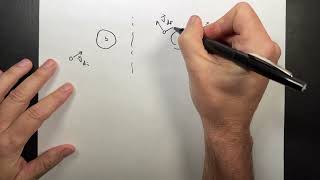
Physics Practice: Conservation of Momentum and Energy in a Space Collision
Solve a space collision problem using conservation of momentum and energy principles. Determine velocities and thermal energy changes.
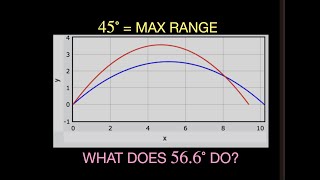
Projectile Motion: Optimal Launch Angle for Maximum Distance - 56.6 Degrees
Explore the optimal launch angle for maximum projectile distance, analyzing the significance of 56.6 degrees through mathematical modeling and Python simulation.
Developing Kinematic Equations from Data - AP Physics 1
Develop kinematic equations from experimental data using linearization. Learn to create mathematical models for constant acceleration motion in physics.
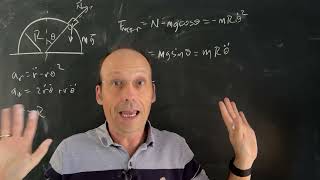
Physics Problem: When Does a Block of Ice Lose Contact with an Inverted Bowl
Solve a physics problem involving a block of ice sliding on an inverted spherical bowl using the work-energy principle to determine the point of detachment.
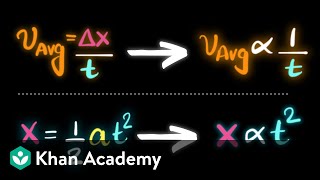
Proportional Reasoning with Motion in AP Physics 1
Explore proportional reasoning in motion scenarios, comparing velocity, acceleration, and distance traveled to predict changes in variables without exact values.
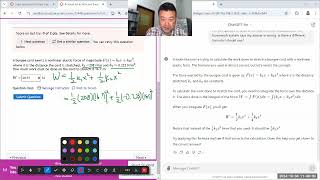
Physics 4A - Problem Solving with ChatGPT - Set 6
Enhance problem-solving skills in physics using ChatGPT 4o, focusing on Set 6 exercises from PHYS 4A curriculum.
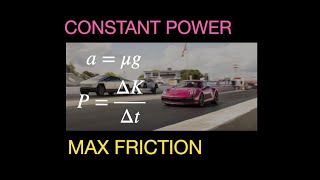
Python Physics - Modeling Motion of a Porsche on Quarter Mile Track
Explore Python-based physics modeling to simulate a Porsche 911's quarter-mile acceleration, using real data to analyze power, friction, and motion dynamics.
2D Motion - Physics 101 - AP Physics 1 Review with Dianna Cowern
Explore 2D motion and kinematics through engaging problems, including cliff jumps, ball kicks, and egg throws. Learn key concepts for introductory physics and AP Physics 1 preparation.
1D Motion & Kinematics - Physics 101 - AP Physics 1 Review with Dianna Cowern
Learn 1D motion and kinematics concepts through engaging examples and problem-solving. Master fundamental physics principles applicable to AP Physics 1 and beyond.
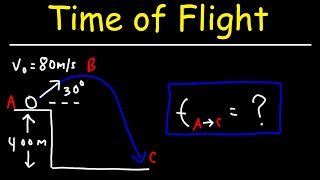
Projectile Motion - Finding the Final Velocity and Time of Flight
Learn to solve projectile motion problems, focusing on calculating time of flight and final velocity before impact. Master key formulas and techniques for physics problem-solving.
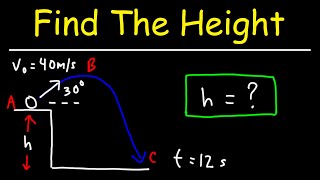
Projectile Motion - How to Find the Height of a Cliff in Physics
Learn to solve projectile motion problems and calculate cliff heights using physics formulas. Master key concepts and techniques for analyzing object trajectories launched from elevated positions.
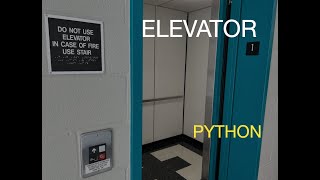
Python Physics: Finding the Height of an Elevator From Acceleration
Estimate elevator height using smartphone acceleration data and Python for numerical integration. Learn practical physics application.
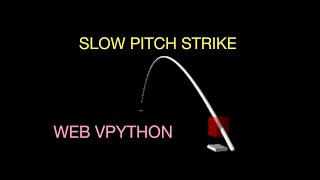
Modeling a Slow Baseball Pitch
Explore the physics behind slow baseball pitches using Python programs, analyzing their trajectory and impact on gameplay.

CE2120: Four-Bar Linkage Design
Design and analyze 4 bar linkages, exploring their kinematics, motion characteristics, and applications in mechanical systems. Gain practical skills for engineering design.
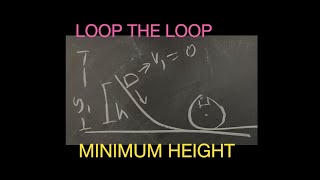
Physics Problem: Finding the Minimum Height and G-Force for Loop the Loop Track
Explore the physics behind roller coaster loops through calculations of minimum height requirements and g-forces, applying principles of energy conservation and circular motion.
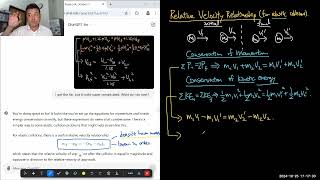
Physics 4A: Derivation of Relative Velocity Relationship in Elastic Collisions
Master the derivation of relative velocity relationships in elastic collisions through step-by-step mathematical proofs and practical physics applications.
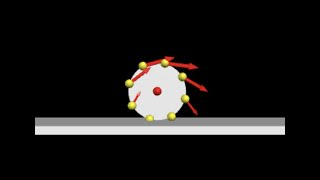
Showing the Velocity on Points of a Rolling Wheel with Python
Visualize velocity vectors on a rolling wheel using Python, recreating a classic physics diagram for deeper understanding.
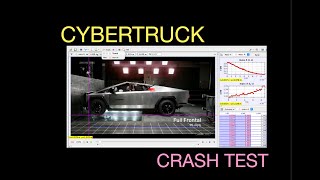
Video Analysis: Cybertruck Crash Test Acceleration
Analyze Cybertruck crash test acceleration using video tracking software, exploring physics concepts in vehicle safety and collision dynamics.