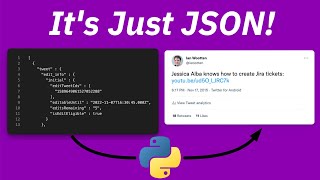
How to Search Your Twitter Archive with Python
Learn to download, reshape, order, and analyze your Twitter archive using Python, enabling you to find and preserve your best tweets during uncertain times.
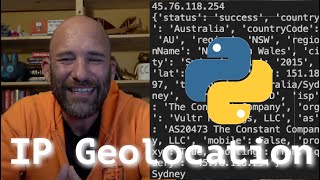
IP Address Geolocation with Python - Using ipify.org and IP-API.com
Learn to determine geolocation using IP addresses with Python, leveraging ipify.org and IP-API.com. Practical skills for network analysis and location-based services.
The Current State of Software Bill of Materials (SBOMs) for End Users
Explore the challenges and opportunities of Software Bill of Materials (SBOMs), examining current implementation issues, regulatory requirements, and emerging solutions through OpenSSF projects like Protobom and bomctl.
Interfaces in Near Data Computing - Simplifying SNIA API for Compute Storage Devices
Explore the FTI API's simplified approach to compute storage devices, focusing on SNIA API integration and practical applications in video encoding scenarios.
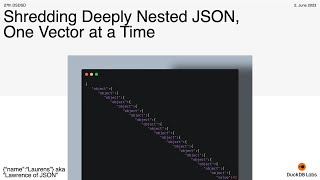
Shredding Deeply Nested JSON for Efficient Analytics in DuckDB
Discover how DuckDB efficiently processes nested JSON data through vectorized analytics, enabling direct reading of JSON files as tables with automatic schema detection for powerful data analysis.
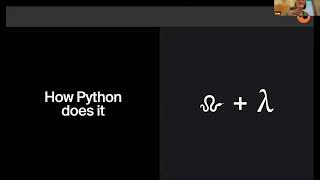
Lambda Functions and List Operations in DuckDB SQL
Explore DuckDB's innovative approach to handling LIST-type operations and Python-style list comprehension in SQL, focusing on efficient processing of nested data formats like JSON for enhanced analytics performance.
EGSTRA: E-Graph-Based Strategy for Test Suite Reduction and Abstraction
Explore e-graph application in software testing, focusing on test suite reduction and abstraction for program analysis tools. Learn about JSON-based implementation and preliminary research findings.

A Journey in Geospatial Timeseries - Handling Marine Traffic Data with PostgreSQL
Explore PostgreSQL's geospatial capabilities for handling timeseries data in marine traffic, using JSON types, PostGIS, and TimescaleDB extensions.

Generic Programming to Rescue Codebases with Multiple JSON Libraries
Explore generic programming techniques to unify multiple JSON libraries in C++. Learn to abstract JSON handling, implement traits, and leverage templates for flexible, maintainable code.

Pydantic Power-up: Performance Tips for Lightning-Fast Python Applications
Discover performance optimization techniques for Pydantic, from simple tweaks to advanced strategies like tagged unions, enhancing Python application speed and efficiency.
Agentic Information Extraction with Structured Outputs in JSON
Explore OpenAI's new feature for guaranteed structured JSON outputs in LLMs, with a demo and discussion on its applications, availability, and limitations.

Getting JSON Output from Gemini
Explore techniques for generating structured JSON outputs with Gemini API, including image-based JSON extraction and Pydantic class integration for enhanced data handling.
μSlope - High Compression and Fast Search on Semi-Structured Logs
Innovative system for compressing and searching semi-structured log data, offering superior compression ratios and faster search speeds compared to existing solutions for managing large-scale log datasets.
OpenAI Introduces Structured Outputs in the API - Tutorial
Learn about OpenAI's new structured output feature for APIs, enabling more precise and controlled responses from models like GPT-4. Explore implementation and potential applications.
Advanced AI Agents, Claude Prompt Caching, Grok-2, and Efficient RAG - LLM News Update
Explore cutting-edge AI developments: prompt caching, advanced agents, efficient retrieval, model distillation, and more. Stay informed on the latest breakthroughs shaping the future of artificial intelligence.
Variant Data Type - Making Semi-Structured Data Fast and Simple
Introducing Variant data type for efficient semi-structured data processing in lakehouse architecture, offering schema flexibility and improved performance over string parsing.
OpenAI Function Calling: Structured Data from GPT - Simplified for Developers
Explore OpenAI's function calling update, simplifying structured data extraction from GPT. Learn implementation and benefits for developers through practical examples.
Calling Java REST API with JDK Http Client - CRUD Service Tutorial
Learn to build a complete CRUD service with JDK's Http Client, calling a public REST API and implementing JUnit 5 tests for robust Java development.
Using Spring AI's Output Parsers to Structure LLM Responses
Learn to structure LLM responses with Spring AI's Output Parsers, enhancing control and precision in AI-powered applications. Gain practical insights for effective implementation.

Pydantic Power-up: Performance Tips for Lightning-Fast Python Applications
Discover performance optimization techniques for Pydantic, from simple tweaks to advanced strategies like tagged unions, enhancing Python application speed and efficiency.
JSON over HTTP Multiple Ways
Explore three API patterns for serving JSON over HTTP: HTTP API, GraphQL, and gRPC JSON Transcoding. Learn implementation basics and compare their pros and cons for effective system communication.