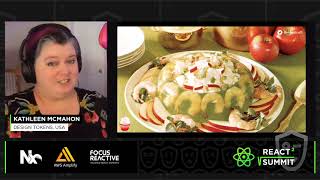
From Brittle to Supple - How Gatsby and MDX Made Our Documentation Smoothly Inclusive
Learn how Gatsby and MDX streamlined component library documentation, making it more maintainable and inclusive while overcoming challenges in React-based setups.
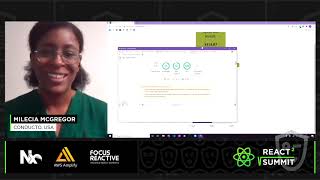
Making Your React Apps Perform At Scale
Learn techniques to optimize large-scale React apps, including performance analysis, state management, and async handling for faster data loading and improved component efficiency.
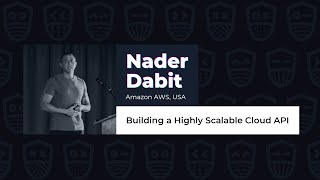
Building a Highly Scalable Cloud API Gateway
Learn to build scalable GraphQL backends connecting multiple databases, serverless functions, and microservices using TypeScript, AppSync, and AWS CDK. Explore real-time applications, security, and authentication at scale.

Let's Talk GraphQL With Your Services
Explore transforming existing services to GraphQL using Abstract Syntax Trees and TypeScript. Learn data models, thinking patterns, and best practices for seamless integration.
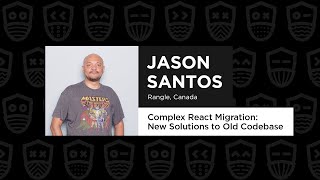
Complex React Migration - New Solutions to Old Codebase Problems
Discover innovative solutions for migrating complex legacy codebases to React, focusing on process and architecture changes that reduce complexity and improve workflow efficiency.

API-First Development with Headless WordPress
Explore API-first development using headless WordPress, enabling modern architectures and practices. Learn to create extensible backends for React apps with plugins like WPGraphQL.

Doing the Least Amount of Work - An Intro to Runtime
Explore techniques to optimize app performance, from identifying issues to debugging memory leaks, ensuring peak efficiency while keeping stakeholders satisfied.

RedwoodJS - The Full-Stack React App Framework
Discover RedwoodJS, a full-stack React framework integrating Apollo GraphQL and Prisma 2. Learn its architecture, core features, and deployment options for efficient web application development.

Internationalizing React
Explore strategies for building React apps that support multiple languages, including context, custom hooks, and locale-proofing techniques for global audience reach.

Creating Videos Programmatically in React
Learn to create MP4 videos using React code with Remotion library. Explore principles, philosophy, and hands-on coding for programmatic motion graphics and server-side rendering.

Scaling Components Across Multiple Frameworks
Learn how Stencil enables creating universal component libraries for multiple frameworks, allowing design teams to maintain a single codebase while generating framework-specific bindings for React, Angular, and Vue.

Building Accessible React Components
Learn to build inclusive React components by addressing accessibility challenges, implementing WCAG guidelines, and using tools to enhance web app accessibility.

React on the Blockchain - The Missing Getting Started Guide
Learn to develop distributed apps in React on the blockchain. Explore blockchain architecture, get started with development, and understand key concepts for building decentralized applications.

Platform-Powered - Building a Frontend Platform to Scale
Discover how Lyft built a scalable frontend platform using Next.js, addressing challenges in microservices and maintenance while boosting engineer productivity and happiness.

Next.js - The Hybrid Architecture for Web Developer
Explore Next.js hybrid approach combining static generation and server-side rendering for efficient React development, enabling automatic server-rendering, code-splitting, and hot-reloading without complex setups.
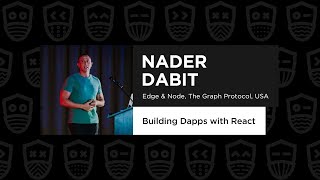
Building Dapps with React
Learn to build decentralized apps with React, exploring the ecosystem, tech stack, and mental models needed for this paradigm shift in app development.

Don't Solve Problems, Eliminate Them
Explore strategies for eliminating problems rather than solving them, with insights from Kent C Dodds on improving efficiency in React development and beyond.

Beyond Virtual Lists - How to Render 100K Items with 100s of Updates/sec in React
Optimizing React performance for large, dynamic datasets using map-reduce inspired FSRW transformations, enabling smooth rendering and interaction with 100K+ rapidly updating items.
Micro-Frontends Performance and Centralised Data Caching
Explore micro-frontends' performance benefits, debunking myths and demonstrating how they can enhance application speed and resilience while maintaining independent deployments.

A Picture Worth a Thousand Programmes
Explore alternative visual representations of React beyond linear text, uncovering hidden information and expanding understanding through metaphorical comparisons and visual programming concepts.

Infrastructure as Code for React Application on AWS Written in TypeScript
Learn to implement Infrastructure as Code for React apps on AWS using TypeScript. Gain hands-on experience in setting up a complete IaC solution, understanding its benefits and practical applications.