From Zero to Microprofile Hero - Let's Dive into a Microservices World
Hands-on exploration of MicroProfile for building efficient, portable microservices in Java. Learn key features like monitoring, security, configuration, and resilience through live coding examples.
Java Security Animated
Explore Java platform security concepts through animated visualizations, making complex topics more accessible and easier to understand for developers.

How Not to Suck at Microservices
Discover key strategies for successful microservices implementation, exploring various Java frameworks, tools, and deployment platforms. Learn to combine technologies for robust, scalable architectures.

Creating a Cloud-Native Microservice – Which Programming Mode Should I Use?
Explore MicroProfile and Spring for cloud-native microservices development, comparing features, benefits, and implementation through side-by-side analysis and practical demonstrations.
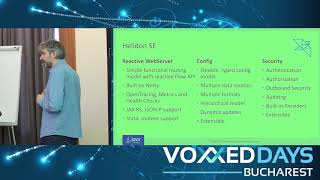
Project Helidon - Java Libraries for Microservices
Explore Helidon's Java libraries for microservices, featuring MicroProfile and Helidon Native models. Includes live demos of reactive web server, config, and security APIs.

Quarkus - The Supersonic and Subatomic Java
Discover Quarkus: a revolutionary Java framework for ultra-fast, lightweight web applications. Learn techniques for optimizing performance, reducing resource usage, and enhancing developer experience with familiar technologies.
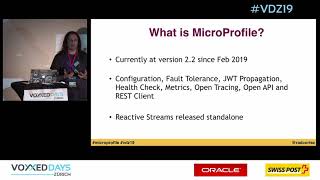
Lightweight Enterprise Java with MicroProfile
Explore lightweight Enterprise Java development using MicroProfile. Learn to create efficient, portable applications optimized for microservices architecture, running on various platforms including Raspberry Pi.
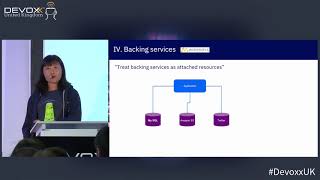
Building a 12-Factor Microservice on Stage
Learn to build robust microservices following 12-Factor principles with live coding, covering configuration, fault tolerance, and MicroProfile programming for scalable and maintainable applications.
Java EE, TypeScript and Angular2
Discover how to integrate Java EE micro-services with TypeScript and Angular2 for full-stack development. Learn to build REST APIs, explore TypeScript, and create responsive web interfaces connecting to Java backends.

Java EE 8 and Java EE 9 - What's Coming
Explore upcoming features in Java EE 8 and 9, including cloud-native enhancements, microservices support, and improvements in configuration, security, and HTTP/2, with insights from Oracle's Software Evangelist.
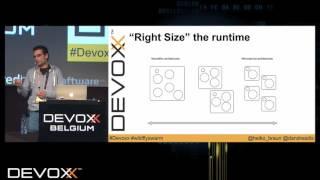
Right Size Your Services with WildFly Swarm
Explore developing "Right Size" Java EE services with WildFly Swarm, including demonstrations, integration with cloud technologies, and insights on microservices architecture for experienced Java EE companies.

Easily Secure Your Front and Back Applications with KeyCloak
Comprehensive guide to implementing robust security across various applications using KeyCloak. Learn to secure Java EE, Node.js, Angular, and mobile apps with features like social login and Single Sign-On.
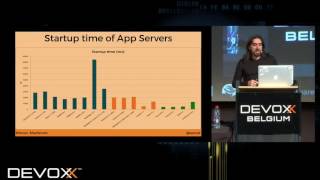
Just Enough App Server
Explore Java app server options, from heavyweight to lightweight, and learn about modular solutions for microservices. Compare performance, features, and use cases to find the right fit for your project.

The Hardest Part of Microservices - Your Data
Explore data challenges in microservices, using Domain Driven Design to manage complexity. Learn about transactional boundaries, CAP theorem, and technologies like Kafka and Camel for building scalable, autonomous systems.
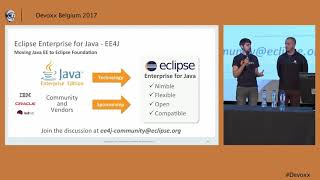
Opening Up Java EE - Panel Discussion
Panel discussion on moving Java EE to Eclipse Foundation, featuring experts from Oracle, IBM, and Red Hat. Learn about project status, future plans, and how to participate in this significant transition for the Java EE community.
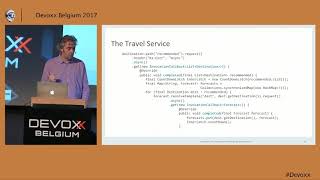
Java EE 8 - What's New in the Java EE 8 Release
Explore the latest features in Java EE 8, including new APIs, reactive programming support, HTTP/2 integration, enhanced security, and updates to existing specifications for improved development.
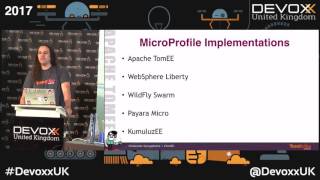
Cluster Your MicroProfile Application Using CDI and JCache
Learn to cluster MicroProfile applications using CDI and JCache. Explore live coding demos, Hazelcast integration, and running clusters on Raspberry Pi's for high availability and scalability.
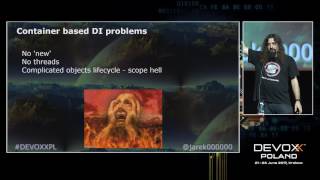
On Annotations - Liberate Yourselves from Demons
Explore how excessive use of annotations in Java can lead to code complexity and maintenance issues, and learn alternative approaches for cleaner, more maintainable code.
Java EE Microservices with WildFly Swarm
Learn to transform Java EE applications into microservices using WildFly Swarm. Covers core concepts, packaging, configuration, security, load balancing, service discovery, and API documentation.
CDI 2.0 is Coming
Explore CDI 2.0's new features, including asynchronous events and Java SE bootstrap. Learn about the specification process and upcoming enhancements through code examples and expert insights.
Badass Microservices - Deploy, Build and Scale Your Apps with Payara Micro
Discover Payara Micro: a lightweight container for Java EE 7 apps. Learn to deploy, build, and scale microservices with automatic clustering and elastic scalability for modern infrastructures.