
Build Your Own Voice Recognition Solution with Alexa
Integrate Alexa with home automation using openHAB, create custom skills in Java, and deploy to AWS Lambda for voice-controlled smart home functionality.

Help Me WebUSB, You're My Only Hope
Explore WebUSB API for integrating hardware with web browsers, enabling direct device connections without traditional drivers. Learn implementation techniques and potential applications.

The Current State of Automotive Security
Explores vulnerabilities in connected cars, focusing on Jeep Cherokee flaws discovered in 2015. Discusses implications for automotive security and the growing importance of cybersecurity in vehicles.

TensorFlow Lite - Solution for Running ML On-Device
Explore TensorFlow Lite for efficient on-device ML inference, featuring low latency, high performance, and small binary size. Learn about mobile BERT, support libraries, and microcontroller applications.

How to Build a Raspberry Pi Pan Tilt Tracking - OpenCV AI Kit Tutorial - 2021
Build a Raspberry Pi pan-tilt tracking camera using OpenCV AI Kit. Learn hardware setup, coding, and dataset creation with Roboflow for real-time object detection and camera movement at 30 FPS.
ChatGPT with Arduino and ESP32 - C++ and MicroPython Coding
Explore AI-assisted coding for Arduino and ESP32 using ChatGPT. Learn to create projects like temperature meters, WiFi scanners, and web servers in C++ and MicroPython.

Arduino Robot Car with Speed Sensors - Using Arduino Interrupts
Build a 2WD robot car with speed sensors using Arduino interrupts. Learn to assemble the chassis, integrate optical sensors, and program for speed and distance measurement. Ideal for beginners and advanced hobbyists.
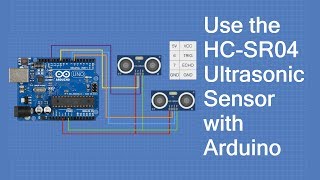
Using the HC-SR04 Ultrasonic Distance Sensor with Arduino - Everything You Need to Know
Comprehensive guide on using HC-SR04 ultrasonic sensors with Arduino, covering basic setup, code libraries, accuracy improvements, 3-wire mode, and multiple sensor configurations.

The Arduino Family - Uno - Mega - Nano - Pro Mini - ATtiny85
Explore various Arduino boards: Uno, Mega, Nano, Pro Mini, and ATtiny85. Learn their unique features, applications, and how they fit into the Arduino ecosystem for your electronics projects.

Controlling DC Motors With the L298N H Bridge and Arduino
Learn to control DC motors using L298N H-Bridge and Arduino, from basic concepts to building a simple robot car. Includes hands-on demos with potentiometers and joystick control.
Raspberry Pi Cameras - The Big Picture
Comprehensive guide to Raspberry Pi cameras: selection, installation, usage, and comparison. Covers command-line and Python programming, GUI options, repairs, and performance tests across various models.
Testing Raspberry Pi Cases with Stressberry and iPerf
Evaluate Raspberry Pi 4 cases using Stressberry and iPerf to assess thermal and network performance, comparing six different enclosures for optimal heat dissipation and connectivity.
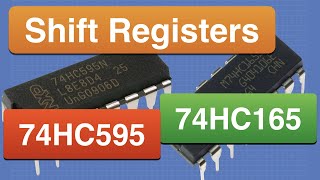
74HC595 & 74HC165 Shift Registers with Arduino
Expand Arduino I/O capabilities using shift registers. Learn to control multiple LEDs, drive 7-segment displays, and create custom light sequences with practical demonstrations.

Raspberry Pi GPIO - Getting Started with Gpiozero
Explore Raspberry Pi GPIO and gpiozero library to interface with LEDs, switches, and a camera. Hands-on demos cover setup, coding, and practical applications for beginners.
Measuring Temperature with Arduino - 5 Sensors
Explore five Arduino-compatible temperature sensors, from basic DHT22 to high-precision MCP9808. Learn wiring, programming, and practical applications for each sensor type.
Arduino Color Sensors - TCS230 & ISL29125
Learn to calibrate and use TCS230 and ISL29125 color sensors with Arduino. Covers sensor operation, hookup, calibration, and RGB value extraction for projects like color-following robots or jelly bean sorters.
MOSFETs and Transistors with Arduino
Learn to control high-current DC loads with Arduino using transistors and MOSFETs. Practical demonstrations include switching lamps, controlling motors, and operating RGB LED strips.
Pi Pico W with the Arduino IDE - Using WiFi
Learn to program the Raspberry Pi Pico W using Arduino IDE, including WiFi capabilities for web-based control of LEDs and servo motors. Covers installation, testing, and practical applications.
Understanding Arduino Interrupts - Hardware, Pin Change & Timer Interrupts
Explore Arduino interrupts: hardware, pin change, and timer. Learn to create responsive interfaces, perform timed operations, and write efficient code for microcontrollers.

LED Displays with Arduino - 7-Segment & Dot-Matrix
Learn to integrate 7-segment and dot-matrix LED displays with Arduino, covering single and multiple modules, wiring, and coding for various configurations and applications.

Pico Prototyping - Building a Pico Uno
Learn to build a "Pico Uno" prototype board, combining Raspberry Pi Pico's power with Arduino Uno's ease of use. Explore three designs, from simple to advanced, including reset and external power options.