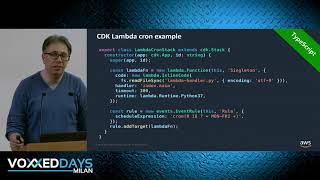
Taking Serverless to the Next Level
Explore best practices for serverless applications, including infrastructure as code, local debugging, state management, continuous delivery, and safe deployments. Learn from real-world case studies.
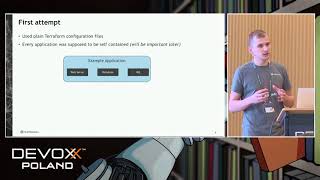
When Terraform Alone Isn't Enough
Explore advanced Terraform usage, including creating wrappers to meet complex client requirements beyond standard capabilities. Learn strategies for handling challenging infrastructure scenarios.
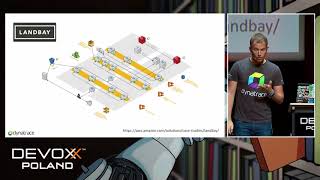
Top Performance Challenges in Distributed Architectures
Explore top performance bottlenecks in distributed architectures and learn techniques to quickly identify and address issues without extensive testing.
Bare-Metal Chronicles - Intertwinement of Tinkerbell, Cluster API & GitOps
Explore cloud-native tools for robust bare-metal infrastructure deployment, focusing on Tinkerbell, Cluster API, and GitOps. Learn how these technologies modernize provisioning models for enterprise-level Kubernetes adoption.
Building Evolutionary Infrastructure
Explore dynamic infrastructure technologies and design patterns for building evolutionary systems. Learn to implement continuous improvement practices and gain confidence in making changes to your infrastructure.
Kafka, DevOps, and Resilience for All
Explore DevOps techniques for Kafka: infrastructure as code, topic management, secrets, configuration, backups, monitoring, and resilience. Learn practical tools and best practices for robust Kafka deployments.
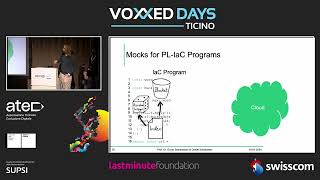
Infrastructure as Code Programs - How to Test, Finally
Explore automated unit testing for Infrastructure as Code programs using ProTI, improving development velocity by mocking cloud resources and validating configurations with pluggable oracles.
Catching Commits to Secure Infrastructure as Code
Explore securing Infrastructure as Code through policy implementation, static and dynamic analysis, and practical demonstrations for enhancing deployment security and configuration management.

gRPC, Kubernetes & .NET
Insightful discussion on gRPC's evolution, its integration with .NET and service meshes, and debates on infrastructure as code and Kubernetes, featuring industry experts Mark Rendle and Matt Turner.

Small Steps Are the Fastest Way Forward - Life Beyond Agile & Scrum
Explore strategies for continuous value delivery in chaotic times. Learn about moving beyond traditional agile frameworks, embracing small steps, and fostering autonomous microteams for faster adaptation and innovation.
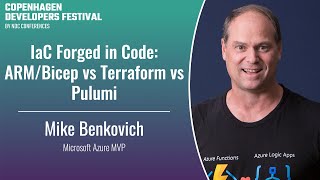
IaC Forged in Code - ARM - Bicep vs Terraform vs Pulumi
Comparison of Infrastructure as Code tools for Azure: ARM/Bicep, Terraform, and Pulumi. Explore pros, cons, and best use cases to optimize cloud deployments and automate infrastructure management.
Transforming GraphQL - Infrastructure as Code for Front End Developers
Explore how GraphQL SDL and a new DSL can empower front-end developers to build full-stack cloud applications directly from GraphQL schemas, revolutionizing rapid prototyping and scalability.
Introduction to the AWS CDK - Infrastructure as Node
Explore AWS CDK for simplified cloud infrastructure using Node.js. Learn to programmatically define architectures, deploy via CloudFormation, and leverage benefits like repeatable deployments and drift detection.
Infrastructure as Code with a Node Focus
Explore tech infrastructure as code for NodeJS stacks, enabling rapid, reliable, and reproducible scaling of real-world infrastructure. Learn to efficiently build, scale, and manage systems.
Introduction to the AWS CDK - Infrastructure as Node
Explore AWS CDK for Node.js to provision cloud-native architectures. Learn how to leverage this powerful tool for efficient infrastructure management and deployment.
Increase App Confidence Using CI - CD and Infrastructure as Code
Explore CI/CD pipeline optimization using smoke tests and Infrastructure as Code to enhance app reliability, prevent deployment failures, and gain pre-deployment insights through automated testing.
Infrastructure as Code - "pip install" Your Environment
Learn to build your own infrastructure-as-a-service using Python, Flask, and Docker. Create a Postgres-as-a-service system with just 300 lines of code, enabling self-service database provisioning and streamlining development workflows.
Infrastructure as Python Code - Run Your Services on Microsoft Azure
Explore Azure cloud deployment options for Python services using Infrastructure-as-Code principles, including Azure Resource Manager Templates, Azure SDK, and Ansible Module, with insights on avoiding pitfalls.
The Challenges of Doing Infra-As-Code Without "The Cloud"
Explore challenges and solutions for implementing Infrastructure-as-Code in non-cloud environments, focusing on unique aspects and practical approaches.
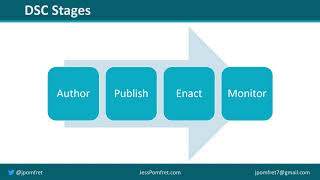
Install & Configure SQL Server with PowerShell DSC
Implement infrastructure as code for SQL Server using PowerShell Desired State Configuration (DSC). Learn to prepare a new Windows Server and explore the advantages of this approach.
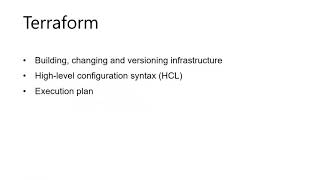
Cloud IaC with Terraform
Learn to implement Infrastructure as Code in cloud environments using Terraform, enabling efficient and scalable infrastructure management and deployment.