
Enshittification Was a Choice - Understanding Internet Platform Consolidation
Explore how policy decisions led to internet platform monopolies and learn what changes are needed to build a better, more open digital future for everyone.
ClearlyDefined: A Crowdsourced Database of Licensing Metadata for Supply Chain Compliance
Discover how ClearlyDefined simplifies software licensing compliance through its crowdsourced database, API integration, and automated metadata management for efficient supply chain security.
Design and Development of a Multi-Tenant SIEM Using Security Onion
Discover how to design and implement multi-tenant capabilities in Security Onion SIEM, enabling efficient management of multiple organizations while maintaining secure access control and streamlined alert monitoring.
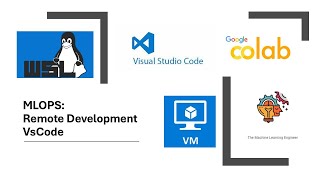
VSCode Remote Development for MLOps and Data Science (Español)
Aprende a conectar VSCode con infraestructura remota, incluyendo máquinas virtuales en la nube, Docker, WSL y Google Colab para optimizar tu desarrollo en ciencia de datos.
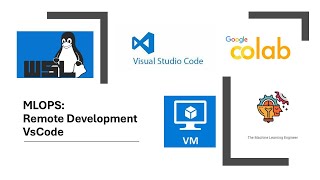
MLOps: VSCode Remote Development for Data Science and Machine Learning
Master remote development in VSCode by connecting to VMs, Docker, WSL, and Google Colab for streamlined machine learning workflows and efficient cloud infrastructure management.
Automotive Grade Linux in the Cloud - Progress on AMI Builds
Discover how to effectively deploy and run Automotive Grade Linux (AGL) on Amazon Web Services, including detailed insights into AMI build processes and cloud implementation.
Secure and Efficient Data Sharing with Federated Cloud Storage
Discover how to build a virtual data lake system using federated cloud storage, focusing on secure data sharing between enterprises through metadata management and integration of open-source tools.
Automated Vulnerability Patching with Copa
Discover how Copa automates container vulnerability patching, enabling swift OS-level remediation without upstream rebuilds while streamlining security workflows for DevSecOps teams.
Deep-Dive in VirtIO: Virtualized Automotive Grade Linux with VirtIO to Achieve Cloud-Native Environment Parity
Dive into VirtIO device virtualization technology and its implementation in Automotive Grade Linux (AGL), exploring cloud-native environments and Software-Defined Vehicles deployment strategies.
Virtio-Loopback Status and Development Roadmap for Hardware Abstraction
Discover the latest developments in virtio-loopback technology, including multi-device support and prioritization features for hardware abstraction in both virtualized and non-virtualized systems.

Python Backend Developer Skills and Learning Path - 2024 Guide
Discover the essential skills, tools, and knowledge required to become a successful Python backend developer, from core language concepts to deployment strategies.
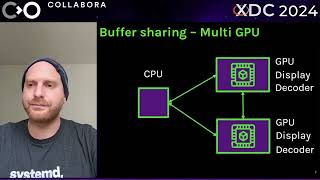
Video Offloading on the Wayland Linux Desktop - Efficient Playback and HDR Developments
Explore recent advancements in Linux desktop video playback efficiency, focusing on Wayland compositors, GStreamer, GNOME, and Chromium developments, including HDR capabilities.
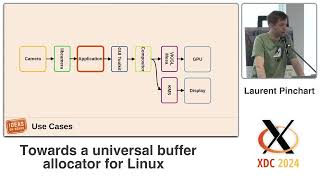
Towards a Universal Buffer Allocator for Linux
Explore the challenges and potential solutions for universal buffer allocation in Linux, focusing on media content frameworks, kernel-side improvements, and cross-device sharing capabilities.
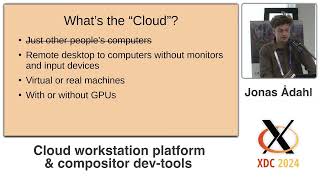
Cloud Workstation Platform and Compositor Developer Tools with PipeWire and Libei
Explore how cloud workstations leverage PipeWire and libei in post-X11 environments, while discovering innovative approaches to compositor development tooling.
VDUSE Performance - A Comparison with Vhost-user and VETH Solutions
Dive into VDUSE performance metrics and comparisons with Vhost-user and VETH pairs in virtual networking environments, exploring acceleration techniques for packet processing.
Unified Representor with Large Scale Ports for Network Management
Discover how to efficiently manage large-scale network ports using unified representors, optimizing memory usage and CPU cycles while handling thousands of ports through proxy port queues and switch representors.
PTYPE Matching as a Fast Way to Steer Network Traffic
Discover how PTYPE matching simplifies protocol layer identification in DPDK, enabling efficient traffic steering without complex header stacking requirements for improved network performance.
Fast and Secure: DPDK Meets Confidential Computing
Discover how to integrate DPDK applications with Confidential Computing technologies, addressing challenges in memory management, optimization, and cross-platform compatibility for secure cloud deployments.
Challenges Faced When Building Various DPDK-based Applications
Explore real-world challenges and solutions in migrating Linux networking applications to DPDK, focusing on performance optimization and practical implementation strategies.

Comparing TC-Flower and RTE_Flow Offloading in Open vSwitch
Dive into network packet processing optimization by comparing tc-flower and rte_flow frameworks for NIC offloading in Open vSwitch, featuring performance metrics and implementation insights.
Combining Rust and DPDK: Security, Stability, and Performance Optimization
Explore how Rust APIs can enhance DPDK functionality through improved security, user experience, and performance optimization while processing network packets efficiently.