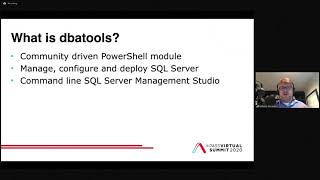
Deploying and Managing SQL Server with dbatools
Automate SQL Server deployment and management using dbatools PowerShell module. Learn installation, configuration, and operations techniques for efficient multi-system administration.
Scaling a DWH Beyond the Petabyte
Learn strategies for planning, architecting, and scaling data warehouse infrastructure from terabytes to petabytes using real-world examples for on-premises and cloud solutions.

Real-World Challenges to Implementing Database DevOps
Explore practical strategies for implementing database DevOps, addressing challenges in data management, and optimizing deployment processes for both on-premises and cloud-based environments.
Notebooks, PowerShell, and Excel Automation
Automate Excel tasks using PowerShell and Jupyter Notebooks. Learn to create self-service solutions for users to generate custom Excel workbooks efficiently and effectively.
Modernize Your SQL Applications Recently Enhanced Version Azure SQL Managed Instance
Explore Azure SQL Managed Instance's latest enhancements for modernizing SQL applications, including improved migration, security, and manageability features for optimal cloud transformation.

How to Put DevOps Into Action for Your Databases
Learn to implement DevOps practices for database deployments, covering source control, automated testing, and continuous integration/delivery through live demonstrations and practical insights.
From Docker to Big Data Cluster - A New Era for SQL Server
Explore SQL Server's evolution from Docker support to Big Data Clusters, covering containerization, Kubernetes deployment, and integration with Python for modernized database management and analytics.
Microsoft SQL Server Machine Learning Workloads on Red Hat Enterprise Linux and Red Hat OpenShift
Accelerate machine learning pipelines using SQL Server on Red Hat Enterprise Linux and OpenShift. Learn in-database ML techniques and containerization for efficient model production and deployment.
Polybase - It's What's for Dinner!
Explore Polybase, Microsoft's linked server replacement, for connecting to diverse data sources. Learn setup best practices, scale-out groups, AlwaysOn integration, and performance optimization techniques.
Dr. DMV with Jupyter Notebooks
Comprehensive guide to using Dynamic Management Views for SQL Server diagnostics, leveraging Jupyter Notebooks to detect and resolve performance issues with detailed result interpretation.
SQL Server Business Intelligence on Amazon RDS
Explore SQL Server Integration Services, Analysis Services, and Reporting Services on Amazon RDS. Learn cost-saving strategies, configuration, security, and reliability for Microsoft BI toolkit on cloud infrastructure.
Building a Highly-Available, Scalable Application with Amazon Aurora
Learn to build high-performance applications using Amazon Aurora, a MySQL- and PostgreSQL-compatible database. Explore scalability, high availability, disaster recovery, and global replication for open source databases on AWS.
Data Governance for Beginners
Learn data governance basics for Microsoft Data Platform, including master data management and data stewardship. Discover practical steps for implementation and documentation to enhance organizational data value.
Let Me Automate You - Take Power BI To The Next Level
Discover advanced Power BI automation techniques using CLI, PowerShell, and C#. Learn to streamline administration tasks, implement continuous integration, and create artifacts automatically.
Normalization Beyond Third Normal Form
Explore higher Normal Forms in database design, debunking myths and enhancing your skills. Learn to identify, check, and understand the consequences of violations for improved database architecture.

Database Administration Through the Ages
Explore modern DBA roles across platforms, leveraging existing skills for maintenance, monitoring, and disaster recovery on Windows, Linux, Azure SQL DB, and containers. Future-proof your career in database administration.
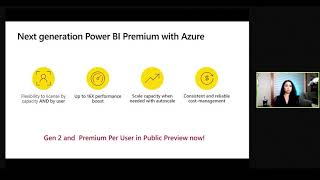
Microsoft Power BI for the Data Engineer
Explore Power BI's capabilities for enterprise-grade insights, performance, governance, and security over massive datasets. Learn simplified data modeling and visualization techniques for actionable insights.
Data Virtualization - Data Lake Power Using SQL Big Data Cluster
Explore data virtualization with SQL Server 2019 Big Data Cluster, enabling seamless integration of diverse data sources for efficient processing and analysis of structured and unstructured data across cloud and on-premises environments.
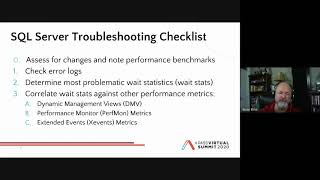
SQL Server on Linux Performance
Explore SQL Server performance on Linux: configuration, monitoring tools, tuning techniques, and leveraging persistent memory for cost-effective optimization.
Navigating Row Level Security
Explore fine-tuned data access with Row Level Security in SQL Server, covering implementation patterns, scaling solutions, and practical tips for sensitive information management.
Intro to Azure Data Catalog
Learn how Azure Data Catalog can help your organization efficiently discover, understand, and utilize vast amounts of data across various sources, improving data accessibility and decision-making.