
Using the Cloud for Scale
Explore how major tech companies leverage cloud, data, and emerging technologies to enhance customer experiences at massive scale.

The Cost of Freedom of Information Online
Exploring the balance between freedom of information, online speech, and safety. Experts discuss challenges and strategies for maximizing digital rights while ensuring protection.

Building Sustainable Communities Through Interaction
Experts discuss sustainable communities, exploring energy monitoring, distribution, and waste management to combat climate change and create lasting environmental impact.

Do We Need a Declaration of Digital Human Rights?
Exploring the need for digital human rights in the age of technology, addressing data privacy, surveillance, and global access to digital freedoms.

A Trusted Trip in the Cloud - Working with Trusted Hardware
Exploring trusted computing in cloud environments using TPM 2.0. Discusses practical challenges and experiences in setting up a secure cloud infrastructure with remote attestation and evolving open-source software.
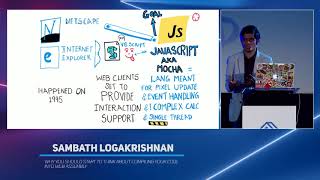
Why You Should Compile Your Code into Web Assembly
Explore WebAssembly's potential for portable, secure, and fast runtime execution across diverse architectures. Learn about its MVP, roadmap, and practical applications beyond browsers.
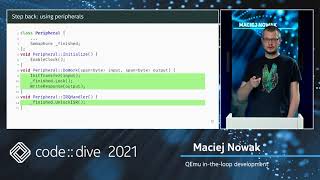
QEmu in-the-loop Development
Explore QEmu for embedded software development, enabling rapid iteration while closely simulating target hardware. Learn to overcome challenges and leverage tools for efficient cross-architecture development.
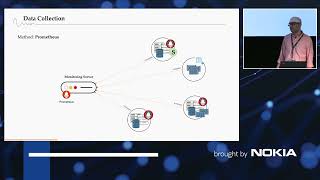
Model Stochastic Behavior of Failures in Telco or IT Systems
Explore stochastic failure modeling in telco/IT systems using Machine Learning. Learn data collection, neural networks, and practical implementation for improved system reliability.
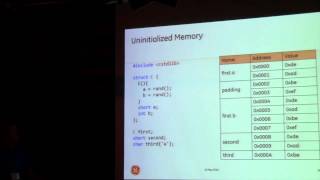
Lifetime and Usage of Global, Thread-local, and Static Data
Explore the intricacies of global, thread-local, and static data in C++, focusing on their lifetimes, usage patterns, and best practices for efficient and safe programming.

Boostache Exposed - The Internals of Boost's Template Engine
Explore Boostache's architecture, including parser, compiler, virtual machine, and data model infrastructure. Learn techniques for implementing template engines and adapting to various data models in C++11.
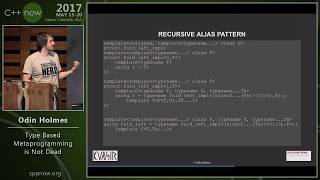
Type Based Template Metaprogramming is Not Dead
Exploring advanced C++ template metaprogramming techniques for improved compilation speed and efficiency, with a focus on type-based approaches and algorithm-data separation.
Hands-On Regular Expressions in Python
Learn to create, understand, and effectively use regular expressions in Python for data validation, parsing, and normalization. Discover when and how to apply regex for optimal results.
Statistical Typing - A Runtime Typing System for Data Science and Machine Learning
Statistical typing: A runtime typing system for data science and ML, extending primitive types to statistical data types. Enables multivariate schemas, generative data contracts, and easier data testing with pandera.
Large Scale Data Validation - with Spark and Dask
Explore data validation techniques for large-scale datasets using Spark and Dask. Learn to transition from single-machine to distributed computing, combining frameworks for efficient validation across partitions.
Open Source on Easy Mode
Streamline open source project maintenance with automation tools and best practices for packaging, testing, CI/CD, documentation, and community engagement. Focus on the fun parts of development.

Finding Penguins with a Snake - Linux Features for a Python User
Explore Linux features through Python APIs, including processes, named pipes, fork, exec, inodes, and signals. Enhance your understanding of OS capabilities using Python's standard library.
How Pydantic V2 Leverages Rust's Superpowers
Explore how Pydantic V2 utilizes Rust to enhance performance, extensibility, and maintainability in data validation. Learn about architecture changes and real-world trade-offs in combining Python and Rust.
Modern, Typed Python for Multimodal ML - From Training to Deployment
Explore the benefits of Python type hints in machine learning, from improving code quality to organizing multimodal data and bridging the gap between training and deployment.
Data Driven Cache Invalidation
Explore efficient cache invalidation techniques using data-driven approaches to optimize system performance and reduce unnecessary cache updates.
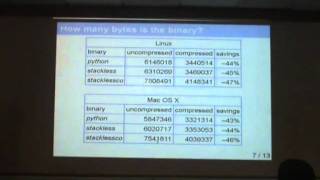
Precompiling and Deploying Python to Any Linux, Mac OS X or FreeBSD System
Learn to precompile and deploy Python applications across Linux, Mac OS X, and FreeBSD systems, enhancing portability and performance for diverse environments.
Snakes on a Cloud - The OpenStack Project
Explore OpenStack, an open-source cloud computing platform. Learn about its architecture, components, and how it's revolutionizing cloud infrastructure deployment and management.