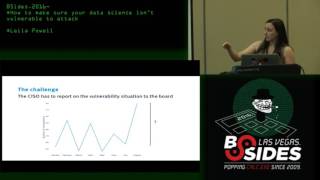
How to Make Sure Your Data Science Isn't Vulnerable to Attack
Learn to protect your data science projects from vulnerabilities through exploration, preparation, algorithm application, and effective communication of insights and risks.

How Do You Keep Up to Date on Everything Technology Has to Offer?
Explore strategies for navigating the rapidly evolving technological landscape and leveraging its potential to enhance business and personal life in the Fourth Industrial Revolution.
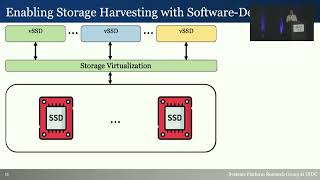
BlockFlex - Enabling Storage Harvesting with Software-Defined Flash in Modern Cloud Platforms
Explore BlockFlex, a learning-based framework for efficient storage harvesting in cloud platforms, enabling fine-grained resource utilization while ensuring performance and security isolation.
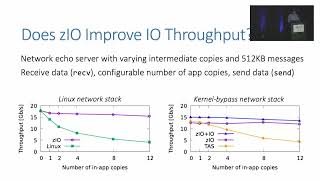
zIO - Accelerating IO-Intensive Applications with Transparent Zero-Copy IO
Explore zIO, a transparent zero-copy IO mechanism that enhances performance of IO-intensive applications by eliminating unnecessary data copies and optimizing data consistency management.
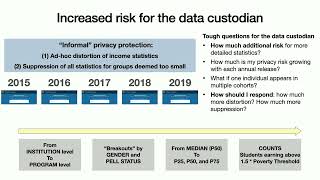
Negotiating Privacy - Utility Trade-Offs under Differential Privacy
Explore privacy/utility trade-offs in differential privacy through a real IRS-DOE case study, examining challenges faced by data custodians when establishing data release standards.
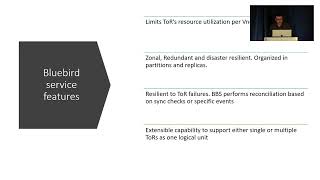
Bluebird - High-performance SDN for Bare-metal Cloud Services
Explore Bluebird, Azure's high-performance network virtualization system for bare-metal cloud services, offering insights into its design, implementation, and real-world performance.
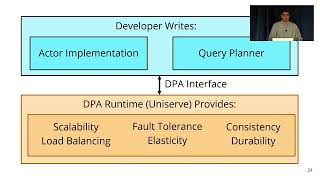
Data-Parallel Actors - A Programming Model for Scalable Query Serving Systems
Explore data-parallel actors, a programming model for building scalable query serving systems, offering simplified development and enhanced functionality for distributed data processing.
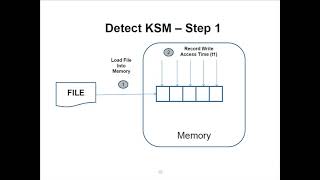
Hyperprobe - Towards Virtual Machine Extrospection
Explores a novel framework for detecting host OS kernel versions from within guest operating systems, leveraging hypervisor features and bugs to enable virtual machine extrospection.
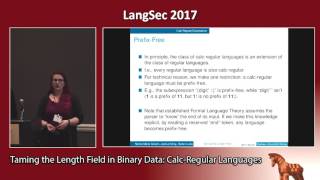
Taming the Length Field in Binary Data - Calc-Regular Languages
Explores calc-regular languages as an extension of regular languages to handle length fields in binary data serialization, improving security and parsing efficiency for length-prefix formats.
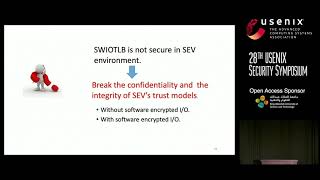
Exploiting Unprotected I/O Operations in AMD's Secure Encrypted Virtualization
Explores vulnerabilities in AMD's Secure Encrypted Virtualization, demonstrating attacks on I/O operations and constructing primitives to breach VM memory encryption, highlighting security risks in emerging technology.
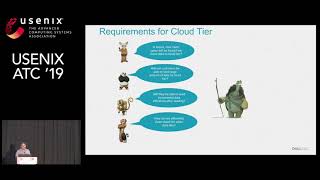
Data Domain Cloud Tier - Backup Here, Backup There, Deduplicated Everywhere!
Innovative cloud tier for Data Domain appliances, enabling cost-effective deduplication in the cloud. Focuses on space estimation, efficient data transfer, and file management between on-premises and cloud storage.
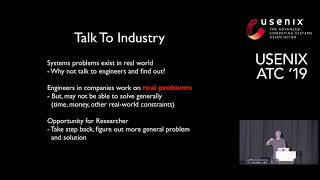
Measure, Then Build
Explore an empirically-driven approach to systems research, focusing on analyzing existing systems before designing new solutions. Learn from two decades of research examples at UW-Madison.
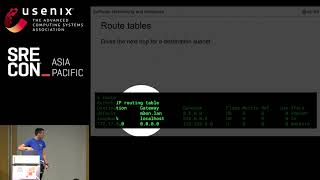
Software Networking and Interfaces on Linux
Comprehensive overview of Linux network interfaces, from traditional to modern cloud-native types. Explores VMs, containers, and service meshes, aiding in debugging cloud platforms.

Incident Management at Netflix Velocity
Discover Netflix's approach to handling incidents at high velocity, focusing on preparation, expertise, and continuous learning to ensure quick recovery and unique outage scenarios.
Characterizing and Understanding Phases of SRE Practices
Explores the evolution of Site Reliability Engineering practices, offering insights into various stages of implementation across key areas like incident response, postmortems, and monitoring to help teams assess and advance their SRE journey.
Signing Me onto Your Accounts through Facebook and Google - A Traffic-Guided Security Study of Commercially Deployed Single-Sign-On Web Services
Explores security vulnerabilities in popular web-based single sign-on systems, uncovering critical flaws that allow unauthorized access to user accounts on major platforms.
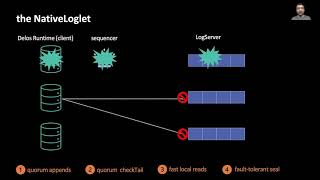
Virtual Consensus in Delos
Explores virtualizing consensus in replicated systems, enabling dynamic protocol changes without downtime. Introduces VirtualLog and Loglets for simplified, diverse, and composable consensus implementations, showcasing benefits in the Delos database.
A Systematic Look at Ciphertext Side Channels on AMD SEV-SNP
Explore ciphertext side channels in AMD SEV-SNP, examining vulnerabilities and potential security risks in confidential computing environments.
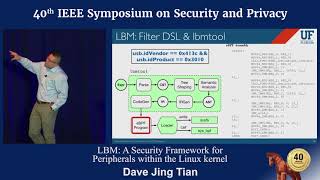
LBM - A Security Framework for Peripherals within the Linux Kernel
Unified security framework for Linux kernel to protect against malicious peripherals, leveraging eBPF for efficient packet filtering across USB, Bluetooth, and NFC protocols.
OSPREY - Recovery of Variable and Data Structure via Probabilistic Analysis for Stripped Binary
Explore probabilistic analysis techniques for recovering variables and data structures from stripped binaries, enhancing reverse engineering capabilities.
Trust, But Verify - A Longitudinal Analysis Of Android OEM Compliance and Customization
Longitudinal analysis exploring Android OEM compliance and customization practices, examining the balance between manufacturer modifications and adherence to platform standards.