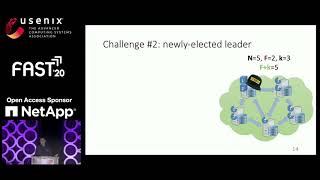
CRaft - An Erasure-coding-supported Version of Raft for Reducing Storage Cost
Explores CRaft, an erasure-coding-supported version of Raft consensus protocol, reducing storage and network costs while maintaining fault tolerance and liveness. Presents design, challenges, and performance improvements.
Sub-Region Failure - How to Handle the Partial Loss of a Data Center
Explore Facebook's innovative approach to handling partial data center failures, focusing on system durability and simulated power outages to minimize service disruptions.
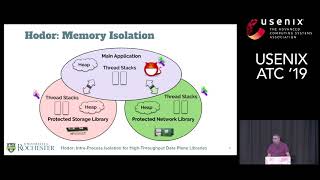
Hodor - Intra-Process Isolation for High-Throughput Data Plane Libraries
Explores intra-process isolation for high-throughput data plane libraries, proposing protected libraries as a new OS abstraction to achieve safety and performance in kernel-bypass approaches for managing high-speed devices.
A Tale of Two Postmortems - A Human Factors View
Explore the contrast between Safety I and Safety II approaches in incident reviews, using a fictional company's experience to demonstrate more effective postmortem practices for improved system reliability.
Confessions of a Systems Engineer - Learning from My 20+ Years of Failure
Insights from a seasoned systems engineer on designing and running large-scale online services, drawing from 20+ years of failures and lessons learned in the tech industry.
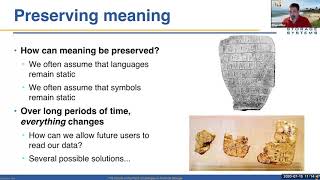
The Future of the Past - Challenges in Archival Storage
Explores challenges and advancements in long-term digital data preservation, discussing media technologies, data integrity, and semantic interpretation for future generations.
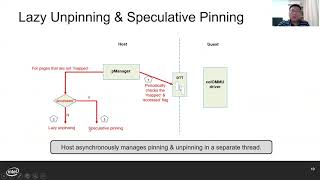
coIOMMU - A Virtual IOMMU with Cooperative DMA Buffer Tracking for Efficient Memory Management in Direct I/O
Explore efficient memory management in direct I/O virtualization through coIOMMU, a novel virtual IOMMU architecture with cooperative DMA buffer tracking for improved performance and resource utilization.
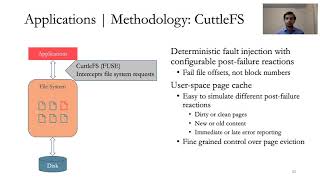
Can Applications Recover from fsync Failures?
Análisis de cómo sistemas de archivos y aplicaciones modernas reaccionan ante fallos de fsync, revelando vulnerabilidades críticas en la durabilidad de datos y sugiriendo mejoras de diseño.
Ten Persistent SRE Antipatterns - Pitfalls on the Road to a Successful SRE Program
Explore common pitfalls in Site Reliability Engineering and learn strategies to build successful SRE programs, drawing insights from industry leaders like Netflix and Google.
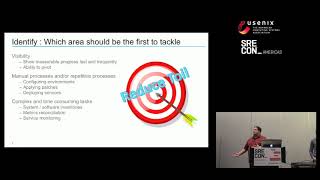
Making the Most of Your SRE Toolbox - Bootstrapping Your SRE Team through Reuse
Explore strategies for repurposing existing tools and frameworks to establish an effective SRE organization, drawing from real-world experiences in building comprehensive delivery pipelines.

The Secret Lives of SREs - Controlling the Costs of Coordination across Remote Teams
Exploring hidden complexities in SRE incident response, revealing surprising findings on coordination strategies, tooling impacts, and adaptive choreography in managing service outages.

Identifying Hidden Dependencies
Discover how Honeycomb improved system reliability through intentional node termination, uncovering bugs and progressing towards continuous experimentation for enhanced resilience and scalability.

Avoiding Goodhart's Law - Use SLOs as Tools Not Cudgels
Explore how to effectively use SLIs, SLOs, and Error Budgets as tools for balanced risk management and productive conversations, rather than punitive measures in SRE practices.
It's a Trap! How Abstractions Have Failed Us
Explores how excessive abstraction in tech can lead to complexity, loss of foundational knowledge, and disconnection from original problems. Offers insights on balancing abstraction with practicality.
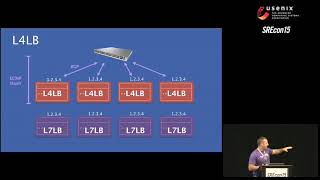
Building a Billion User Load Balancer
Discover Facebook's innovative load balancing techniques for handling billions of users, improving performance, managing capacity, and enhancing reliability at a global scale.
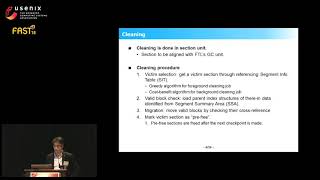
F2FS - A New File System for Flash Storage
Explore F2FS, a Linux file system optimized for flash storage. Learn its design, data structures, and algorithms, and see how it outperforms EXT4 in various scenarios on mobile and server systems.
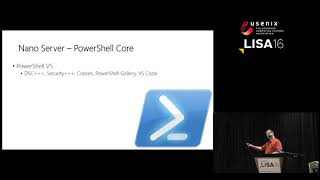
The Devopsification of Windows Server 2016
Explore Windows Server 2016's DevOps-centric features, including NanoServer, DSC, OneGet, and containers. Learn how these innovations enable cloud-paced workflows and enhance security, deployment, and management.
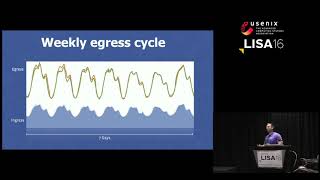
Building a Billion User Load Balancer
Discover Facebook's innovative load balancing techniques for handling over 1.3 billion users, improving performance, managing capacity, and enhancing reliability across global infrastructure.
Scaling Shopify's Multi-Tenant Architecture across Multiple Datacenters
Explore Shopify's journey from a single-database Rails app to a multi-datacenter setup, focusing on scalability, resiliency, and disaster recovery strategies for multi-tenant architectures.
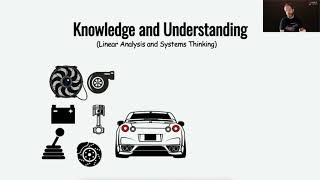
Learning More from Complex Systems
Explore complex systems' traits and learn better approaches to incident analysis beyond linear root-cause methods. Gain insights from history, science, and philosophy to enhance understanding of resilience in modern organizations.
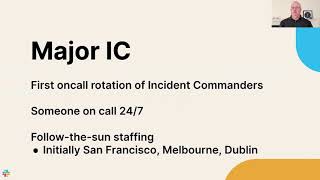
Evolution of Incident Management at Slack
Explore Slack's evolution in incident management, covering strategies for handling numerous incidents, team-wide capability building, and future directions in maintaining platform reliability.