
Becoming You - A Glimpse Into Credential Abuse
Explore CDN-based techniques for detecting and mitigating credential abuse vulnerabilities, enhancing security protection during request flow without relying solely on origin servers.

A Universal Controller to Take Over a Z-Wave Network
Explore Z-Wave network vulnerabilities using auto-discovery and backup/restore features, demonstrating potential security risks in smart home systems.

Cyber Comrades - Alliance-Building in Cyberspace
Explore cyber diplomacy, international partnerships, and the evolving landscape of cybersecurity in a globalized world. Learn strategies for alliance-building and advancing cooperation in cyberspace.

Exposing Hidden Exploitable Behaviors in Programming Languages Using Differential Fuzzing
Uncover hidden vulnerabilities in programming languages through differential fuzzing. Learn to identify undocumented functions, exposed sensitive data, unexpected code execution, and potential security risks.
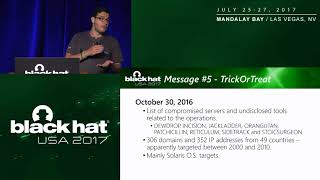
The Shadow Brokers - Cyber Fear Game-Changers
Explore the impact of The Shadow Brokers' leaks on cybersecurity, examining sophisticated nation-state tools and the evolving landscape of cyber fear as a geopolitical instrument.
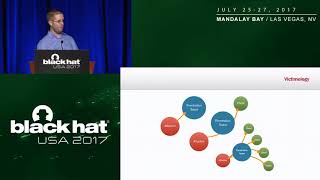
Protecting Pentests - Recommendations for Performing More Secure Tests
Comprehensive recommendations for building secure penetration testing operations, including technical aspects, policies, procedures, and client communication strategies.
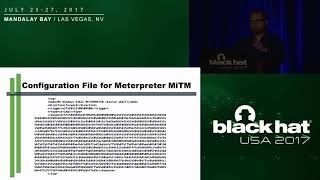
They're Coming for Your Tools - Exploiting Design Flaws for Active Intrusion Prevention
Explore design flaws in popular attack tools and techniques, and learn strategies for active intrusion prevention in this cybersecurity presentation from Black Hat.
Bridging the Gap Between Research and Practice in Intelligently Bypassing WAF
Explore AI-driven techniques for bypassing web application firewalls, addressing practical challenges in payload diversity and difficulty balancing. Learn innovative approaches to enhance cybersecurity defenses.
Event-based Fuzzing, Patch-based Research, and Comment Police - Finding Bugs Through a Bug
Discover innovative bug-hunting techniques: event-based fuzzing, patch analysis, and comment inspection. Learn to leverage known vulnerabilities for deeper security research in Chrome and Android.
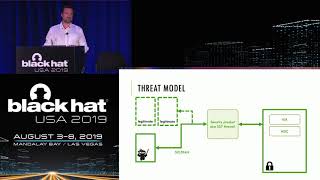
Mobile Interconnect Threats - How Next-Gen Products May Be Already Outdated
Explore vulnerabilities in mobile networks, focusing on SS7 security flaws, potential attacks, and risks to subscriber privacy and communication integrity.
Fuzzing and Breaking Security Functions of SIMATIC PLCs
Explore techniques for cracking TLS protocols, conducting security protocol fuzzing, and analyzing vulnerabilities in Siemens S7-1500/S7-1200 PLCs, with practical demonstrations of exploiting and controlling these industrial devices.
From Finding New Type of Logical Flaw at Linux Kernel to Developing New Heap Exploitation Technique
Discover Pspray, a novel Linux kernel exploitation technique enhancing reliability for targeted attacks. Learn about its effectiveness across various memory vulnerabilities and its impact on cybersecurity.
Demystifying AI and Machine Learning to Enhance SOC Detection
Demystifies AI and machine learning for SOC teams, focusing on practical applications like data leak prevention. Includes live demo and insights from Credit Agricole's SOC experience.
Human or Not - Can You Really Detect the Fake Voices?
Explore AI-synthesized speech detection techniques and their real-world effectiveness in combating voice cloning and fake audio. Uncover challenges and limitations in current approaches.

Is WebAssembly Really Safe? - Wasm VM Escape and RCE Vulnerabilities Have Been Found in New Way
Explore WebAssembly security vulnerabilities through a new fuzzing framework, focusing on VM escape and RCE risks in Wasm runtimes for edge computing and web applications.
AEPIC Leak - Architecturally Leaking Uninitialized Data from the Microarchitecture
Systematic analysis of CPU vulnerabilities, exploring root causes and connections between transient-execution attacks and architectural vulnerabilities. Identifies blank spots in CPU security research.
Stalloris - RPKI Downgrade Attack
Demonstration of novel downgrade attacks against RPKI, exposing networks to prefix hijacks by disabling RPKI validation through malicious publication points.
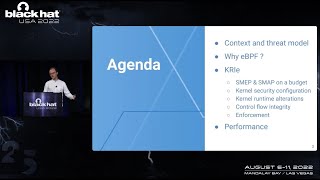
Detecting Kernel Exploits with eBPF
Explore eBPF's evolution in Linux, its expanding capabilities, and its potential for detecting kernel exploits, with insights on probes, challenges, and performance implications.
Trust Dies in Darkness - Shedding Light on Samsung's TrustZone Keymaster Design
Exposing critical security flaws in Samsung Galaxy devices' hardware-backed keystore through reverse engineering, revealing vulnerabilities in cryptographic design and implementation.
The Open Threat Hunting Framework - Enabling Organizations to Build, Operationalize, and Scale Threat
Explore the Open Threat Hunting Framework to build, operationalize, and scale threat hunting in organizations. Learn from industry experts about effective strategies and best practices.
Malware Classification With Machine Learning Enhanced by Windows Kernel Emulation
Explore hybrid machine learning for malware classification using static and dynamic analysis, Windows kernel emulation, and neural networks. Learn about adversarial ML and future developments.