
Planning for the Worst
Explore strategies for handling production issues, from common errors to obscure failures. Learn practical tips, best practices, and code solutions to enhance system reliability and resilience.

Ethical Hacking with Python Tools
Explore ethical hacking using Python tools for security testing, vulnerability analysis, and pentesting. Learn to develop custom security tools and conduct demonstrations on target domains.

Hacking Ético con Herramientas Python
Explora herramientas de Python para hacking ético, incluyendo análisis de vulnerabilidades, escaneo de puertos y extracción de metadatos para pruebas de seguridad y pentesting.
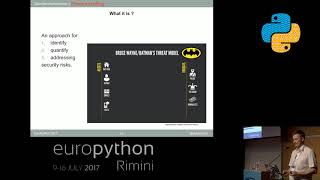
CyberSecurity.bootcamp
Explore cybersecurity essentials for Python applications, covering threat modeling, attack vectors, security testing, and best practices to protect your servers from malicious threats.
Scripting Across Hosts with Chopsticks
Explore Chopsticks, a Python tool for remote code execution over SSH, enabling parallel processing across hosts without deployment. Learn its API, clever tricks, and versatile applications.
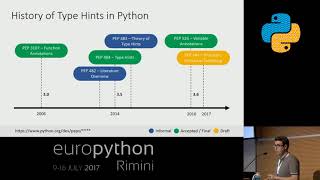
Type Annotations in Python 3 - Whats, Whys & Wows!
Explore Python 3 type annotations: syntax, benefits, and practical applications. Learn to enhance code security, leverage popular libraries, and build custom extensions using type hints.

Network Visualization and Automation
Explore network visualization and automation using Python's tkinter library, covering graph drawing algorithms, GIS implementation, and automated script generation for network devices.

Identity Management, Single Sign-On and Certificates with FreeIPA
Explore FreeIPA's comprehensive identity management solution for authentication, authorization, and PKI. Learn installation, integration, and key features for centralized user management and security.
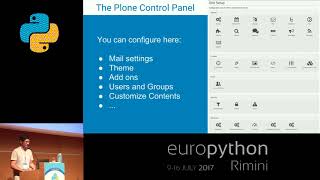
Plone - Where Is It Today and Where Is It Going
Explore Plone CMS's current state and future direction, focusing on its robust security features, customization capabilities, and upcoming enhancements in version 5.1 and beyond.
Replacing Passwords with Multiple Factors - Email, OTP, and Hardware Keys
Explore modern authentication methods beyond passwords, including email-based, one-time passwords, and hardware keys. Learn implementation strategies for enhanced security in Python web applications.
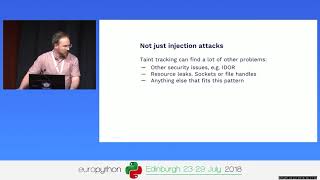
Is Your Code Tainted? Finding Security Vulnerabilities Using Taint Tracking
Discover taint tracking for identifying security vulnerabilities in code. Learn about sources, sinks, and sanitizers, and see a practical demonstration using a Django app.
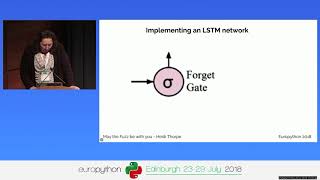
May the Fuzz Be with You
Explore how LSTM neural networks and Python can generate AI-driven test inputs for software testing and network security, improving upon traditional fuzzing techniques.

Rehabilitating Pickle
Explore Pickle's security risks, potential defenses, and alternatives for safe Python object serialization in distributed systems.
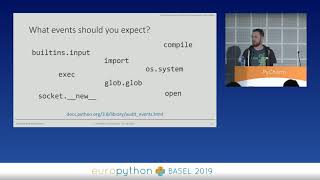
Auditing Hooks and Security Transparency for CPython
Explore CPython's new security features: auditing hooks and verified open call. Learn how to detect and prevent malicious use of Python, integrating with OS security frameworks.
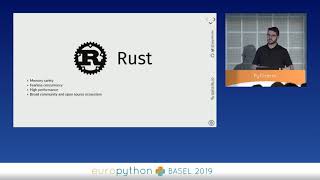
Build Your Python Extensions with Rust
Explore writing Python extension modules in Rust using pyo3 and milksnake libraries. Learn about performance, safety, and maintainability compared to C and Cython extensions.
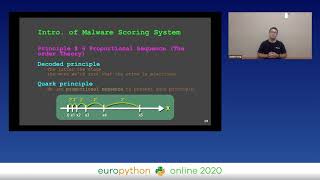
So, You Want to Build an Anti-Virus Engine?
Learn to build an Android malware analysis engine using Python, combining criminal law principles with bytecode analysis to create a robust scoring system that can detect threats even in obfuscated code.
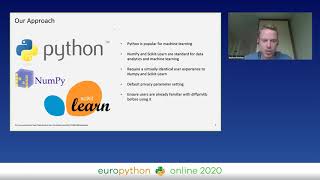
Diffprivlib - Privacy-Preserving Machine Learning with Scikit-Learn
Explore differential privacy in machine learning using Diffprivlib, a tool for training accurate models with robust privacy guarantees, seamlessly integrating with scikit-learn and numpy.
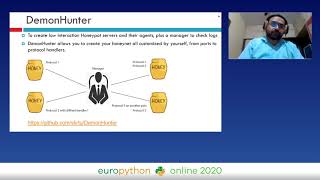
Deceptive Security Using Python
Explore deceptive security techniques using Python, including WebTrap and DemonHunter tools. Learn how to implement machine learning for XPath injection attack mitigation in web services.
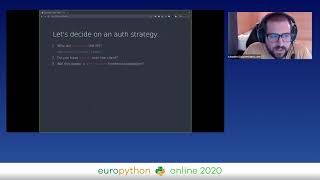
Overcoming Access Control in Web APIs
Explore strategies for securing web APIs, including JWT implementation, browser storage best practices, and structured scopes for access control. Learn to overcome security challenges in modern web development.
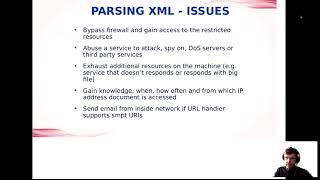
Python Security Best Practices
Discover essential Python security practices, covering input validation, XML parsing, assert statements, temporary files, and data serialization. Learn to identify vulnerabilities and implement robust defenses.
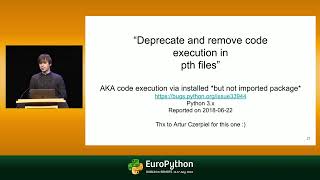
CPython Bugs and Risky Features
Explore security risks in CPython, including directory vulnerabilities, code injection possibilities, and socket issues. Learn about potential threats and mitigation strategies for Python developers and administrators.