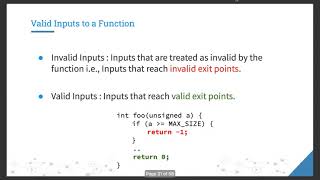
SPIDER - Enabling Fast Patch Propagation in Related Software Repositories
Explore fast patch propagation in software repositories, focusing on security patches, solution requirements, and implementation techniques for efficient and safe updates.
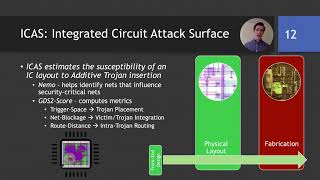
ICAS - An Extensible Framework for Estimating the Susceptibility of IC Layouts to Additive Trojans
Explore an extensible framework for assessing IC layout vulnerability to additive trojans, covering hardware security, development processes, and preventive measures.
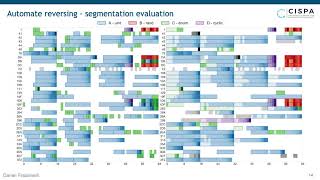
Automated Reverse Engineering and Privacy Analysis of Modern Cars
Uncover hidden data collection in modern cars using AutoCAN tool. Reveals GPS tracking, occupant info, usage stats, and remote control capabilities through automated network analysis and reverse engineering.
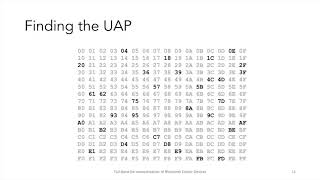
Full-Band De-Anonymization of Bluetooth Classic Devices
Unveils a robust de-anonymization technique for Bluetooth Classic devices, demonstrating vulnerabilities in privacy guarantees and enabling tracking of piconet masters through SDR-based sniffing.
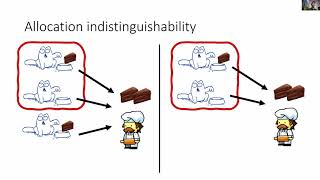
Private Resource Allocators and Their Applications
Introduces private resource allocators to prevent allocation-based side-channel attacks in systems like anonymous messaging, with various constructions offering different privacy guarantees and trade-offs in efficiency.

Breaking and Partially Fixing Provably Secure Onion Routing
Explores vulnerabilities in provably secure onion routing protocols, analyzes flaws in existing proof strategies, and proposes improved properties to enhance anonymity and security in these systems.
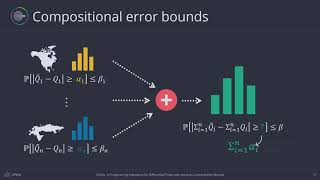
A Programming Framework for Differential Privacy with Accuracy Concentration Bounds
Explore a programming framework for differential privacy, balancing data protection and analysis accuracy through novel static tracking and taint analysis techniques.
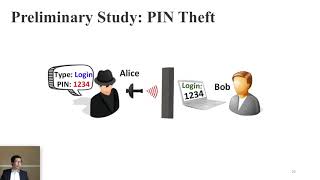
WaveSpy - Remote and Through-Wall Screen Attack via mmWave Sensing
Explores a novel screen attack method using mmWave sensing to remotely capture display content through walls, bypassing traditional security measures and demonstrating vulnerabilities in isolated environments.
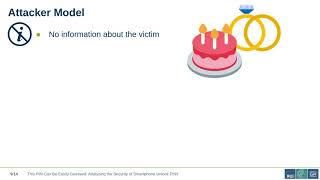
Analyzing the Security of Smartphone Unlock PINs
Analyzes security of smartphone unlock PINs, comparing 4- and 6-digit options, and evaluating effectiveness of blacklists in enhancing protection against guessing attacks.
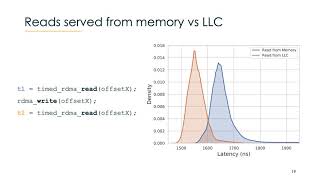
NetCAT - Practical Cache Attacks from the Network
Reverse engineering DDIO to demonstrate NetCAT, a network-based cache attack enabling remote keystroke timing attacks and covert channels, highlighting security risks in modern Intel processors.
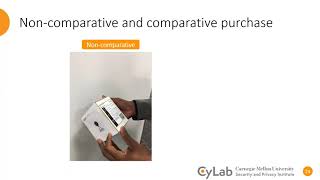
What Should Be on an IoT Privacy and Security Label?
Experts discuss essential privacy and security information for IoT device labels, proposing a two-layer design to help consumers make informed purchase decisions.
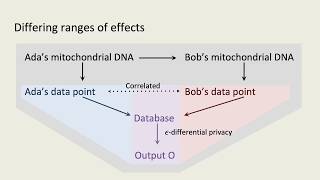
SoK- Differential Privacy as a Causal Property
Explores differential privacy as a causal property, offering a simple characterization without data independence assumptions and resolving prior disagreements about its consequences and applications.

The Value of Collaboration in Convex Machine Learning with Differential Privacy
Explores collaborative machine learning on distributed private data using differentially-private gradients, quantifying trade-offs between privacy and utility, and validating performance predictions with real-world financial datasets.
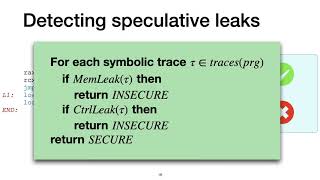
SPECTECTOR - Principled Detection of Speculative Information Flows
Principled detection of speculative information flows in computer systems, focusing on security against Spectre-like attacks through speculative non-interference and symbolic execution techniques.
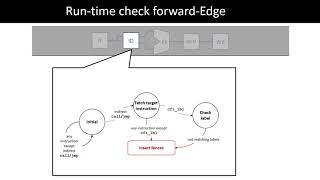
Mitigating Spectre Attacks Using CFI Informed Speculation
Mitigating Spectre attacks using Control-Flow Integrity to constrain speculative execution, combining forward and backward edge protection for comprehensive defense against non-vendor-specific vulnerabilities.
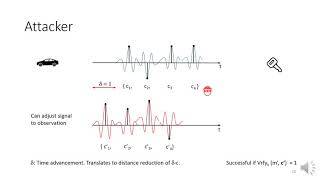
Message Time of Arrival Codes - A Fundamental Primitive for Secure Distance Measurement
Explores secure Time-of-Arrival measurement through Message Time of Arrival Codes, addressing attacks on proximity verification systems and discussing performance-security tradeoffs in signal modulation techniques.
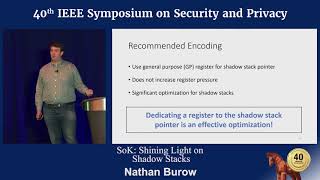
Shining Light on Shadow Stacks
Comprehensive analysis of shadow stack mechanisms for protecting against control-flow hijacking attacks, evaluating performance, compatibility, and security. Proposes a novel design using a dedicated register.
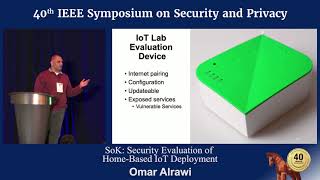
SoK- Security Evaluation of Home Based IoT Deployment
Comprehensive security evaluation methodology for home IoT devices, analyzing attack techniques, mitigations, and stakeholders. Includes assessment of 45 devices to identify research gaps.
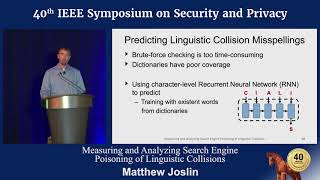
Measuring and Analyzing Search Engine Poisoning of Linguistic Collisions
Analyzing linguistic-collision search poisoning attacks, revealing prevalence and impact on Google and Baidu. Explores misspellings, auto-correction evasion, and targeted categories, offering insights for threat mitigation.
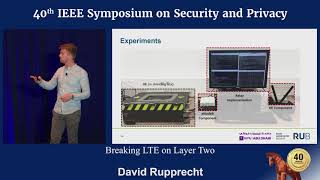
Breaking LTE on Layer Two
Exploring LTE layer two vulnerabilities: identity mapping, website fingerprinting via resource allocation, and payload modification through the A LTE R attack, demonstrating critical security risks in mobile communications.
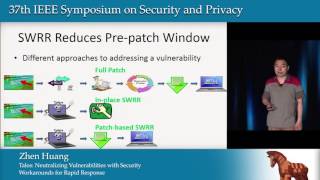
Talos - Neutralizing Vulnerabilities with Security Workarounds for Rapid Response
Neutralizing vulnerabilities using error-handling code for rapid response, minimizing patch delays while maintaining functionality. Explores automated security workarounds to mitigate risks in popular Linux server applications.