
Operating Elasticsearch with Ease at Scale
Discover strategies for operating Elasticsearch at scale, covering common issues, optimization techniques, and best practices for handling massive deployments with billions of ingests and millions of searches daily.
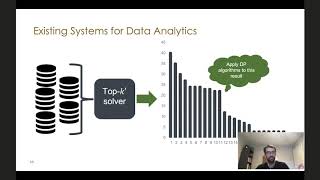
A Differentially Private Data Analytics API at Scale
LinkedIn's privacy system uses differential privacy to protect member data while providing audience engagement insights, enabling marketing analytics with user-level privacy guarantees and strict budget management.
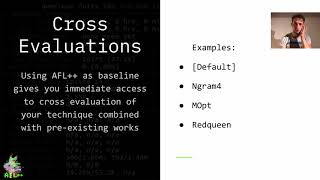
AFL++ - Combining Incremental Steps of Fuzzing Research
AFL++: A community-driven fuzzing tool combining state-of-the-art research, offering novel features like Custom Mutator API. Enhances fuzzing process, enables quick testing of new techniques, and evaluates effectiveness individually and in combination.
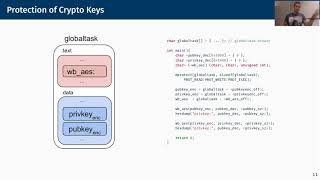
Unearthing the TrustedCore - A Critical Review on Huawei’s Trusted Execution Environment
Unveils critical security flaws in Huawei's TrustedCore, exposing vulnerabilities in trusted execution environments and demonstrating weaknesses in hardware-backed cryptography on mobile devices.

BASTION - A Security Enforcement Network Stack for Container Networks
Innovative security enforcement network stack for containers, enhancing visibility and isolation while improving performance. Mitigates attacks and optimizes inter-container communication.
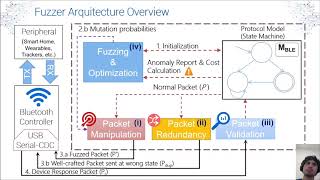
SweynTooth - Unleashing Mayhem over Bluetooth Low Energy
Explores vulnerabilities in Bluetooth Low Energy protocol implementations, presenting a systematic fuzzing framework that discovered 11 new vulnerabilities across various devices and IoT products.

Twizzler - A Data-Centric OS for Non-Volatile Memory
Explore Twizzler, an innovative OS redesign for non-volatile memory, offering efficient data persistence, simplified programming, and improved performance over traditional systems.
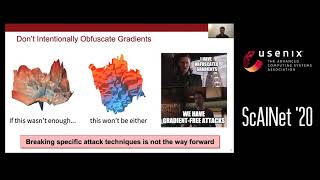
On Adaptive Attacks to Adversarial Example Defenses
Explore adaptive attacks on adversarial example defenses, examining challenges, whitebox attacks, and key observations to understand vulnerabilities in machine learning security.

Ten Persistent SRE Antipatterns - Pitfalls on the Road to a Successful SRE Program
Explore common pitfalls in Site Reliability Engineering and learn strategies to build successful SRE programs, drawing insights from industry leaders like Netflix and Google.
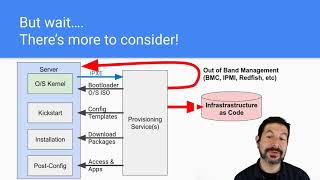
Give Your PXE Wings - Bootstrapping Explained
Demystifying system bootstrapping: explore PXE, multi-stage processes, and automation techniques for faster, simpler, and more reliable IT provisioning and day-two operations.
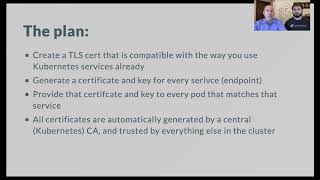
Achieving Mutual TLS - Secure Pod-to-Pod Communication Without the Hassle
Explore secure pod-to-pod communication using Mutual TLS, focusing on certificate management, implementation in Golang and Java applications, and integration with Kubernetes for streamlined security.
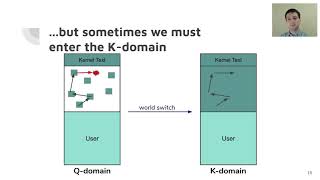
Efficiently Mitigating Transient Execution Attacks Using the Unmapped Speculation Contract
Explores efficient mitigation of transient execution attacks using the unmapped speculation contract, presenting Ward kernel design for improved performance without compromising security.
UNVEIL - A Large-Scale, Automated Approach to Detecting Ransomware
Automated approach to detect ransomware through dynamic analysis, focusing on file tampering and desktop changes. Improves detection of evasive ransomware unnoticed by traditional antimalware solutions.

Stealing Machine Learning Models via Prediction APIs
Explores model extraction attacks on machine learning systems, demonstrating vulnerabilities in publicly accessible ML interfaces and proposing potential countermeasures to protect confidential models.

Virtual U - Defeating Face Liveness Detection by Building Virtual Models from Your Public Photos
Innovative approach to bypass face authentication using 3D models created from social media photos, exploiting virtual reality to simulate liveness and fool security systems.
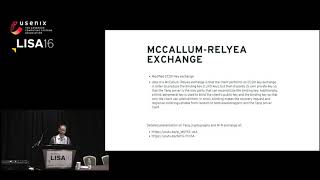
Network-Based LUKS Volume Decryption with Tang
Network-based LUKS volume decryption using Tang: a solution for secure, automated server disk encryption at scale. Enables unattended boot in secure environments while protecting data at rest from unauthorized access.
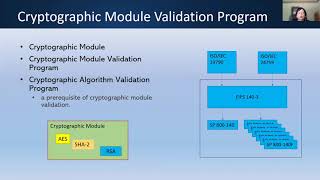
The Cornerstone for Cybersecurity - Cryptographic Standards
Introduction to NIST cryptographic standards, their applications in cybersecurity, and future challenges including quantum threats, transitions, and lightweight cryptography for constrained devices.

Lessons Learned from a Ransomware Attack
Comprehensive analysis of a real-world ransomware attack on a school district, covering timeline, damage, recovery, and preventive measures for future cybersecurity preparedness.

Beyond Firefighter vs. Safety Matches - Growing the DevSecOps Pipeline
Explore strategies for balancing specialization and generalization in DevSecOps talent development, addressing challenges in modern systems development, operations, and security.
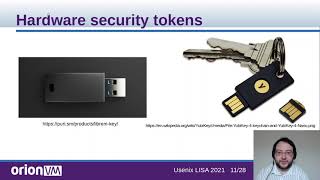
The Remote Working Security Conundrum - What Is Reasonably Secure Anyway?
Explore challenges and solutions for securing remote work environments, from physical security to application layer, with focus on novel technologies and practical approaches.
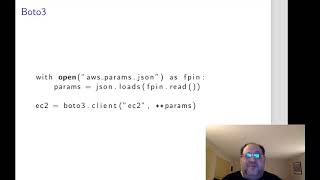
Jupyter as Incident Response Tool
Explore using Jupyter for incident response in SRE, showcasing its dynamic exploration and result-sharing capabilities through a simulated cache slowdown scenario and post-incident best practices.