Covert Channels through Random Number Generator - Mechanisms, Capacity Estimation and Mitigations
Explore covert channels in random number generators, their mechanisms, capacity estimation, and mitigation strategies for enhanced computer security.
C-FLAT - Control-Flow Attestation for Embedded Systems Software
Control-flow attestation for embedded systems: detect runtime attacks, ensure software integrity. Novel approach combines remote attestation with control-flow monitoring for enhanced security in IoT devices.
Efficient Batched Oblivious PRF with Applications to Private Set Intersection
Explores efficient batched oblivious PRF for private set intersection, presenting novel protocols and discussing security implications and comparisons with existing methods.
A Framework for Prototyping Applications Using Multilinear Maps and Matrix Branching Programs
Explore a novel framework for prototyping applications using multilinear maps and matrix branching programs, focusing on optimizations, cryptographic techniques, and performance improvements in program obfuscation.
Garbling Gadgets for Boolean and Arithmetic Circuits
Explore innovative garbling techniques for Boolean and arithmetic circuits, enhancing cryptographic protocols and secure computation methods.
Alternative Implementations of Secure Real Numbers
Explore alternative implementations of secure real numbers, including golden section numbers and logarithmic floats, with benchmarks for various operations in secure computation outsourcing.

Cybersecurity is National Security - Cyber Command and NSA's Partnership Defending the Nation
Explore the evolving landscape of cybersecurity and national defense with insights from U.S. Cyber Command and NSA leadership on strategies, challenges, and future directions.
Hypnoguard - Protecting Secrets across Sleep-Wake Cycles
Innovative approach to protect sensitive data during sleep-wake cycles, addressing memory secrets and implementation challenges in computer security systems.

iLock - Immediate and Automatic Locking of Mobile Devices against Data Theft
Innovative mobile device security system using acoustic sensing to automatically lock devices when users leave, preventing data theft and unauthorized access.

The "Web/Local" Boundary Is Fuzzy - A Security Study of Chrome's Process-based Sandboxing
Explore Chrome's process-based sandboxing, its security implications, and potential vulnerabilities in web browser architecture. Learn about attacks exploiting the fuzzy web/local boundary.
Build It, Break It, Fix It - Contesting Secure Development
Explore secure development through a competitive contest format, analyzing builder strategies, common vulnerabilities, and resilience in software security.
Practical Detection of Entropy Loss in Pseudo-Random Number Generators
Explore techniques for detecting entropy loss in pseudo-random number generators, crucial for cryptographic security. Learn analysis procedures and implementation strategies.

When CSI Meets Public WiFi - Inferring Your Mobile Phone Password via WiFi Signals
Explores WiFi signal-based mobile password inference, discussing attack scenarios, challenges, system design, and data processing methods for enhancing cybersecurity awareness.

The Sounds of the Phones - Dangers of Zero-Effort Second Factor Login Based on Ambient Audio
Explores security vulnerabilities in ambient audio-based two-factor authentication, demonstrating potential attacks and discussing mitigation strategies for improved cybersecurity.

Acing the IOC Game - Toward Automatic Discovery and Analysis of Open-Source Cyber Threat Intelligence
Explore automatic discovery and analysis of open-source cyber threat intelligence, focusing on IOC generation, correlation analysis, and impact on security.
Chainsaw - Chained Automated Workflow-based Exploit Generation
Explore automated workflow-based exploit generation for web applications using Chainsaw, a novel approach to identify and exploit vulnerabilities through informed traversal and workflow inference.
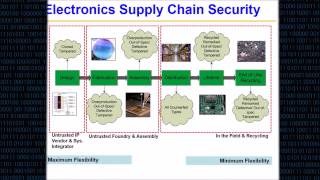
MERS - Statistical Test Generation for Side-Channel Analysis Based Trojan Detection
Learn statistical test generation techniques for detecting hardware Trojans through side-channel analysis, focusing on rare nodes and security metrics in combinational circuits.
On the Practical - In-Security of 64-bit Block Ciphers - Collision Attacks on HTTP over TLS and OpenVPN
Explore practical security vulnerabilities in 64-bit block ciphers, focusing on collision attacks in HTTP over TLS and OpenVPN. Learn about countermeasures and implications for network security.
Message-Recovery Attacks on Feistel-Based Format Preserving Encryption
Explore message-recovery attacks on Feistel-based format preserving encryption, examining technical challenges, known plaintext attacks, and theoretical implications for cryptographic security.

Heavy Hitter Estimation over Set-Valued Data with Local Differential Privacy
Explore local differential privacy for heavy hitter estimation on set-valued data. Learn about randomized response, RAPPOR, and the LDPMiner framework for privacy-preserving data analysis.

CREDAL - Towards Locating a Memory Corruption Vulnerability with Your Core Dump
Innovative approach to locating memory corruption vulnerabilities using core dumps, tracking crash points, identifying stack frames, and determining corruption sources for improved software security.