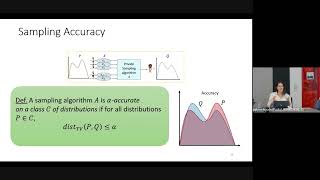
Differentially Private Sampling from Distributions - Google Algorithms Seminar
Explore private sampling from distributions, examining dataset size requirements for various distribution families and comparing private sampling to non-private learning in different parameter regimes.
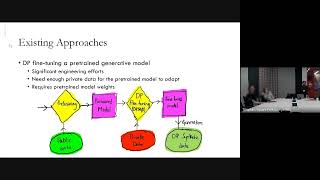
Differentially Private Synthetic Data Generation via Foundation Model APIs
Explore generating high-quality differentially private synthetic data using foundation model APIs, overcoming challenges and achieving state-of-the-art results without accessing model weights.
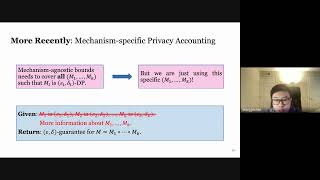
Randomized Approach for Tight Privacy Accounting in Differential Privacy
Explore a novel differential privacy paradigm for improved privacy accounting in compositions, featuring Monte Carlo-based verification and enhanced utility-privacy tradeoffs in machine learning.
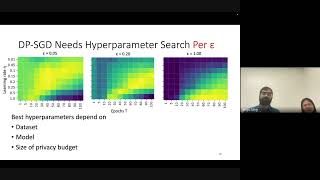
Improving the Privacy-Utility Tradeoff in Differentially Private Machine Learning with Public Data
Explore techniques to enhance privacy-utility balance in differentially private machine learning using public data, focusing on DP-RAFT and DOPE-SGD algorithms for improved model accuracy.

Almost Tight Error Bounds on Differentially Private Continual Counting
Explore novel mechanisms for differentially private continual counting, analyzing error bounds and applications in private optimization. Gain insights into matrix mechanisms and factorization techniques.
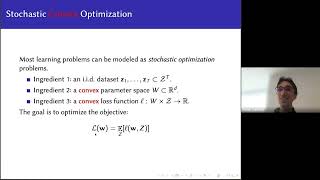
Differentially Private Online-to-Batch Conversion for Stochastic Optimization
Explore differentially private stochastic optimization techniques, comparing simple preprocessing and custom algorithms. Learn about a novel online-to-batch conversion method for optimal private convergence rates.
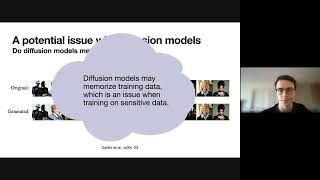
Differentially Private Diffusion Models
Explore privacy-preserving machine learning with differentially private diffusion models, optimizing design for sensitive data and enhancing performance through public pre-training.
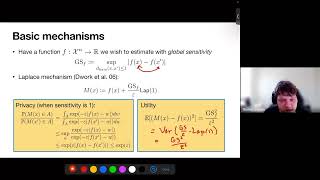
A Fast Algorithm for Adaptive Private Mean Estimation in Machine Learning
Explore adaptive private mean estimation with a fast algorithm, focusing on optimal convergence rates, computational efficiency, and adaptability beyond sub-Gaussian distributions.
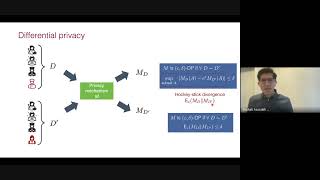
The Saddle Point Accountant for Differential Privacy in Machine Learning
Explore differential privacy's saddle point accountant method, its composition, and applications in machine learning through expert insights.
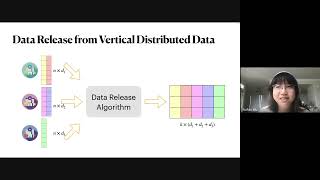
Differentially Private Multi-party Data Release for Linear Regression
Explore differential privacy techniques for secure multi-party data sharing in linear regression, enhancing privacy protection in collaborative machine learning environments.
Inside Apple's Lightning: JTAGging the iPhone for Fuzzing and Profit
Explore Apple's Lightning protocol, learn iPhone JTAGging techniques, and discover fuzzing methods for potential vulnerabilities and profit.

Information Security: An Ecology of Horrors and You Are the Solution - Keynote
Explore the ecology of information security, examining strategic force design, great power conflicts, and the evolving role of hackers in modern systems and deterrence.
Exploit Engineering: Attacking the Linux Kernel
Explore Linux kernel exploitation techniques, from attack surface mapping to vulnerability discovery and exploit development. Gain insights into advanced kernel exploitation methods and tools.
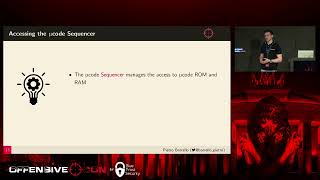
CustomProcessingUnit: Reverse Engineering and Customization of Intel Microcode
Explore Intel microcode reverse engineering and customization techniques, uncovering CPU vulnerabilities and enhancing processor functionality.
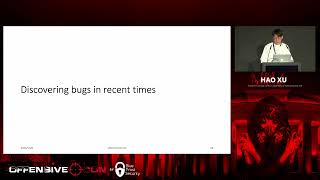
Changing and Unchanged Things in Vulnerability Research
Explore vulnerability research evolution, from buffer overflows to advanced fuzzing and exploit mitigations. Analyze case studies and future trends in offensive and defensive security strategies.
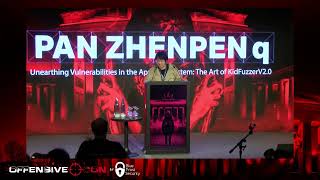
Unearthing Vulnerabilities in the Apple Ecosystem - The Art of KidFuzzerV2.0
Explore Apple's kernel vulnerabilities, attack surfaces, and mitigations. Learn advanced fuzzing techniques and root cause analysis for enhanced security understanding.
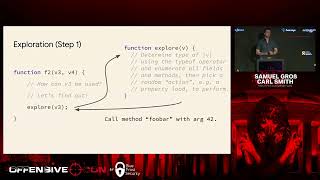
Advancements in JavaScript Engine Fuzzing - OffensiveCon 2023
Explore advancements in JavaScript engine fuzzing, covering techniques like splicing, code coverage, and hybrid engines to enhance bug discovery and security testing.
New Phones, Software and Chips - New Bugs?
Explore cutting-edge vulnerabilities in modern smartphones, examining software and hardware innovations that introduce new security challenges.
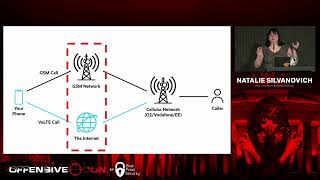
How to Hack Shannon Baseband from a Phone
Explore techniques for hacking Shannon baseband from a phone, uncovering vulnerabilities and potential exploits in mobile communication systems.
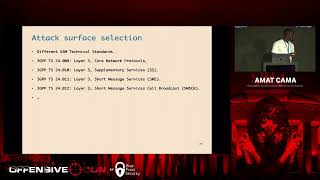
ASN.1 and Done: A Journey of Exploiting ASN.1 Parsers in the Baseband
Explore ASN.1 parser vulnerabilities in cellular baseband, uncovering security risks and exploitation techniques in mobile communication systems.
Abusing Linux In-Kernel SMB Server to Gain Kernel Remote Code Execution
Explore Linux kernel vulnerabilities and gain insights into exploiting the in-kernel SMB server for remote code execution.