Assessing Open Source Software Projects in the Software Supply Chain Security
Discover techniques for evaluating open source software trustworthiness through process assessment, risk analysis, and supply chain practices, with insights from DoD's Unified Platform project.
Role-Based Access Is So Yesterday: Revolutionizing Authorization with Open FGA
Discover how Open FGA revolutionizes authorization systems by implementing relationship-based access control, offering enhanced security and flexibility beyond traditional RBAC limitations.
Novel Sandboxing Techniques for Open Source Libraries Using eBPF and KRSI
Discover how to implement advanced sandboxing techniques for open source libraries using eBPF and KRSI technologies to enhance security and protect against vulnerabilities and exploits.
Artificial Intelligence Cyber Challenge - Overview and Releasing Research as Open Source Software
Discover how AI systems can secure critical code through the AIxCC competition, focusing on vulnerability detection, fixes, and open-source research implementation strategies.
The Simple Yet Lethal Anatomy of an AI Attack
Dive into the anatomy of AI security threats through live demonstrations, exploring attack strategies from reconnaissance to LLM poisoning, and learn to defend against emerging vulnerabilities in AI systems.
A Glimpse Into Open Source Software Vulnerability Disclosure Practices
Explore current challenges and solutions in open-source software vulnerability disclosure, examining security advisories, bug bounty reports, and maintainer perspectives for improved OSS security practices.
PEP 740 and PyPI - Bootstrapping Provenance for the Python Ecosystem
Explore how PEP 740 enhances PyPI's security through digital attestations, integrating with Sigstore and SLSA to provide robust package provenance without complex key management.

Secure Numerical Computing is Hard: Lessons from 10 Years of Open Data Science and the Long Road Ahead
Explore key security challenges and lessons learned from a decade of open data science, focusing on enterprise adoption of ML/AI technologies and emerging threats in numerical computing.
The Simple Yet Lethal Anatomy of a Software Supply Chain Attack
Explore software supply chain vulnerabilities through an attacker's lens, examining open-source security flaws and defense strategies with practical demonstrations and countermeasures.

Easier, Faster, and Safer Open Source Consumption Governance
Discover practical strategies for automating and securing open source consumption while maintaining effective governance and legal compliance in enterprise environments.

The Open Source Paradox - Unpacking Risk, Equity, and Acceptance
Explore the complex dynamics between open source and proprietary software, examining risk tolerance, security biases, and evolving enterprise acceptance patterns in modern technology landscapes.
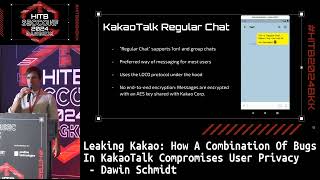
How a Combination of Bugs in KakaoTalk Compromises User Privacy
Uncover critical security vulnerabilities in KakaoTalk messaging app, from account takeover exploits to encryption weaknesses, with practical demonstrations and analysis of protocol flaws.
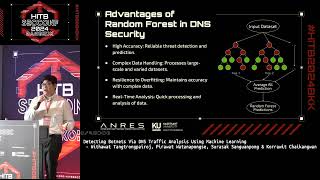
Detecting Botnets via DNS Traffic Analysis Using Machine Learning
Discover advanced techniques for detecting botnet-infected devices through DNS traffic analysis, combining natural language processing and machine learning for enhanced network security monitoring.
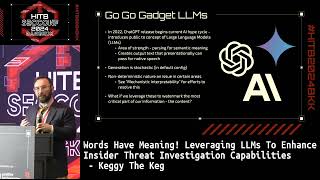
Leveraging Large Language Models to Enhance Insider Threat Investigation Capabilities
Discover innovative methods using LLMs for cybersecurity investigations, focusing on semantic watermarking techniques to detect and trace unauthorized data exfiltration across air-gapped systems.
TPMs and the Linux Kernel - A Better Path to Hardware Security
Explore TPM integration with Linux kernel subsystems, focusing on practical approaches to hardware-based security implementation and simplified application-level access to TPM functionality.
Analysis of and Lessons from the Xz-Utils Vulnerability - What Might Come Next
Delve into the technical analysis of the xz-utils vulnerability incident, exploring the combined attack techniques, social engineering aspects, and future implications for open-source software security.
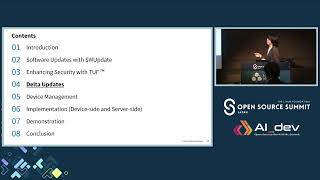
Device Management and Delta Update for Embedded Devices with SWUpdate and TUF
Discover how to implement secure and efficient software updates for embedded devices by integrating SWUpdate with TUF framework, focusing on delta updates and device management for resource-limited environments.
Exploring Best Practices for Implementing Authentication and Authorization in a Cloud-Native Environment
Discover best practices for implementing authentication and authorization in cloud-native environments, exploring standards like OpenID Connect and tools including Keycloak, OPA, OpenFGA, and Topaz.
Understanding Linux Kernel CVEs and Their Recent Surge
Understand how the Linux kernel community manages CVE assignments, their new structured approach to vulnerability reporting, and best practices for handling security updates.

The Current Situation of SBOM in Japan - Software Supply Chain Management and Implementation
Discover Japan's evolving SBOM landscape through insights on implementation challenges, government guidelines, and industry best practices from a leading Japanese SBOM evangelist and METI advisor.
Trials and Tribulations of Updating Dependencies for Vulnerability Remediation
Discover how to effectively manage and update dependencies for vulnerability remediation, exploring automated solutions and practical strategies for npm and Maven ecosystems while minimizing potential breakages.