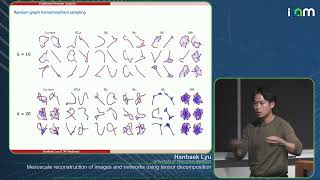
Mesoscale Reconstruction of Images and Networks Using Tensor Decomposition
Explore mesoscale reconstruction of images and networks using tensor decomposition, focusing on a unified framework, error bounds, and online CP-dictionary learning for multi-modal datasets.
On Mathematical Modeling in Image Reconstruction and Beyond
Explores connections between wavelet frame-based and PDE-based approaches in image reconstruction, linking to deep learning and computational imaging advancements.
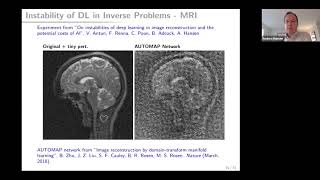
Foundations of Deep Learning and AI: Instabilities, Limitations, and Potential
Exploring deep learning's instability, AI limitations, and potential impacts on scientific computing and medical imaging. Compares AI's current state to early 20th-century mathematics, predicting similar foundational challenges.
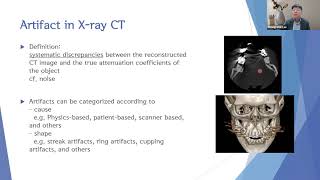
Artifact Suppression in X-ray CT Images - SIAM-IS Virtual Seminar
Explore X-ray CT imaging, artifact suppression techniques, and recent advancements in metal and scattering artifact reduction for improved medical and industrial applications.
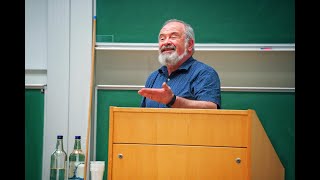
The Miracle of Tomography - Rothschild Lecture
Explore the diverse applications and mathematical techniques of tomography, from medical imaging to geophysics, with Professor Peter Kuchment's comprehensive overview of this fascinating field.

Toward Brain Computer Interface - Deep Generative Models for Brain Reading
Explore deep generative models for brain reading, covering GAN implementation, image reconstruction from brain signals, and evolving latent codes using genetic algorithms.
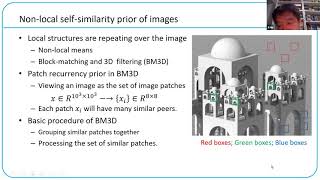
Self-supervised Deep Learning for Image Recovery - SIAM-IS Virtual Seminar
Self-supervised deep learning approach for image recovery, focusing on dataset-free methods. Explores Bayesian deep networks, uncertainty prediction, and applications in compressive sensing, outperforming traditional methods.

BigGAN and Other Generative Models
Explore BigGAN and BigBiGAN generative models, their functionality in RunwayML, and learn about image reconstruction techniques in this informative video on advanced AI-powered image generation.

Rethinking the Truly Unsupervised Image-to-Image Translation - Paper Explained
Explore TUNIT, a groundbreaking approach to unsupervised image-to-image translation. Learn about its innovative architecture, loss functions, and experimental results for transforming images across domains.
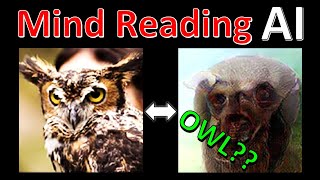
Deep Image Reconstruction from Human Brain Activity
Explores innovative technique for reconstructing visual imagery from brain activity using fMRI and deep neural networks, demonstrating potential for "mind-reading" technology and insights into neural representations.
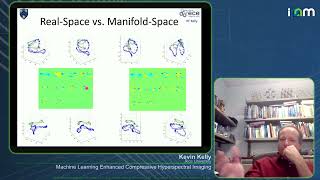
Machine Learning Enhanced Compressive Hyperspectral Imaging - IPAM at UCLA
Explore machine learning-enhanced compressive hyperspectral imaging techniques, combining optical systems and neural networks for efficient data acquisition and processing in various applications.
The Role of Data and Models for Deep-Learning Based Image Reconstruction
Explores deep learning in image reconstruction, focusing on model scaling, data requirements, and robustness. Discusses performance under distribution shifts and strategies for improvement.
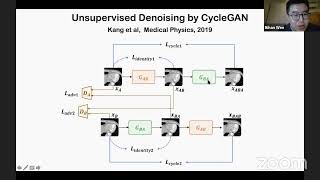
Computational Imaging - Deep Learning Approaches
Explore advanced computational imaging techniques with Jong Chul Ye from KAIST, covering innovative approaches in signal processing and image reconstruction.
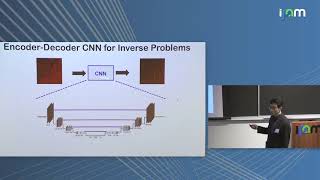
Geometric Understanding of Supervised and Unsupervised Deep Learning for Biomedical Image Reconstruction
Geometric understanding of deep learning for biomedical image reconstruction, exploring supervised and unsupervised approaches, with applications in various imaging modalities.
Deep Learning-Based MR Image Reconstruction and Contrast Conversion
Explore deep learning techniques for MR image reconstruction, parallel imaging, and contrast conversion, focusing on k-space and image space applications in medical imaging.
Computational Imaging Systems and Optical Design - Webinar
Explore computational imaging systems, diffractive optics, and neural network-based reconstruction in this advanced signal processing webinar by Prof. Wolfgang Heidrich from KAUST.
Computational Imaging Systems: From DiffuserCam to Neural Activity Tracking - Seminar 2
Explore computational imaging systems, focusing on DiffuserCam technology and its applications in 3D neural activity tracking. Learn about challenges and solutions in image reconstruction and processing.
3D Phase Imaging with Scattering Samples - IPAM at UCLA
Innovative microscopy techniques for 3D phase imaging in thick, scattering samples using computational algorithms and neural networks to reconstruct refractive index maps from angle-coded illumination.
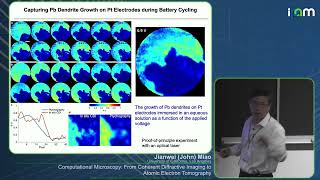
Computational Microscopy: Coherent Diffractive Imaging to Electron Tomography
Explore computational microscopy techniques from coherent diffractive imaging to atomic electron tomography with UCLA expert Jianwei Miao in this insightful presentation on cutting-edge imaging methods.
Solving Inverse Problems With Deep Neural Networks - Robustness Included?
Exploring robustness of deep learning in inverse problems, focusing on resilience against statistical noise and adversarial perturbations in image reconstruction tasks.
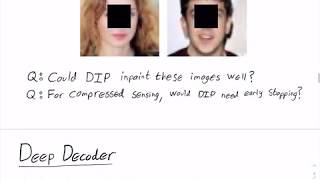
Unlearned Neural Networks as Image Priors for Inverse Problems
Explore unlearned neural networks as image priors for inverse problems in imaging, covering Deep Image Prior, Deep Decoder, and Deep Geometric Prior techniques and their applications.