
AI Art Course Install and Setup - Automatic1111 and Stable Diffusion
Learn to set up Automatic1111 UI and Stable Diffusion for AI art creation. Hands-on approach with project-based learning to explore image generation using artificial intelligence.
Doubling Stable Diffusion Inference Speed with RTX Acceleration and TensorRT - A Comprehensive Guide
Comprehensive guide on boosting Stable Diffusion performance with RTX Acceleration TensorRT, covering installation, optimization, and troubleshooting for various models and extensions.
DALL-E 3 Comparison: ChatGPT vs Bing Image Creator
Comparative analysis of DALL-E 3 in ChatGPT and Bing Image Creator, exploring strengths and weaknesses through various use cases like video thumbnails, book covers, textures, and film posters.

Leonardo AI Tutorial: Image Generator Basics for Beginners
Learn to create AI art using Leonardo AI's Image Generator, from basic settings to advanced tools. Explore prompts, styles, and elements to generate unique images and build your personal art collection.

Best AI Art Websites and Generators - Free and Paid Rankings Guide for 2024
Comprehensive guide to AI image generation tools, comparing free and paid options, ranking their performance and value, and providing practical insights for users of all levels.

IP-Adapter-FaceID Tutorial - Installation, Usage, and Advanced Features
Comprehensive guide on using IP-Adapter-FaceID for face transfer across Windows, RunPod, and Kaggle. Covers installation, customization, model conversion, and advanced features for seamless image generation.

Comprehensive Guide to 160+ Best Stable Diffusion 1.5 Custom Models - Comparison and Download Script
Comprehensive tutorial on downloading and comparing 160+ top Stable Diffusion 1.5 models, with detailed analysis of their performance, capabilities, and output quality across various prompts and resolutions.

Leonardo AI Full Course: Learn Prompts, Upscaling and More
Comprehensive guide to Leonardo AI: master image generation, prompt writing, upscaling, motion images, and real-time canvas. Unlock creative potential with hands-on techniques and expert tips.
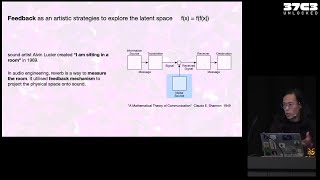
Self-Cannibalizing AI: Exposing Generative Text-to-Image Models
Artistic strategies to expose generative AI models' inner workings, biases, and limitations. Experiments with Stable Diffusion, dataset filtering, CLIP, and recursive image generation reveal unexpected correlations and default patterns.

Using SwarmUI and Stable Diffusion 3 on Cloud Services - Installation and Usage Guide
Learn to install and use SwarmUI with Stable Diffusion 3 on cloud services like Massed Compute, RunPod, and Kaggle. Covers setup, GPU optimization, model downloading, and image generation across platforms.
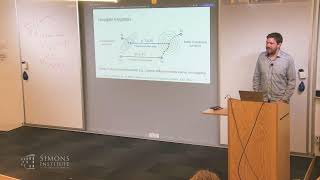
From Entropy to Artistry: Thermodynamics and Generative AI
Explore connections between diffusion models and physics, focusing on non-equilibrium thermodynamics and its applications in image/video generation and climate modeling.
Powering Generative AI Workloads with AMD and Open-Source ROCm
Explore cost-effective generative AI using AMD hardware and open-source ROCm. Learn to run language and image models, compare performance with NVIDIA, and discover ROCm's latest features and support.

Fooocus: A User-Friendly Stable Diffusion Web UI for High-Quality Image Generation - Tutorial
Explore Fooocus, a powerful Stable Diffusion Web UI with 200+ styles, automatic model downloads, and advanced features for effortless AI image generation. Learn installation, usage, and creative techniques.

FLUX LoRA Training Tutorial: From Zero to Hero with Kohya SS GUI - 8GB GPU, Windows
Comprehensive guide to FLUX LoRA training using Kohya SS GUI, covering installation, configuration, dataset preparation, training process, and image generation with practical tips for optimal results.
ControlNet Union ProMax, Pixart Sigma 900M, and New ComfyUI Features
Explore new ComfyUI features: ControlNet Union ProMax, Pixart Sigma 900M, improved background removal, and more. Enhance your AI image generation capabilities with these free tools.
XAI: A Model to Explain StyleGANs
Explore an innovative explanation model for StyleGANs using active shape and appearance models in this computational essay.
MultiDiffusion: Fusing Diffusion Paths for Controlled Image Generation
Explore MultiDiffusion: a framework for controllable image generation using pre-trained diffusion models. Learn about panorama creation, high-resolution outputs, and versatile user controls without retraining.
Additive Decoders for Latent Variables Identification
Explore additive decoders for latent variable identification and out-of-support image generation in representation learning. Gain insights into nonlinear ICA and object-centric representation learning.
Consistency Trajectory Models: Learning Probability Flow ODE Trajectory of Diffusion
Explore advanced diffusion models with Consistency Trajectory Models, improving sample quality and efficiency in AI-driven image generation. Learn novel sampling techniques and state-of-the-art results.
Reflected Diffusion Models: Principled Data Constraints in Generative Modeling
Explore reflected diffusion models for improved image generation. Learn about reversing stochastic differential equations, addressing numerical errors, and incorporating data constraints in principled ways.
PFGM++: Unlocking the Potential of Physics-Inspired Generative Models
Explore PFGM++, a physics-inspired generative model unifying diffusion models and PFGMs. Learn about its flexible embedding, unbiased objectives, and superior performance on image datasets.