Inception v1 Neural Network Architecture Tutorial
Learn to implement Google's Inception v1 architecture for image classification, exploring its innovative design and performance benefits.

Build Your First PyTorch Model - Image Classification Tutorial
Learn to build an image-classifying PyTorch model for playing cards in this hands-on tutorial. Covers datasets, model creation, training, and result analysis.
Machine Learning Papers in Virtual Reality - IEEE VR 2022
Cutting-edge machine learning research in VR, covering topics like stereoscopic photography, adversarial attacks, 360° depth estimation, scanpath generation, autism screening, and projector deblurring.
Enhanced POET - Open-ended Reinforcement Learning through Unbounded Invention of Learning Challenges
Explore open-ended reinforcement learning through unbounded invention of challenges and solutions, focusing on Uber's Enhanced POET algorithm and its applications in AI development.

Object Classification Using VGG16 and XGBoost for Vehicle Classification with TensorFlow
Learn to classify vehicles using VGG16 and XGBoost in TensorFlow. Covers data preparation, feature extraction, model training, and testing. Gain practical skills in object classification and deep learning.

The Fundamentals of Modern Deep Learning with PyTorch
Learn PyTorch for deep learning: train neural networks for image and text classification, explore tensor operations, automatic differentiation, and modern libraries like PyTorch Lightning for efficient GPU training.
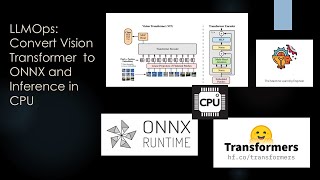
LLMOps: Converting Fine-Tuned ViT Classifier to ONNX for CPU Inference
Convert a fine-tuned ViT Transformer to ONNX format and perform CPU inference, enhancing model portability and efficiency for custom image classification tasks.
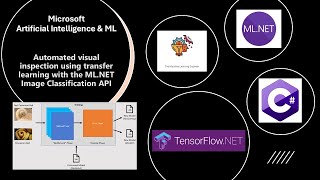
Microsoft AI: ML.NET Framework in C# - Transfer Learning for Image Classification
Aprende a entrenar modelos de aprendizaje profundo personalizados utilizando transferencia de aprendizaje, TensorFlow y ML.NET para clasificar imágenes de superficies de concreto.
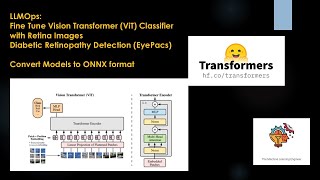
Fine-Tuning ViT Classifier with Retina Images and Converting to ONNX - Video 3
Fine-tune a Vision Transformer for diabetic retinopathy detection using EyeQ dataset and convert the model to ONNX format for efficient deployment.
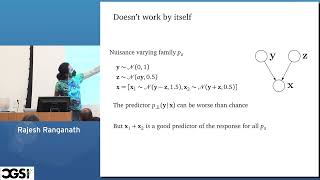
Out of Distribution Generalization
Explore out-of-distribution generalization techniques, focusing on nuisance-induced spurious correlations and invariant risk minimization. Gain insights into robust neural networks and counterfactual invariance.
Train a Production-Level Image Classifier
Learn to build a robust image classifier using advanced techniques like data augmentation, transfer learning, and learning rate scheduling.

One Pixel Adversarial Attacks via Sketched Programs
Explore a novel approach for one-pixel adversarial attacks using program synthesis, achieving state-of-the-art success rates with fewer queries and transferable programs for neural network classifiers.
Learning with Marginalized Corrupted Features
Explore machine learning with marginalized corrupted features, a novel approach to enhance generalization and scalability in finite data scenarios. Discover applications in risk minimization and document representation.
Explainable AI - The Apex of Human and Machine Learning
Explore the emerging field of Explainable AI, its importance in high-risk domains, and how it bridges the gap between human cognition and machine learning for more intuitive and understandable AI systems.
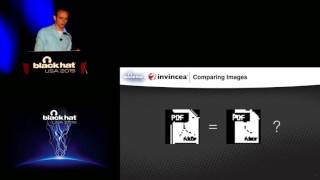
Graphic Content Ahead - Towards Automated Scalable Analysis of Graphical Images Embedded in Malware
Explores automated analysis of images in malware, focusing on identifying visually similar samples and classifying images into categories to enhance malware triage and reveal attacker patterns.
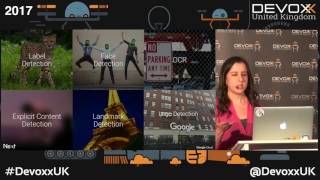
Machine Learning as an API - Easy Ways to Add Intelligence to Your Web App
Explore machine learning APIs for image analysis, speech recognition, and text processing to enhance web apps without deep technical expertise.
Computer Vision - British Clay
Explore AutoML techniques for image classification, comparing tools to build models from labeled samples. Discover the ease of detecting Wallace vs. Gromit in this hands-on demo.
A Practical Introduction to Convnets for Image Classification
Practical guide to developing CNN-based image classification pipelines, covering dataset handling, architecture design, training, and evaluation. Explores real-world applications in robotics and biomedicine.
Deep Learning in Medicine - An Introduction and Applications to Next-Generation Sequencing and Disease Diagnostics
Exploring deep learning applications in medicine, focusing on genetic variation detection using neural networks and its potential impact on disease diagnostics and genomics.

Applied AI - Real-World Use Cases for Microsoft’s Azure Cognitive Services
Explore real-world applications of Azure Cognitive Services for AI, including image classification, chatbots, and text analysis. Gain insights into machine learning concepts and practical implementation.

Deep Learning - What It Is & What It Can Do For You
Explore deep learning fundamentals, applications, and potential impact. Learn about neural networks, image classification, style transfer, and future trends in AI and machine learning.