
Classifying Skin Cancer - TensorFlow Tutorial
Build a TensorFlow model to classify skin lesions as benign or malignant. Learn preprocessing, model setup, training, and evaluation using metrics like ROC curves for this important medical application.

TensorFlow Tutorial - TensorFlow Datasets
Learn to use TensorFlow Datasets for loading, preprocessing, and modeling image and text data. Covers MNIST image classification and IMDB sentiment analysis with practical examples and code demonstrations.
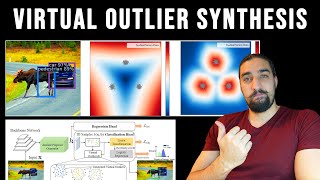
VOS - Learning What You Don't Know By Virtual Outlier Synthesis
Explore virtual outlier synthesis for robust image classification and object detection, enhancing out-of-distribution awareness in AI models through innovative feature space sampling techniques.
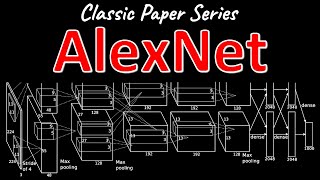
ImageNet Classification with Deep Convolutional Neural Networks - Paper Explained
Detailed explanation of AlexNet, the groundbreaking deep convolutional neural network that revolutionized computer vision and kickstarted the deep learning era in image classification.

Transfer Learning for Image Classification with PyTorch & Python Tutorial - Traffic Sign Recognition
Learn to classify traffic signs using transfer learning with PyTorch. Explore data, build datasets, train a pre-trained ResNet model, evaluate performance, and make predictions on new images.
Build a Deep CNN Image Classifier with Any Images
Learn to build a custom deep CNN image classifier from scratch using Python, TensorFlow, and Keras. Covers data pipeline, preprocessing, network building, training, evaluation, and model saving.

Getting Started with Python Deep Learning for Beginners
Learn to set up Python, Jupyter, and TensorFlow for deep learning. Create environments, configure GPU, and train an image classifier. Perfect for beginners starting their deep learning journey.

Implementing a Multi-Class CNN Image Classifier in Pytorch - Computer Vision Basics Ep. 3 CIFAR10 CNN
Learn to build a CNN image classifier using PyTorch and CIFAR10 dataset. Covers data loading, model architecture, training, and validation, with practical coding examples for computer vision enthusiasts.

Image Classification with CIFAR 10 - Computer Vision Basics Ep. 1 Loading Data
Practical guide to image classification using CIFAR10 dataset. Learn to load data, create DataLoaders, transform images, and visualize the dataset in PyTorch for computer vision tasks.

Real-World Python Neural Nets Tutorial - Image Classification with CNN - Tensorflow & Keras
Learn to build and train a CNN for image classification using TensorFlow and Keras. Covers data preparation, model improvement, hyperparameter tuning, and practical applications in Python.

Vision Transformers Explained + Fine-Tuning in Python
Explore Vision Transformers (ViT) for image classification, from theory to implementation. Learn about attention mechanisms, patch embeddings, and fine-tuning using Hugging Face in Python.

Self-Training With Noisy Student Improves ImageNet Classification
Explore advanced image classification techniques using self-training and noisy student methods, improving accuracy and robustness in deep learning models.
Human-AI Interaction for Computer Vision
Explore human-AI collaboration in computer vision, covering image classification, content editing, generative AI, and interactive learning for enhanced AI systems and applications.

Machine Learning - What Is Easy, Medium, and Hard?
Explore the landscape of machine learning through case studies, examining easy, medium, and hard challenges while considering future possibilities and potential pitfalls.
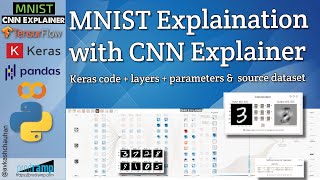
Deep Understanding of MNIST Problem and Its CNN Solution Using CNN Explainer
Comprehensive tutorial on MNIST problem and CNN solution using CNN Explainer. Covers dataset preparation, model architecture, training, and evaluation. Ideal for beginners in deep learning and neural networks.
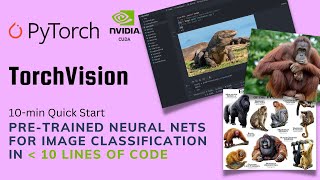
TorchVision Quick Start - Building an Image Classifier in 10 Minutes
Build an image classifier for orangutans and komodo dragons using PyTorch's torchvision library and a pretrained ResNet model. Learn to leverage pre-trained models for quick and effective computer vision tasks.
Zero-Shot Image Classification with OpenAI's CLIP Model
Explore OpenAI's CLIP model for zero-shot image classification, demonstrating its ability to predict relevant text for images using natural language instructions without task-specific training.
Scalable AI for Environmental and Social Impact
Explore Microsoft's AI contributions to Apache Spark and Machine Learning, focusing on environmental and social impact projects like art exploration and endangered species protection.

The Future of Crime Detection and Prevention
Expert panel explores AI's role in predicting and preventing crime, discussing technological advancements, ethical concerns, and the future of law enforcement and security.

Will Computers Ever Think Like Human Beings? - With Vint Cerf
Explore the challenges of creating human-like artificial intelligence with Internet pioneer Vint Cerf. Delve into neural networks, image classification, and the complexities of replicating human reasoning in computer systems.
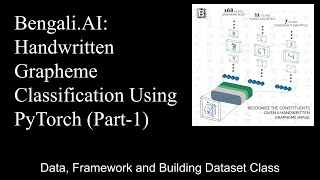
Bengali.AI- Handwritten Grapheme Classification Using PyTorch
Learn to approach Kaggle's Bengali.AI grapheme classification challenge using PyTorch, covering data exploration, framework setup, and dataset creation for multi-label image classification.