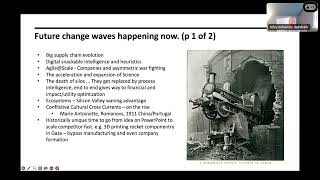
Photoshop Fantasies - Putting Altered and Synthetic Imagery on the Internet into Context
Explore the impact of altered and synthetic imagery on the internet, understanding its context and implications for digital media consumption and creation.
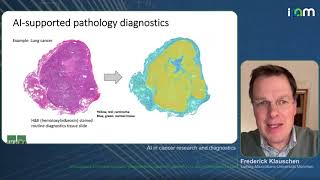
AI in Cancer Research and Diagnostics - IPAM at UCLA
Explore AI's impact on cancer diagnostics, focusing on pathology applications, explainable methods, and multi-modal data integration for research and clinical use.
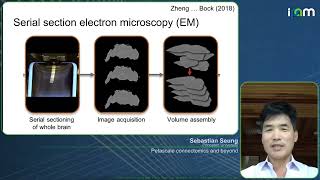
Petascale Connectomics and Beyond - IPAM at UCLA
Explore petascale connectomics, its advancements in brain mapping, and future exascale projects. Learn about automated image analysis techniques and their impact on understanding neural structures and brain function.
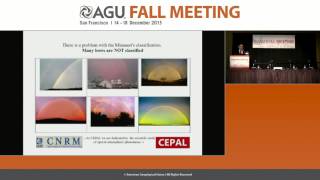
Why All Rainbows Don't Look Alike - New Classification System
Explore the science behind rainbow variations through a new classification system based on hundreds of images, offering insights into color band differences and atmospheric phenomena.
Emerging Technologies for Quantitative Interpretation of Carbonate Rock Images
Explore machine learning applications for automatic identification of carbonate facies using core images, improving accuracy and consistency in geological classifications.
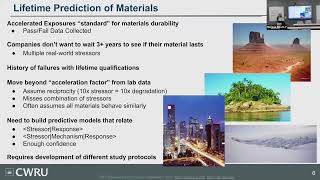
Materials Data Science Approach for Reliability: Materials to Systems
Explore materials data science for reliability prediction, focusing on degradation mechanisms and stressors in complex systems like PV modules. Learn FAIRification and modeling techniques for lifetime forecasting.
New Methods for EOR Optimization Using Microfluidics
Explore microfluidics-based optimization for heavy oil recovery, focusing on chemical spend efficiency and increased oil extraction in Alberta and Saskatchewan fields.
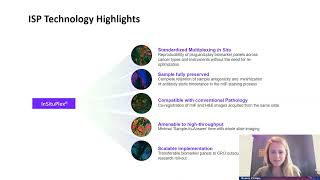
Innovative Biomarker Spatial Analysis for Comprehensive Tissue Immunophenotyping
Explore advanced tissue-based technologies for biomarker identification and disease prognosis using multiplex immunofluorescence assays and complex image analysis techniques.
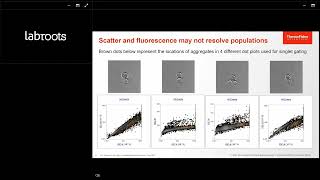
Automated Image Analysis Reduces User-to-User Variability in Flow Cytometry Gating Strategies
Discover how automated image analysis minimizes variability in flow cytometry data analysis, enhancing sample quality assessment and revealing morphological features beyond traditional parameters.

Image Analysis Using AWS Rekognition
Learn to build an image analysis app using AWS Rekognition, from setup to implementation. Discover how to identify objects, faces, and text in images, enhancing your projects with powerful AI capabilities.
Computer Vision Dog Breed Classification with Convolutional Neural Networks, TensorFlow and Kubeflow
Develop a dog breed classification system using TensorFlow, Kubeflow, and convolutional neural networks. Compare AI predictions with DNA results for accuracy.
Microphysiological Systems Research: Applications in Biopharmaceutics and Advancements in Image Analysis
Explore microphysiological systems in biopharmaceutics, focusing on microvascular network models and advanced 3D image analysis using deep learning for enhanced drug development and disease understanding.

TensorFlow Tutorial - TensorFlow Datasets
Learn to use TensorFlow Datasets for loading, preprocessing, and modeling image and text data. Covers MNIST image classification and IMDB sentiment analysis with practical examples and code demonstrations.
Deep Learning and Energy Models for Fine Dead Wood Segmentation - Jacquelyn Shelton
Explore deep learning and energy models for fine dead wood segmentation in climate research, focusing on carbon cycle implications and advanced image analysis techniques.
Comparing AI Image Caption Models: GIT, BLIP, and ViT+GPT2
Explore a comparison of three cutting-edge AI image captioning models, analyzing their performance across diverse images and understanding their unique approaches to vision-language tasks.

Machine Learning with TensorFlow Object Detection Running on Docker
Explore TensorFlow Object Detection API implementation using Docker, covering image creation, dependencies, and practical analysis of object detection in pictures.
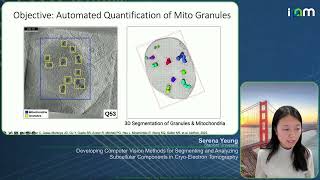
Computer Vision for Segmenting & Analyzing Subcellular Components in Cryo-Electron Tomography
Explore computer vision techniques for automated 3D segmentation and analysis of subcellular components in cryo-electron tomography, focusing on mitochondrial features in Huntington's Disease neurons.
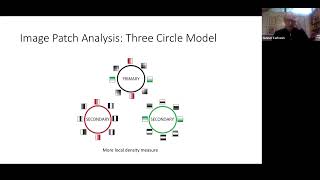
Gunnar Carlsson - Deep Learning and TDA
Explore deep learning's interaction with Topological Data Analysis, focusing on explainability and performance enhancement in neural networks and various data analysis applications.
The Medial Axis - Image Analysis, Homological Simplification, Gerrymandering
Explore applications of the medial axis in image segmentation, shape simplification, and detecting gerrymandered districts. Learn about innovative approaches in computational geometry and topology.

Digging Into Container Image Layers for Sneaky Vulnerabilities
Explore techniques to identify and mitigate hidden vulnerabilities in container image layers, focusing on Java-based images and using tools like Trivy and dive for in-depth analysis.

Node.js Best Practices in Docker - 2023 Edition
Explore the latest Node.js strategies for Docker, including Wolfi images, Docker Scout analysis, Compose Sync, and docker init. Learn about Dockerfile advancements, process management, and GitHub Actions for efficient development.