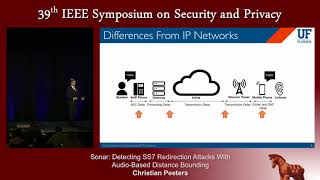
Sonar- Detecting SS7 Redirection Attacks With Audio-Based Distance Bounding
Detect SS7 redirection attacks in phone networks using audio-based distance bounding. Learn about Sonar, a system that measures call audio round-trip times to identify and prevent illicit call interceptions.
HARK No More - Preregistration of CHI Experiments
Explores preregistration of experiments in HCI research to prevent post-hoc hypothesizing, discussing its adaptation and benefits for improving the discipline's scientific rigor.

Measuring the IQ of Your Threat Intelligence Feeds
Explore methods for evaluating threat intelligence feeds, including novelty tests, overlap tests, and population tests, to improve cybersecurity decision-making and data analysis.

Understanding Clinical Research
Explore the fundamentals of clinical research, its importance, and how to participate in trials for Graves' disease and thyroid conditions.
Structural Break Analysis Using Chow Test - Part 1
Explore structural break analysis using the Chow test, gaining insights into detecting significant changes in economic time series data.
Ideas on Conducting Experiments in AI and ML
Explore various experimental approaches in AI and ML, focusing on methodologies used in cutting-edge research and practical applications.
A Guide to A/B Testing as a Data Scientist
Comprehensive guide to A/B testing for data scientists, covering experiment design, dataset creation, hypothesis testing, Bayesian methods, and result interpretation using practical examples and code.
Introduction to Online Experimentation and A-B Testing
Learn best practices for designing and evaluating A/B tests in online experimentation. Covers choosing metrics, avoiding errors, interpreting results, and comparing A/B to multivariate testing.
Testing Dependency of Databases - Lecture
Explore statistical methods for detecting dependencies between random databases, including hypothesis testing and phase transitions in error probability based on database dimensions and distributions.
Distributionally Robust Hypothesis Tests - IFDS 2022
Explore distributionally robust hypothesis tests with Yao Xie, delving into advanced statistical methods for robust decision-making under uncertainty.

Statistical Inference
Comprehensive exploration of statistical inference, covering likelihood, hypothesis testing, Bayesian statistics, and non-parametric methods for robust data analysis and decision-making.
Hypothesis Testing
Learn fundamental concepts and techniques of hypothesis testing, including error types, statistical power, and various tests for population parameters and relationships.
Statistics with R Programming Language - Step by Step
Learn statistical concepts and their implementation in R programming. Step-by-step tutorials cover introductory to intermediate topics, with hands-on practice using downloadable datasets and scripts for a comprehensive learning experience.
Statistical Inference Concept Statistics for Beginners
Comprehensive introduction to statistical inference concepts, covering sampling distributions, confidence intervals, hypothesis testing, and more. Ideal for beginners seeking a solid foundation in statistical analysis.
Bootstrapping Statistics and Bootstrapping in R
Learn bootstrapping in statistics and R, covering resampling techniques, hypothesis testing, and confidence intervals. Gain practical skills with examples and downloadable datasets.
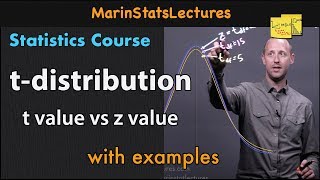
Univariate Analysis in Statistics and with R - Statistics for Beginners
Comprehensive introduction to univariate analysis in statistics, covering key concepts like t-distribution, hypothesis testing, and confidence intervals. Includes practical examples using R for data analysis and visualization.

Inference for Two Population Means
Learn statistical inference techniques for comparing two population means, including pooled-variance and Welch t-tests, confidence intervals, and paired-difference procedures.
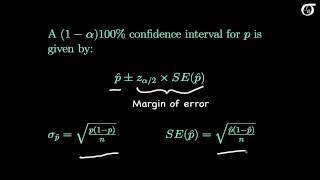
Inference for Proportions
Explore statistical inference for proportions, covering sampling distributions, confidence intervals, hypothesis tests, and comparisons between two populations.
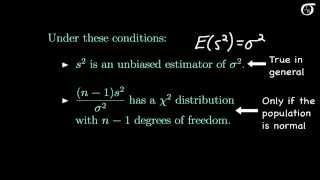
Inference for Variances
Explore statistical methods for analyzing variances, including confidence intervals and hypothesis tests for one and two variances, with a focus on normally distributed populations and robustness considerations.
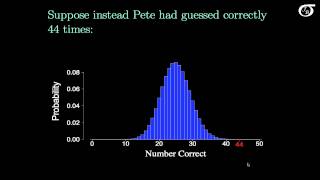
Hypothesis Testing
Learn hypothesis testing fundamentals, including rejection regions, p-values, error types, power calculations, and statistical significance. Explore Z and t tests for one mean, with practical examples and assumptions.
How Not to Fall for Bad Statistics - With Jennifer Rogers
Uncover the truth behind misleading statistics in media. Learn to critically analyze data, understand risk, and differentiate between correlation and causation for informed decision-making.