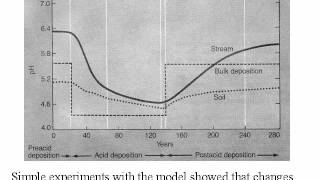
Hydrologic Modeling and Regionalization - Langbein Lecture 2002
Explore hydrologic modeling, regionalization, and scientific approaches in water resource management with insights from a renowned expert in the field.
Attributing Mountain Glacier Retreat to Climate Change
New method for assessing glacier retreat and its link to climate change. Researchers present findings on individual glacier changes and their implications for freshwater sources and climate indicators.
Changing Lake Temperatures on Six Continents - Global Study Findings
Global study reveals changing lake temperatures worldwide, discussing implications for freshwater supplies and ecosystems. Scientists present findings on warming rates, measurement methods, and impacts on wildlife and specific lakes.
Future Himalayan Seismic Hazards - Lessons from the 2015 Gorkha Earthquake
Experts discuss the 2015 Gorkha earthquake's impact, future seismic risks in Nepal, and new findings on medieval quakes. Insights on predicting Himalayan landscape changes and regional hazards.
Hydrologic Sciences Tomorrow: Self-Organization in Ecohydrology - Langbein Lecture 2000
Explore self-organization in ecohydrology, focusing on soil moisture balance, vegetation's role, and climate impacts. Gain insights into modeling water deficit and methodologies in hydrologic sciences.
Multi-scale Laboratory Experimentation in Hydrologic Sciences - Walter B. Langbein Lecture
Exploration of multi-scale laboratory experimentation in hydrology, discussing challenges and opportunities. Focuses on innovative approaches to studying subsurface environmental processes and advancing hydrologic sciences.
Hydrology Awards and Walter B. Langbein Lecture - Fall Meeting 2016
Prestigious hydrology awards ceremony featuring the Walter B. Langbein Lecture, recognizing outstanding contributions to water science and fostering excellence in the field.
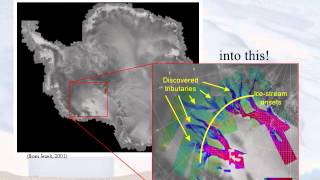
Ice Stream Dynamics and Ice Shelf Interactions - Nye Lecture
Explore ice dynamics and glaciology with Robert Bindschadler's Nye Lecture, covering topics from Ross Ice Shelf to ice stream cycles and their implications for climate science.
Polydisciplinary Innovation in Water Resources Modeling and Prediction
Explore cutting-edge advancements in water resources modeling and prediction through a polydisciplinary lens, featuring innovative approaches and cross-disciplinary collaborations.
Predictive Understanding of Coupled Interactions Among Water, Life, and Landforms
Explore coupled interactions among water, life, and landforms in this AGU Fall Meeting session, focusing on predictive understanding and cutting-edge research in Earth sciences.
Arsenic and Other Metals as Contaminants in Hydrologic Systems - Part 2
Explore arsenic and metal contamination in hydrologic systems, focusing on environmental impacts, detection methods, and mitigation strategies for water resource management.
Water, Weather, and Climate in Our Future - What Can We Know?
Explore the future of water resources, weather patterns, and climate change with insights from a retired NOAA expert. Gain valuable knowledge on potential impacts and uncertainties.
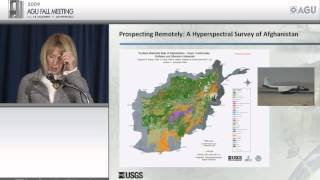
Frontiers of Geophysics - Advances in Earth Science Technologies
Explore cutting-edge geophysical technologies and their applications in earth sciences, from LiDAR to atmospheric rivers, with insights from USGS Director Marcia McNutt.
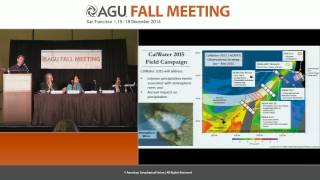
Refilling California's Reservoirs - Fall Meeting 2014 Press Conference
Explore strategies for replenishing California's water reservoirs amid drought conditions, examining innovative solutions and their potential impacts on the state's water security.
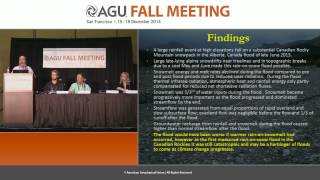
Rain on Snow Floods in a Changing Climate
Explore the impact of climate change on rain-on-snow floods, examining their frequency, intensity, and consequences for water management and ecosystems.
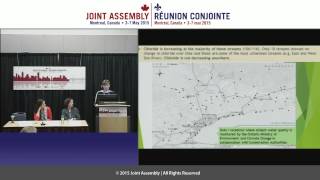
Ontario Water Contamination Study - AGU Joint Assembly 2015
Explore water contamination issues in Ontario, examining causes, impacts, and potential solutions to safeguard public health and environmental integrity.
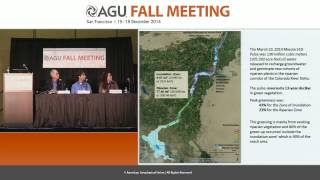
Greening the Colorado River Delta
Explore the ecological restoration efforts in the Colorado River Delta, examining the impact of water releases and conservation initiatives on this vital ecosystem.
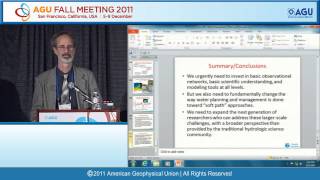
The Evolution of Water Management Paradigms - 2011 AGU Fall Meeting
Explore evolving water management paradigms, addressing hydrological challenges, social disparities, equity, sustainability, and complex adaptive systems in urban water resources management.
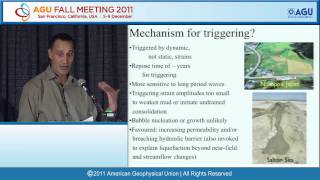
Hydrological Responses to Earthquakes and the LUSI Mud Volcano Eruption
Explore hydrological responses to earthquakes and the controversial LUSI mud volcano eruption in Indonesia. Gain insights from expert Michael Manga on seismic impacts on water systems.
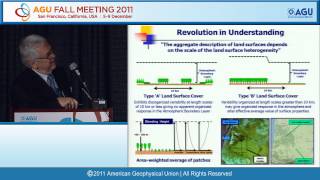
The Emergence of Terrestrial Hydrometeorology
Explore the evolution of terrestrial hydrometeorology, its impact on climate science, and future challenges in this comprehensive lecture by William J. Shuttleworth at AGU's Fall Meeting.

Cultural Dimensions in Combatting Climate Change
Explore the impact of cultural dimensions on local climate change mitigation and water management strategies, drawing insights from global experiences to address sustainability challenges.