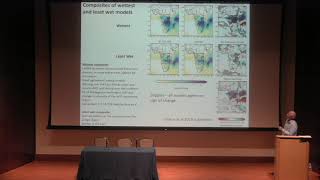
Tropical Rainbelt - Understanding Congo Basin Rainfall and Climate Dynamics
Explore cutting-edge research on Congo Basin rainfall, vertical motion drivers, and seasonal cycles. Gain insights from leading experts in tropical meteorology and hydrology.
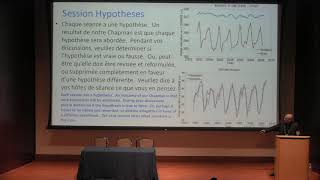
Rainfall and Runoff in the Congo Basin - 2018 Chapman Conference
Explore hydrological research in the Congo Basin, focusing on rainfall patterns, runoff dynamics, and long-term trends. Gain insights from experts on the basin's changing hydrology and its implications.
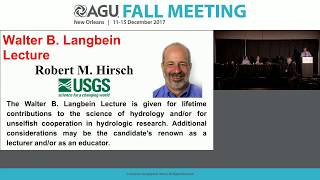
The Walter B. Langbein Lecture - 2017 Fall Meeting
Explore water resource challenges and innovative solutions with Robert M Hirsch in this AGU Fall Meeting lecture, focusing on critical hydrological issues and advancements in the field.
Assessing Flood Risk in the U.S. - Climate Change Impacts and Mitigation Strategies
Experts discuss new flood risk estimates, sea level rise impacts on infrastructure, and community relocation strategies in the face of climate-driven flooding across the United States.
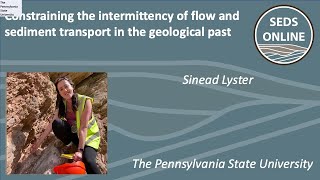
Constraining the Intermittency of Flow and Sediment Transport in the Geological Past
Explore ancient river dynamics and hydroclimate reconstruction through flow intermittency analysis, bridging the gap between instantaneous and mean flow conditions.
Integrated Catchment and Receiving Water Modelling: Environmental Management Solutions
Explore integrated catchment and receiving water modeling techniques, including rain-on-grid hydrology and 3D water quality simulations, to address environmental management challenges in water resources.
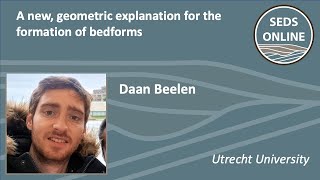
A New Geometric Explanation for the Formation of Sand Dunes and Bedforms
Innovative theory on sand dune formation based on geometric principles, explaining bedform development through surface-to-volume ratios and bed shortening, with validated predictions of dune migration rates.
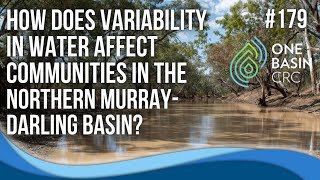
Water Variability Effects on Northern Murray-Darling Basin Communities
Explore impacts of water variability on northern Murray-Darling Basin communities. Learn about effects on livelihoods, wellbeing, recreation, and cultural connections in different regions.
Advances in Dam Breach Assessment and Modeling
Explore advances in dam breach assessment, covering regression equations, hydraulic modeling, and updated methodologies. Learn about recent changes in practices and ANCOLD guidance for improved dam safety analysis.
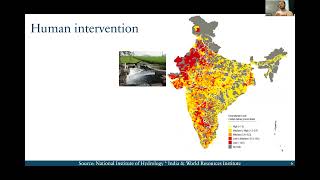
The Sky is Falling - Precipitation Observations and Their Role in Understanding the Earth System
Explore precipitation observations and their impact on Earth system understanding in this seminar for early career atmospheric scientists.
Modelling Rainfall Extremes and Floods Over Karnataka
Explore modelling techniques for rainfall extremes and floods in Karnataka, focusing on data assimilation methods and their applications in weather and climate prediction.
Beavers as Ecosystem Engineers: Impacts on Landscapes in the US West and Beyond
Experts discuss beavers' role in ecosystem engineering, including wildfire and drought resilience, historical presence, and potential impacts of reintroduction on hydrology and landscape restoration.
Dam Removals: Balancing Science and Society for Environmental Justice
Experts discuss the scientific and societal impacts of dam removals, exploring ecosystem restoration, Indigenous rights, and social justice considerations in the context of U.S. and global dam assessment efforts.
Applying AI to HEC-RAS Modeling Workflows
Explore AI-powered coding for HEC-RAS workflows, including terrain modifications, custom data exports, and GIS scripts. Learn to leverage ChatGPT's code interpreter for efficient hydraulic modeling tasks.
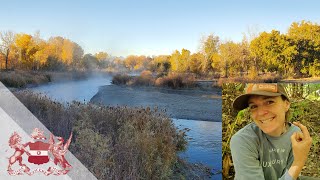
Understanding our Urban Streams Through History, Geography, and Ecology
Explore urban streams' rich history and ecology, examining human impacts, changing perceptions, and new approaches to reconnect city dwellers with nature and each other.
Perfect Storms: A Regional Earth System Modeling Platform for Coastal Hazards in the Gulf of Mexico
Explore a Regional Earth System Model for Gulf of Mexico coastal hazards, integrating atmospheric, oceanic, and river processes to analyze and manage climate-related disasters.
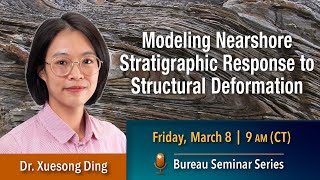
Modeling Nearshore Stratigraphic Response to Structural Deformation
Explore nearshore stratigraphic evolution due to tilting using coupled landscape-stratigraphic models. Discover how sediment supply and tectonic forces shape basin-margin facies and depositional patterns.
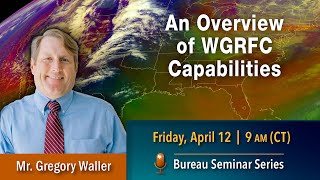
An Overview of WGRFC Capabilities - Weather, Hydrology, and Communication in River Forecasting
Explore weather forecasting and hydrology concepts used by the West Gulf River Forecast Center to provide accurate and timely forecasts for public safety.
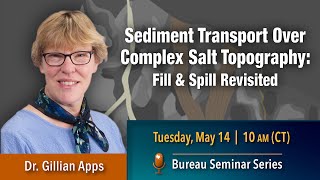
Sediment Transport over Complex Salt Topography: Fill and Spill Revisited
Explore sediment transport in complex salt topographies, focusing on 3D structural analysis and evolving spill points. Gain insights into predicting facies arrangements and reservoir connectivity.
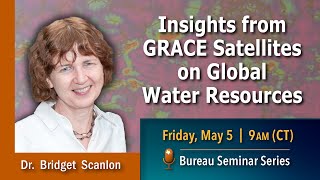
Insights from GRACE Satellites on Global Water Resources
Explore GRACE satellite data's impact on global hydrology, revealing water storage changes, groundwater depletion, and climate-human interactions. Learn how this technology influences water policy worldwide.
The Land Surface-Groundwater Nexus: A Case Study, Science, and Big Picture
Explore the Brownwood flooding case study, examining land subsidence causes and implications for Houston's future water management and urban planning.