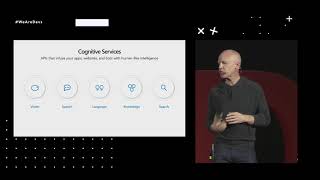
Artificial Intelligence in the Modern Workplace
Explore AI's role in enhancing workplace productivity, enabling better insights, and improving business processes. Learn about integrating AI into existing tools for more intelligent and contextualized experiences.

Bias in NLP
Exploring ethical implications of word embedding models in NLP, focusing on gender bias in occupational representations derived from Wikipedia data using word2vec algorithm.

The Quake Postmortem - The End of the Original Id
John Romero reveals the tumultuous development of Quake, a groundbreaking 3D FPS that revolutionized gaming with mouse look, advanced graphics, and internet multiplayer, while also marking the end of the original id Software team.
Staying Safe in the AI Future
Explore strategies for responsible AI development and usage, focusing on data quality, bias mitigation, and ethical considerations to ensure a safer AI-driven future.

Program Synthesis
Explore program synthesis techniques including data wrangling, enumerative search, and superoptimization. Learn about tools like FlashFill and PROSE for automated code generation and optimization.
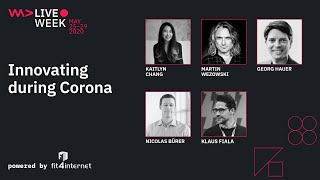
Innovating During the Crisis
Panel discussion exploring innovation strategies during COVID-19, examining how businesses adapt, overcome challenges, and leverage opportunities in uncertain times. Insights on crisis-driven innovation and its lasting impact.
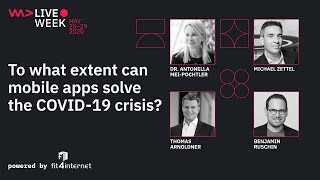
To What Extent Can Mobile Apps Solve the COVID-19 Crisis
Panel discussion exploring the potential and limitations of mobile apps in addressing the COVID-19 crisis, including their role in containment efforts and addressing public concerns about privacy and effectiveness.
From Cultural Heritage to Partying in the MetaVerse
Explore the evolution of virtual spaces, from preserving cultural heritage to hosting immersive social experiences in the MetaVerse, and discover the latest developments in this rapidly advancing field.

Defining Brand Ideology
Discover how to define brand ideology by blending emotion, logic, and cultural insights with Genki Imamura, founder of Bees & Honey. Learn to create impactful brand designs rooted in Japan's "IKI" aesthetic.

How to Make Love, Correctly
Explore a new web-building approach rooted in creative equality, technical freedom, and constant play. Learn to overcome design limitations and bridge the gap between code and creativity.
Informational Models of the Phenomenon of Consciousness and the Mechanistic Project
Exploring informational models of consciousness, their methodological contributions, and limitations in guiding mechanistic research. Critiques panpsychist interpretations and discusses quantitative recharacterizations.
Insights from the Conscious Turing Machine - A Machine Model for Consciousness
Explores puzzling phenomena of consciousness using the Conscious Turing Machine model, including pain's impact on sleep, experiences vs. simulations, illusions, dreams, and free will.
Does Consciousness Emerge?
Explore the concept of emergence in consciousness theories, examining its meanings, applications, and implications for understanding the nature of consciousness.
Fusing Agents and Qualia - A Formal Solution to the Combination Problem
Explores a formal theory of consciousness, proposing that agent interactions create complex structures and fuse subjects and qualia, with spacetime as an interface for these interactions.
On the Degrees of Freedom Worth Having - Psychedelics and Free Will
Explore the intersection of psychedelics, free will, and consciousness. Discover how serotonergic pathways may influence volitional capacities and adaptive flexibility in human cognition and behavior.
To What Extent Are Machines Conscious?
Exploring machine consciousness: challenges, theories, and implications. Analyzes information, computation, and phenomenal experience in AI, discussing strong vs. weak machine consciousness and their achievability.
Consciousness as a Coherence-Inducing Operator
Exploring consciousness as an operator that induces coherence in biological information processing, examining its properties, function, and potential for computational simulation.
What Do Theories of Consciousness Predict About the Onset of Infant Consciousness?
Explores predictions of major consciousness theories on infant consciousness onset, examining higher-order, global workspace, integrated information, and recurrent processing theories.
Name, Number and the Foundation of Consciousness
Explores how natural languages and their inner domain of meaning create subject-object differentiation, forming the basis of consciousness through sound-meaning relations grounded in number.
A Structural Turn in Consciousness Studies
Explores the emerging structural approach in consciousness studies, discussing its implications, potential pitfalls, and promise for advancing the field using mathematical and structural tools.
The Fitness-Beats-Truth Theorem - Some Philosophical Reflections
Philosophical exploration of the Fitness-beats-truth theorem, examining veridicality, mathematical representation, and potential self-refutation in the context of perceptual and cognitive models.