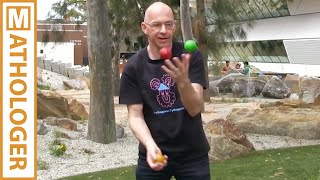
The Mathematical Soul of Juggling
Explore the fascinating mathematical principles behind juggling patterns, analyzing techniques and uncovering the hidden complexities of this captivating art form.
Curt Jaimungal Interview and Theories of Everything - Sociology and Pure Maths
Exploring diverse topics from physics and mathematics to consciousness and UFOs, this wide-ranging interview delves into theories of everything, sociological aspects of science, and the intersection of academic disciplines.
How to Write Mathematics at the College Level - Math Terminology
Learn effective techniques for writing clear, structured mathematical solutions at the college level, including defining terms, logical layout, complete sentences, and careful diagrams.
Sets, Logic and Graphs - Math Terminology - NJ Wildberger
Review of high school math language and notation for sets, logic, and basic graph theory. Covers key concepts like union, intersection, subsets, logical statements, and graph circuits, providing essential foundations for advanced mathematics.
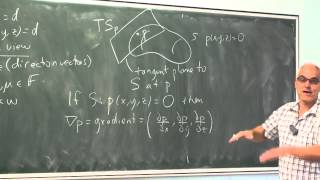
An Introduction to Surfaces - Differential Geometry
Explore surfaces in differential geometry, covering orientability, algebraic and parametric surfaces, and examples like quadrics and the Oloid. Gain insights into this fundamental area of mathematics.
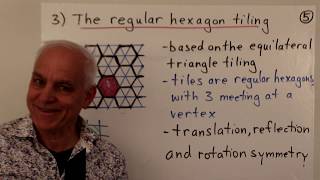
Regular Tilings of the Plane - Elementary Mathematics Explained
Explore the fascinating world of regular tilings, including square, equilateral, and hexagon patterns. Learn their properties, historical significance, and practical applications in various fields.
Cooking and Baking With Basic Arithmetic - Elementary Mathematics Explained
Explore how basic arithmetic and measurement skills can be developed through cooking and baking activities, while emphasizing kitchen safety and practical applications for young learners.
Measuring Weight - Elementary Mathematics Explained
Explore the fundamentals of weight measurement, from ancient techniques to modern systems. Learn about scales, metric units, and practical applications in everyday life and science.
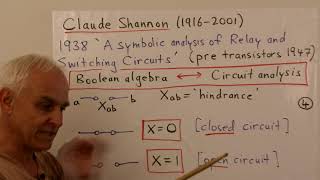
Boolean Algebra and Shannon's Circuit Analysis - Math Foundations - N J Wildberger
Explores Boolean algebra's connection to circuit analysis, focusing on Huntington's formulation and Shannon's groundbreaking 1938 paper linking the two fields.
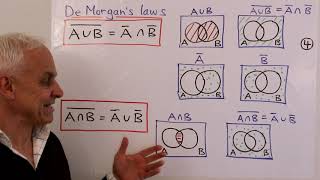
Boolean Algebra and Set Theory - Math Foundations - N J Wildberger
Explore Boolean algebra, set theory, and Venn diagrams. Learn about De Morgan's laws, distributive properties, and their proofs using truth tables and Boole's algebra.
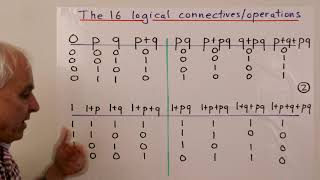
Implication and Logical Operations - Math Foundations - N J Wildberger
Explore 16 logical operations, including AND, OR, XOR, and implication, with applications to Boolean algebra and circuit analysis. Gain insights into Modus Ponens and Boole's algebra for solving electrical engineering problems.
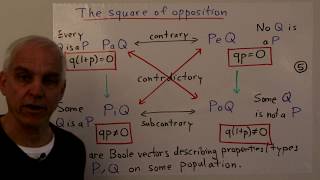
The Algebra of Boole is Not Boolean Algebra - Math Foundations - N J Wildberger
Exploring the Algebra of Boole, its relation to Boolean algebra, and its role in logic and circuit analysis. Discusses syllogisms, the Square of Opposition, and Boole's proofs of Aristotle's arguments.
Sets, Logic and Computability - Math History - NJ Wildberger
Overview of set theory, logic, and computability in late 19th/early 20th century math, covering Cantor's work, Dedekind's constructions, paradoxes, and philosophical schools addressing foundational issues.
Newcomb's Paradox - Famous Math Problems
Explore Newcomb's paradox, a mathematical-philosophical puzzle involving free will, determinism, and rationality. Learn about expected value and strategies for decision-making in uncertain scenarios.
How to Do CS Theory - Lecture 1b: Research Tips for Theoretical Computer Science
Insights and tips for aspiring theoretical computer science researchers, covering research methods, paper writing, presentation skills, and essential resources in the field.
Sam Sanders - Uniformity in Mathematics
Explore uniformity in mathematics, from historical examples to modern applications. Examine how uniform theorems challenge traditional logical systems and impact proof methods across various mathematical domains.
David Cerna: Proof Schema and the Refutational Complexity of Their Cut Structure
Explore proof schemas, refutational complexity, and cut structures in mathematical logic. Gain insights into CERES, ECA, and 1-SMA concepts for advanced theorem proving techniques.
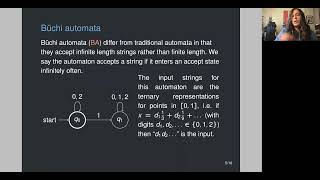
Buchi Automata and Fractals on R
Explore Buchi automata and fractals on R, covering regular languages, model theory, and first-order logic. Gain insights into sparse sets and omega languages in this mathematical journey.
Topics in Pure Model Theory - Lecture 10
Explore advanced concepts in pure model theory, including simple theory, invariant types, and symmetry, with expert insights from Itay Kaplan of The Hebrew University of Jerusalem.
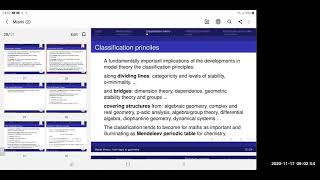
Model Theory: From Logic to Geometric Stability Theory and O-Minimality II
Explore model theory principles, focusing on o-minimality and stability theory, with applications to complex geometry and arithmetic aspects.
Does Math Reveal Reality?
Explore the profound connection between mathematics and physical reality with leading thinkers. Delve into whether math is a human invention or an intrinsic part of the universe's fabric.