Understanding Human Trust in AI Systems - Evaluation and Analysis
Explore the complex dynamics of human-AI trust relationships, from interpersonal trust foundations to evaluating AI trustworthiness and warranted trust in practical applications.
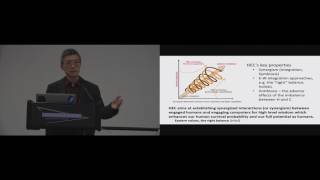
Human Computer Integration versus Powerful Tools
Experts debate the future of human-computer relationships, exploring symbiosis, integration, and powerful tools. Discusses implications for design, research, and society in this thought-provoking panel.

Leveraging Human Factors to Stop Dangerous IoT
Explore strategies to mitigate IoT security risks through informed device selection and user-friendly interfaces that nudge consumers towards safer choices, based on psychological factors and effective risk communication.
The Turing Lectures: Where Next for Self-Driving Vehicles
Exploring the future of autonomous vehicles: challenges, opportunities, and policy implications. Insights on integrating research into legislation and ensuring societal benefits of self-driving technology.

Interactive Explainable AI - Enhancing Trust and Decision-Making
Explore interactive Explainable AI techniques, human factors in AI decision-making, and practical strategies for enhancing XAI services. Learn to understand and trust AI predictions for effective decision-making.

Do Certain Types of Developers or Teams Write More Secure Code?
Explore factors influencing secure code development, including developer experience, team dynamics, and work environment. Learn how human and environmental elements impact software security.
Human Factors That Influence Secure Software Development
Explores human factors influencing secure software development, including environmental conditions, developer characteristics, and team dynamics. Discusses strategies to identify and mitigate vulnerability-prone code before issues arise.

When -bin-sh Attacks - Revisiting "Automate All the Things"
Explores human factors in automation, challenges for system administrators, and strategies for coping with complex socio-technical systems. Discusses resilience, expertise development, and the ironies of automation.

Thriving in a Stochastic World
Explore how embracing variability in software development can lead to better economic outcomes. Learn to thrive in uncertainty rather than merely survive it.
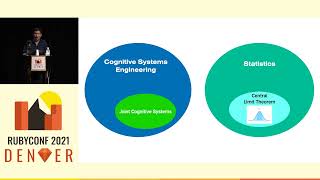
Workshop - Fundamentals of Joint Cognitive Systems
Explore human-machine teaming principles in highly automated systems through interactive exercises, discussions, and real-world examples. Gain insights into Joint Cognitive Systems for enhanced problem-solving and system design.
Humans are Hard, Code is Easy - DevSecOps Challenges
Explore strategies for effective communication and collaboration in DevSecOps teams, focusing on human interactions and relationships beyond technical skills.

The Chips and Pickle Story - What's Really Behind Infamous, Historic UI Failures
Exploring infamous UI failures and their underlying causes, emphasizing the importance of small design details and broader context in development work for societal impact.

Automated Driving - Are We Taking the Human Factors Out of the Loop?
Explores the impact of automated driving on human factors, discussing efficiency gains, risks, levels of automation, and challenges in human-machine interaction for autonomous vehicles.
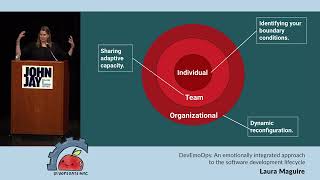
DevEmoOps: An Emotionally Integrated Approach to the Software Development Lifecycle
Explore DevEmoOps: integrating emotional aspects into software development for enhanced resilience, collaboration, and effective engineering practices.

Complexity for Complexity's Sake: The Bane of Cybersecurity Programs
Discover how to simplify cybersecurity approaches by avoiding tool overload and focusing on effective, streamlined solutions for better threat management and user experience in modern security programs.
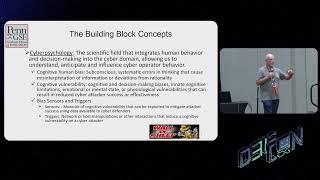
Pwning the Pwners with Mindware - Using Cyberpsychology and AI for Defensive Strategy
Discover how cyberpsychology and AI can empower defenders to exploit human vulnerabilities in cyber attacks, turning defense into an offensive advantage through psychological tactics.
Lean Experimentation and Decision Science with Humans in Warehouses
Explore optimization strategies for warehouse operations through decision science, focusing on picker scheduling, shift management, and experimental design challenges in quick-commerce environments.
When it All Goes Wrong: Database Incident Response Dos and Don'ts
Learn effective database incident response strategies, including disaster preparedness, communication techniques, and human factors in emergency situations for large-scale systems.
The Boeing 737 MAX - When Humans and Technology Don't Mix
Exploring Boeing's 737 MAX crisis: design compromises, human factors oversights, and the consequences of prioritizing profit over safety in aircraft development. Lessons for all developers.

Engineering a Safer World - Inaugural Lecture on Transport Risk and Safety
Explore strategies for enhancing global safety through engineering innovations and risk management techniques in transportation and beyond.
Fly the Enterprise - Applying Aviation Lessons to DevOps Teams
Applying aviation safety principles to DevOps teams for improved reliability, performance, and incident management. Learn from real-world examples and implement effective strategies.