ML Model Signing: Cryptographically Paving the Way to Provenance in Machine Learning Models
Explore cryptographic signing for ML models, enhancing trust and provenance in AI. Learn about open-source specifications for verifying model integrity and strengthening the AI supply chain.

Llama 3.2 - Multimodal and Edge Computing Advancements
Explore Llama 3.2's multimodal capabilities, edge computing potential, and performance benchmarks. Learn about its vision-tuned models, lightweight versions, and integration with Ollama.

Getting Started with Meta Llama 3.2 and Its Variants Using Groq and Hugging Face
Explore Meta Llama 3.2 variants using Groq and Huggingface. Learn to fine-tune, distill, and deploy this open-source AI model in various sizes for your projects.
End-to-end Modern Machine Learning in Production - Part 2
Explore RLHF, efficient training techniques, on-device ML, and optimizations in modern machine learning production with insights from a Hugging Face lead engineer.
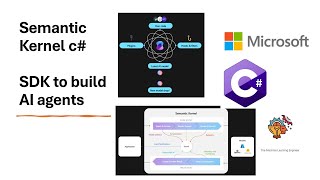
Microsoft AI: Introduction to the Semantic Kernel SDK in C#
Explore Microsoft's Semantic Kernel SDK for integrating LLMs with C#. Learn to combine AI models with traditional programming for enhanced applications.
Fine-Tuning Flan T5 Base for Document Summarization Using Multi-News Dataset
Fine-tune Flan T5 for document summarization using multi_news dataset. Learn practical implementation with provided notebook and explore variations with other models and datasets.
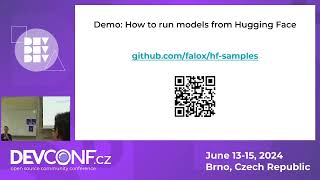
Rapid Prototyping with Open Source AI Models
Discover and leverage open-source AI models for idea validation, process automation, and innovation without expensive hardware requirements.
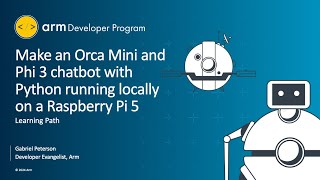
Building an Orca Mini and Phi 3 Chatbot with Python on Raspberry Pi 5
Build a Python-based chatbot using Orca Mini and Phi 3 models on Raspberry Pi 5, running locally without internet or subscriptions. Gain hands-on experience in implementing AI models on embedded systems.

Fine-tuning Llama 2 for Tone or Style Using Shakespeare Dataset
Fine-tune Llama 2 for Shakespearean style using custom datasets. Learn LoRA, parameter settings, and inference techniques to adapt language models for specific tones or styles.

How to Quantize a Large Language Model with GGUF or AWQ
Learn to quantize large language models using GGUF and AWQ. Explore techniques, compare methods, and gain practical skills for efficient model compression and deployment.
Really Long Context LLMs - 200k Input Tokens
Explore Yi 34B 200k model capabilities, compare long context models, and learn about passkey retrieval and inferencing on Runpod. Access resources for implementing extended context LLMs.

Fine-tuning Multi-modal Video and Text Models
Explore fine-tuning techniques for multi-modal video and text models, covering dataset generation, clipping, querying, and evaluation using IDEFICS 2 and Jupyter Notebooks.

Creating Custom Flux AI Photos Without LoRA Using PuLID Technique
Learn to generate personalized Flux AI photos quickly using PuLID technique, without fine-tuning or LoRA. Create custom AI images efficiently with this innovative method.
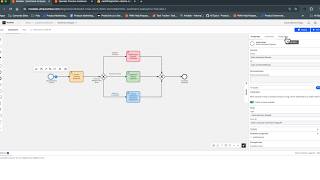
Configuring and Using the Camunda Hugging Face Connector for Customer Sentiment Analysis
Learn to configure and use Camunda Hugging Face Connector for analyzing customer sentiment in BPMN processes. Integrate machine learning to improve customer interactions and automate decision-making based on sentiment analysis.

Lies, Damned Lies, and Large Language Models - Measuring and Reducing Hallucinations
Explore LLM hallucinations, measure misinformation using TruthfulQA dataset, and learn about retrieval augmented generation to enhance model reliability and accuracy.
Introducing the New Champion of Function Calling - Groq Tool Use Model
Explore the new open Tool Use / Function Calling model based on Llama-3, featuring Groq and Glaive. Learn about its capabilities, performance, and practical applications through code demonstrations.

LongWriter: Generating Extended Text with Large Language Models
Explore LongWriter: an innovative model for generating extensive text in a single pass, with demos, paper insights, and practical applications using various LLMs.

IPAdapter for Flux Installation Guide in ComfyUI
Guía de instalación de IPAdapter para Flux en ComfyUI, incluyendo descarga desde Hugging Face y configuración del flujo de trabajo para mejorar la generación de imágenes.
Google Gemma 2 2B: Introduction and Free Access Methods
Explore Google's new Gemma 2 2B model: features, access methods, and potential applications in AI development.

Best Open Source Text-to-Speech AI Tutorial - Parler-TTS in 2024
Explore Parler-TTS, an open-source text-to-speech model generating natural speech in customizable styles. Learn about its features, implementation, and advantages over other TTS models.

Creating Your Own Flux AI Model with LoRA Fine-Tuning
Learn to create and fine-tune a custom Flux AI model using LoRA, including dataset preparation, cost-effective training on Replicate, and generating AI images with your personalized model.