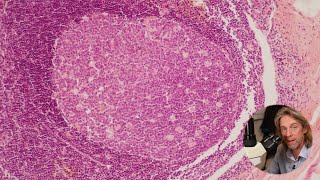
Microscopic Anatomy of the Appendix
Explore the vermiform appendix's microscopic structure, potential functions, and role in appendicitis through comparative analysis with other gastrointestinal regions.
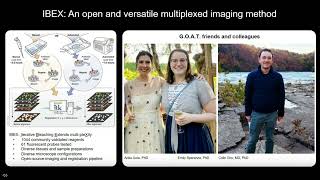
Accelerating Discovery Together - Community Resources for Multiplexed Imaging of Diverse Tissues
Explore IBEX, a cost-effective multiplexed imaging method for tissue analysis. Learn about community initiatives, organ mapping antibody panels, and guidelines for successful application across diverse scientific questions.
Combining RNAscope Technology with Protein Detection - A Multi-Omics Approach Using RNA-Protein Integrated Co-Detection Workflow
Explore an Integrated Co-Detection Workflow combining RNAscope ISH with IHC/IF for simultaneous RNA and protein detection. Learn sample preparation, troubleshooting, and guidelines for this powerful multi-omics approach.
Tips, Tricks, and Optimization: A User's Guide to BOND RX and Chromogenic Multiplexing in Research
Optimize IHC and multiplex staining protocols with expert guidance on BOND RX usage, chromogenic multiplexing, and best practices for research applications. Gain step-by-step insights for software configuration and problem-solving.
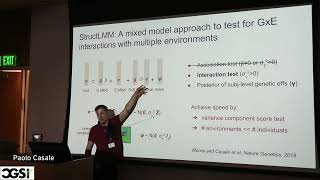
Mixed Models in Genomic Analyses and Imaging Studies
Explore mixed models in genomics and imaging, focusing on efficient set tests, Gaussian process priors, gene-environment interactions, and neural networks for histologic feature quantification.
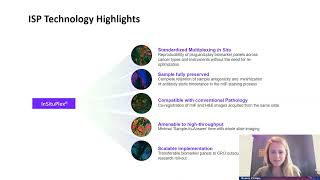
Innovative Biomarker Spatial Analysis for Comprehensive Tissue Immunophenotyping
Explore advanced tissue-based technologies for biomarker identification and disease prognosis using multiplex immunofluorescence assays and complex image analysis techniques.
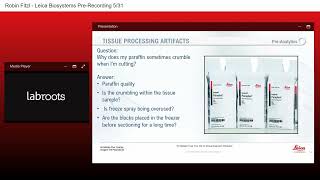
Lessons From The Laboratory - Tissue Processing Questions Answered
Explore tissue processing techniques and get expert answers to your questions. Gain valuable insights from a senior application specialist to enhance your laboratory skills.
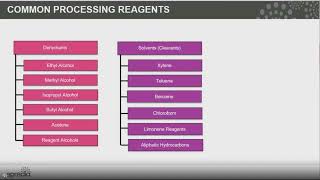
Science of Tissue Processing - Tidal vs. Rotational Processing
Explore tissue processing techniques, comparing tidal and rotational methods. Learn to improve sample preparation quality for faster, more accurate diagnoses in histology workflows.
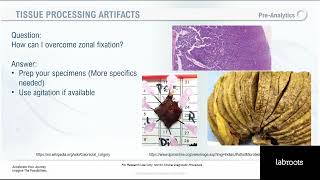
Lessons From The Laboratory: Your Tissue Processing Questions Answered
Gain expert insights on tissue processing techniques, from optimal steps to reprocessing specimens. Solve challenging dilemmas with guidance from a certified histologist's decade of experience.
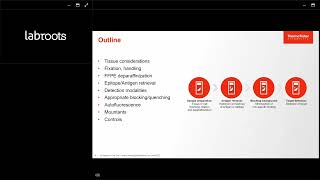
Tissue Preparations and Handling for Multiplex Imaging in Spatial Biology Research
Explore tissue preparation techniques for multiplex imaging in spatial biology, enhancing molecular detection and spatial resolution for advanced research applications.
Computer Vision to Phenotype Human Diseases Across Physical and Molecular Scales
Innovative computer vision algorithms for disease phenotyping across scales, from video-based heart function assessment to spatial transcriptomics and immune cell dynamics, with focus on robust and human-compatible AI.
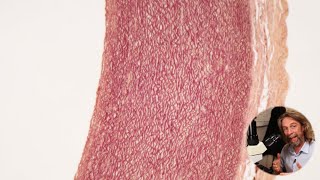
Microscopic Anatomy of the Aorta - Understanding Cardiovascular Disease and Atherosclerosis
Explore the cellular and tissue structure of the aorta to understand cardiovascular diseases, including atherosclerosis and aortic dissection mechanisms.
ML-Enabled Genetic Association Studies of High-Content Phenotypes
Explore cutting-edge machine learning applications in genetic association studies, focusing on high-content phenotypes and innovative frameworks like HistoGWAS for analyzing tissue phenotypes in histology cohorts.
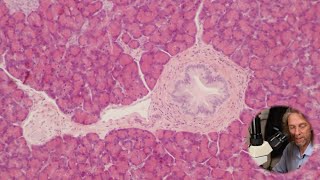
Microscopic Anatomy of the Pancreas
Explore the intricate histology of pancreatic islets and exocrine cells, understanding their arrangement and function in insulin production and digestive processes.
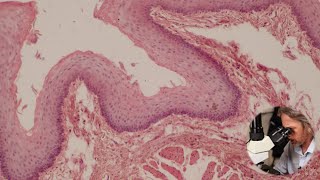
Histology of the Esophagus - Structure and Function
Explore the cellular structure of the oesophagus, providing a foundation for understanding the entire gastrointestinal tract's anatomy and tissue organization.
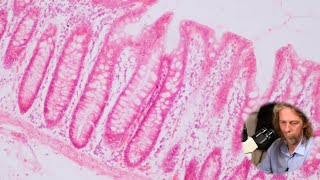
Histology of the Large Intestine - Microscopic Structure and Comparison
Explore the microscopic structure of the colon, comparing it to other parts of the gastrointestinal tract and understanding its role in intestinal diseases.
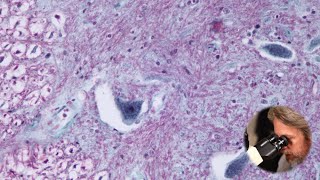
Histology of the Spinal Cord - Neuronal Structure and Organization
Explore the microscopic structure of the spinal cord, examining its grey and white matter, neurons, axons, and support cells.
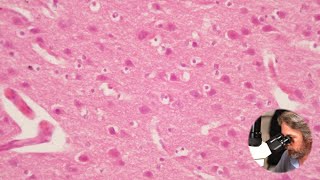
Histology of the Brain: Cerebral Structure and Cell Types
Explore brain structure: identify 4 cell types, examine grey matter organization, and trace myelinated axons into white matter. Uncover cerebral complexity.
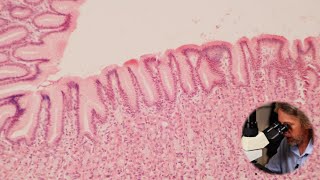
Histology of the Stomach - Structure, Function, and Protective Mechanisms
Explore the unique epithelium of the stomach, its role in producing hydrochloric acid, and protective mechanisms against self-digestion in this comprehensive histological overview.
Shear-Induced Dynamics and Mechanical Responses in Biological Tissues
Explore computational models of biological tissue mechanics under shear forces, examining solidification, thickening, plasticity, and multilayered responses in developmental processes.
Rupture Strength of Living Cell Monolayers
Explore the mechanical properties of epithelial monolayers, focusing on their ability to withstand stress and rupture. Gain insights into tissue strength, strain stiffening, and the role of keratin filaments.