Machine Learning for LHC Theory - Lecture 1
Explore machine learning applications in high-energy physics, focusing on LHC theory. Learn key concepts and techniques for analyzing complex particle collision data and uncovering new physics insights.
Deepsets, Graph Neural Networks, and Transformers in High Energy Physics - Lecture 6
Explore advanced machine learning techniques like Deepsets, Graph Neural Networks, and Transformers, with applications in high energy physics research and data analysis.
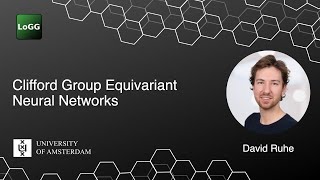
Clifford Group Equivariant Neural Networks
Explore Clifford Group Equivariant Neural Networks for E(n)-equivariant network construction. Discover theoretical foundations, methodology, and applications in various dimensions and tasks.
Conquering Large Numbers at the LHC
Journey through LHC's proton collisions: from hydrogen bottle to rare particle detection. Explore advanced techniques for extracting valuable data from billions of collisions, overcoming 14 orders of magnitude.
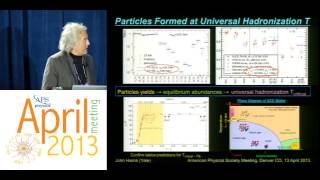
Creating the Primordial Quark-Gluon Plasma at the LHC
Explore the creation of quark-gluon plasma in heavy ion collisions at LHC and RHIC. Learn about QCD behavior, particle formation, and probing hot QCD matter with hard probes.
Python in High Energy Physics
Explore Python's growing role in High Energy Physics, from its adoption and key libraries to its impact on data analysis and machine learning in particle physics research.
Hunting for New Particles Leveraging Legacy Infrastructure with Kubernetes
Explore how CERN leverages Kubernetes to analyze particle collisions, integrating legacy batch systems with modern cloud-native workflows for efficient physics research.
A Better and More Efficient ML Experience for CERN Users
Explore how CERN leverages machine learning and Kubeflow to handle massive data growth from the Large Hadron Collider, improving resource usage and integrating with site services for efficient analysis.
UnROOT.jl - Data I/O for High-Energy Physics in Julia
Explore UnROOT.jl, a Julia package for high-performance data I/O in high-energy physics. Learn about its optimizations, type stability challenges, and performance comparisons with popular alternatives.
Geant4.jl - Particle Transport in Julia
Explore Geant4.jl, a Julia wrapper for simulating particle interactions in physics. Learn about its user-friendly interface, performance benefits, and automated generation using WrapIt.
Generalized Symmetries in Quantum Field Theory and Condensed Matter Physics
Explore generalized symmetries in quantum field theory and their applications in high-energy and condensed matter physics, emphasizing locality and observables.
Data Science in High Energy Physics - Applications at Future Collider Experiments
Explore how data science tackles challenges in high-energy physics experiments, from managing vast datasets to precise measurements and signal detection in particle colliders.
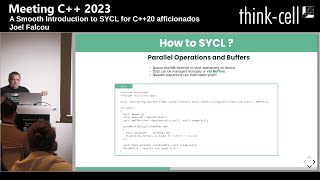
A Smooth Introduction to SYCL for C++20 Aficionados
Explore SYCL for cross-platform accelerator programming in C++20. Learn integration techniques, key features, and real-world applications in high-energy physics.
Physmatics - The Tip of the Iceberg
Explore quantum field theory, string theory, and black hole physics with a theoretical high energy physicist. Uncover spacetime's building blocks and matter's essence.
How CERN Serves 1EB of Data via FUSE - Kernel Recipes 2024
Explore CERN's data management strategies, including open-source projects and FUSE implementation, to handle massive datasets from LHC experiments and serve global scientific community.
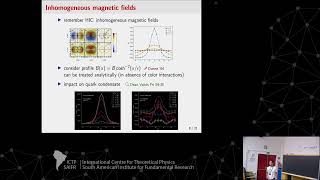
QCD Matter in Strong Magnetic and Electric Fields
Explore QCD matter's behavior under intense electromagnetic fields, examining its properties and implications for strongly interacting systems.
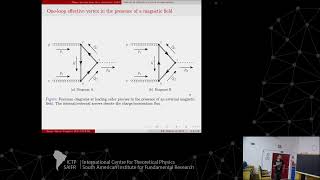
Magnetic Field Effect on Higgs Boson Production Rate Through Gluon Fusion
Explore magnetic field effects on Higgs boson production via gluon fusion. Gain insights into cutting-edge particle physics research and its implications for our understanding of the universe.
Introduction to Quantum Information for High Energy Physics - Lecture 3
Explore quantum information fundamentals and applications in high-energy physics, delving into advanced concepts and their relevance to particle research.
Searching for Surprises at the Highest Energies
Explore particle physics at the energy frontier, uncovering technological challenges and the quest for physics beyond the standard model.
Fundamental Physics and Cosmology with High-Energy Cosmic Particles
Explore fundamental physics and cosmology through high-energy cosmic particles, delving into cutting-edge research and its implications for our understanding of the universe.
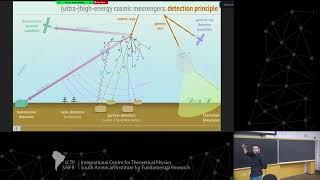
Multimessenger Insights into the Ultra-High-Energy Universe
Explore multimessenger insights into the ultra-high-energy universe with Rafael Batista, uncovering cutting-edge research and discoveries in astrophysics and cosmology.