
How I Fell in Love with Zephyr - A System Architect's Tale
Discover how Zephyr revolutionizes system architecture for medical devices, improving collaboration and reducing risks through innovative technologies like Kconfig and Device tree.

Braiding Wires Into the Linux Network Stack - Recent Work on Embedded Networking
Explore recent advancements in Linux kernel's network infrastructure for embedded systems, focusing on power efficiency, cable reduction, and diagnostics in industrial, medical, and automotive applications.
RT Linux in Safety Critical Systems - The Potential and Challenges
Explore the potential and challenges of implementing Real-Time Linux in safety-critical systems, with insights from industry experts on cutting-edge applications and best practices.
Aruba's Decentralized Solution for COVID-19 Driving Air Travel Transformation
Explore Aruba's innovative decentralized solution for COVID-19 travel requirements, its impact on air travel, and the role of open source in its development and implementation.

Ethical Artificial Intelligence: Oxymoron or Possibility?
Exploring ethical AI in healthcare: balancing rapid data analysis with concerns about bias, regulation, and fairness to advance health equity and address algorithmic decision-making challenges.
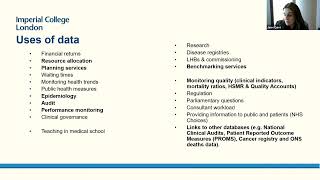
Using Routinely Collected Electronic Healthcare Record Data to Study Respiratory Disease
Explore methods for analyzing electronic healthcare records to gain insights into respiratory diseases, leveraging big data for improved patient outcomes and research.

The Silent Hero of COVID-19 Variant Surveillance Effort - Docker Containers in Genomic Analysis
Explores Docker containers' role in genomic analysis for COVID-19 variant surveillance, highlighting StaPH-B's containerized applications and workflow languages that supported rapid public health responses.

Latest AI News Roundup: From AGI Stages to Multimodal Models
Explore cutting-edge AI developments: AGI stages, medical applications, multimodal models, autonomous driving, and more. Stay informed about the latest advancements in artificial intelligence across various domains.

Explainable AI in Healthcare: Oxford-Style Debate - November 2023
Engaging Oxford-style debate on the necessity of explainable AI in healthcare, featuring expert speakers discussing its role in shaping the future of medical technology.
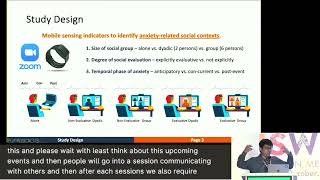
Detecting Social Contexts from Mobile Sensing Indicators in Virtual Interactions
Exploring mobile sensing to detect social contexts in virtual interactions for socially anxious individuals, using wristband sensors and machine learning for context-aware interventions.

AI in Healthcare - The Next Frontier
Exploring AI's potential to revolutionize healthcare, from enhancing diagnostics to automating tasks. Discusses advancements, ethical challenges, and the future of AI in biomedicine.
OpenFL: A Federated Learning Framework for Secure Collaborative Model Training
Explore OpenFL, a Python framework for federated learning that enables collaborative model training without sharing sensitive data. Learn its features, applications, and security benefits.
Integrating AI and Machine Learning in Life Sciences - Allen School Colloquia
Exploring AI integration in life sciences, covering explainable AI, COVID-19 detection, cancer precision medicine, and biological discovery through advanced machine learning techniques.
Computer Vision to Phenotype Human Diseases Across Physical and Molecular Scales
Innovative computer vision algorithms for disease phenotyping across scales, from video-based heart function assessment to spatial transcriptomics and immune cell dynamics, with focus on robust and human-compatible AI.
Learning for Never-before-seen Biomedicine
Exploring machine learning methods for predicting never-before-seen biomedical scenarios, focusing on novel class and cohort situations using ontologies and multiscale knowledge graphs.
Lessons Learned in Creating a Mechanical Ventilator with Open Hardware and Open Source Software
Explore the development of an open-source mechanical ventilator, focusing on evolutionary architecture, incremental changes, and continuous integration in IoT projects.
Insight and Inequity by Gagandeep Kang
Exploring health inequities and insights in India, focusing on challenges in data collection, analysis, and implementation for improved public health outcomes.
Public Health Data Sources for Machine Learning and Examples of Research
Explore public health data sources for machine learning and discover research examples in this informative talk. Learn how to leverage data for innovative health studies and applications.
Data- Access, Analysis and Distillation by K VijayRaghavan
Explore data access, analysis, and distillation techniques for machine learning in healthcare. Learn to harness computational methods for understanding health-related data across multiple domains.
Heterogeneity of Type-2 Diabetes in India - I by V Mohan
Explore the diverse manifestations of Type-2 Diabetes in India with Dr. V Mohan, gaining insights into its unique characteristics and implications for diagnosis and treatment in the Indian population.
Fusing Biophysics and Machine Learning for Computational Oncology
Innovative approach combining biophysics and machine learning to enhance understanding of cancer dynamics, utilizing clinical data to extract disease patterns and improve oncology research.