
Joint Hypermobility in Children: Approach and Diagnosis
Explore joint hypermobility in children, covering concepts, classification, diagnosis, and management. Learn to identify and investigate relevant cases effectively.
ERN ReCONNET Good Practice Sharing Initiative 2023 - First Edition
Explore innovative approaches in rare connective tissue disease care, including patient education, transition protocols, and specialized programs for conditions like Ehlers-Danlos syndrome and myositis.

IgG4-Related Disease: Patient Experiences and Perspectives
Explore patient experiences with IgG4 related disease, including diagnosis, treatment, and living with the condition. Gain insights from two patients and medical experts.

Adherence to Treatment in Connective Tissue Diseases: A Multi-Faceted Issue
Explore multifaceted issues of treatment adherence in connective tissue diseases, focusing on patient empowerment and strategies to improve compliance.

Facial Nerve Anatomy and Function - CN 7
Explore the facial nerve's anatomy, function, and clinical relevance. Learn about its components, nuclei, course, branches, and associated disorders like Bell's Palsy.

The Aftermath of Innovation: Regulation, Dissemination, and Adoption
Explore regulation, dissemination, and adoption processes following medical innovations in otolaryngology and head & neck surgery.

Over-the-Counter Hearing Aids - Current Status and Future Directions
Explore the current state and future of over-the-counter hearing aids, examining their impact on accessibility and hearing health care.

The Impact of Dysphagia on Patient and Caregiver Quality of Life
Explore the profound effects of dysphagia on patients and caregivers, going beyond aspiration concerns to understand its broader impact on quality of life.

Sensorium - Enhancing the World of Perception
Explore cutting-edge advancements in sensory enhancement technologies and their potential to revolutionize human perception and interaction with the world.

Optic Nerve and Visual Pathway - From Eye Anatomy to Clinical Relevance
Explore the optic nerve's anatomy, function, and clinical relevance. Gain insights into visual pathways, eye structures, and related disorders through detailed explanations and animations.

Parasympathetic Nervous System - Structure, Function, and Outflow
Explore the parasympathetic nervous system's structure, function, and outflow. Learn about its role in "rest-and-digest" activities and how it differs from the sympathetic system.

The Maternal Imprint: Evolution of Heredity and Maternal-Fetal Effects
Explore the evolution of ideas about maternal influence on offspring development, from genetic determinism to modern research on maternal-fetal effects.
How to Explain the Antiphospholipid Profile to Patients
Understand antiphospholipid antibody test results using simple language. Learn to interpret and communicate aPL profiles effectively for patients with AntiPhospholipid Syndrome (APS).
Update on Hypermobile Type of Ehlers-Danlos Syndromes (EDS)
Explore hypermobile Ehlers-Danlos syndrome and hypermobility spectrum disorders, including clinical boundaries, genetic diagnostics, and new findings on peripheral microcirculation and skin layers.
Characterization of Pain in Connective Tissue Diseases and Its Management
Explore different types of pain in connective tissue diseases, their origins, and personalized management approaches. Learn to distinguish between acute and chronic pain for effective treatment.

The Multifaceted Aspects of Nutrition in Connective Tissue Diseases
Explore nutrition's role in connective tissue diseases, optimal diets, and lifestyle choices. Learn about chrononutrition, gut microbiota, and their impact on disease management and outcomes.

Hearing Rehabilitation: Why Can't I Hear in Background Noise, and What Can We Do About It?
Explore strategies for improving hearing in noisy environments and learn about rehabilitation techniques for better auditory perception.
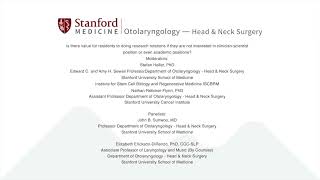
Value in Resident Research Beyond Academic Careers
Explore the importance of research for residents, even those not pursuing academic careers, in this Stanford Otolaryngology Grand Round discussion.

How to Be a Surgeon Without Spinal Issues
Learn ergonomic techniques and preventive strategies to maintain spinal health while performing surgery, ensuring a long and pain-free career in the operating room.

Nutrition During and After Head and Neck Treatment
Learn essential nutrition strategies for managing head and neck cancer treatment side effects and maintaining optimal health during recovery.

Batch-Dependent Safety of BNT162b2 mRNA COVID-19 Vaccine - Analysis of Danish and Swedish Studies
Explore batch-dependent safety signals in COVID-19 vaccines, analyzing data from Denmark and Sweden to understand potential variations in adverse event rates across different batches.