
Neurology - Cerebrum: Frontal Lobe Anatomy & Function
Comprehensive exploration of frontal lobe anatomy and function, including Broca's area, motor cortex, and prefrontal cortex. Covers key roles in language, movement, and executive functions.

Neurology - Basal Ganglia Anatomy & Function - Direct & Indirect Pathways
Comprehensive exploration of basal ganglia anatomy and function, covering direct, indirect, and nigrostriatal pathways, with insights into Parkinson's and Huntington's diseases.
Neurology - Hypothalamus Anatomy & Function
Explore hypothalamus anatomy, zones, and functions, including endocrine control, autonomic regulation, and behavioral influences. Learn about key nuclei and their roles in the body.

Spinal Cord Lesions - Anterior Cord, Posterior Cord, Central Cord, Brown-Sequard
Comprehensive exploration of spinal cord lesions, detailing complete and incomplete types. Focuses on anterior, posterior, central cord, and Brown-Sequard syndromes, providing in-depth neurological insights.

Neurology - Upper Motor Neuron vs Lower Motor Neuron Lesion
Comprehensive exploration of upper and lower motor neuron lesions, covering pathophysiology, characteristics, and diagnostic tests. Ideal for medical students and neurology enthusiasts.

Neurology - Thalamus Anatomy & Function
Comprehensive exploration of thalamus anatomy and function, covering various nuclei and their roles in sensory processing, motor control, and cognitive functions.

Neurology - Spinal Cord: Stretch Reflex - Muscle Spindle
Detailed exploration of the spinal cord stretch reflex and muscle spindle components, providing in-depth neurological insights for medical students and professionals interested in neuromuscular mechanisms.

Neurology - Spinal Cord: White Matter Structure & Function
Explore spinal cord white matter structure and function, including white columns, ascending tracts, and basic functions. Gain insights into the organization and role of white matter in the nervous system.

Neurology - Spinal Cord: Gray Matter Structure & Function
Explore spinal cord gray matter structure and function, including Rex lamina, nuclear groups, nucleus functions, lamina functions, and Clark's nucleus.
Neurology - Spinal Cord Blood Supply
Comprehensive overview of spinal cord blood supply, including anatomy, clinical correlations, and anterior spinal artery syndrome. Covers key concepts for understanding neurological implications.

Neurology - Gross Anatomy of the Spinal Cord and Spinal Nerves
Comprehensive exploration of spinal cord and nerve anatomy, covering structure, function, and key anatomical features. Ideal for medical students and neurology enthusiasts seeking in-depth understanding.
Medullary Lesions - Medial and Lateral Medullary Syndromes
Comprehensive exploration of medial and lateral medullary syndromes, covering anatomical structures, clinical presentations, and diagnostic approaches for these common medullary lesions.
Pons Lesions
Explore common pons lesions, their effects on cranial nerves, and associated syndromes. Learn about Raymond Syndrome, Locked-in Syndrome, and their impact on neurological function.
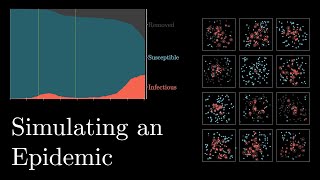
Simulating an Epidemic
Explore epidemic dynamics through toy SIR models, visualizing how various factors influence disease spread and containment strategies.
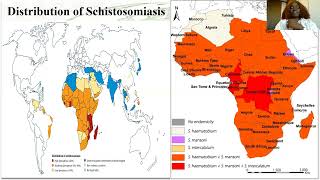
Tutorial Lecture Series on Infectious Diseases Affecting Africa - Part 2
Explore infectious diseases impacting Africa through mathematical modeling, focusing on transmission dynamics, control strategies, and public health implications.

Pharmacology - Drugs for Osteoporosis
Comprehensive overview of osteoporosis medications, exploring mechanisms of action for bisphosphonates, RANKL inhibitors, SERMs, PTH analogs, and sclerostin inhibitors to promote bone health and prevent fractures.
Environmental and Behavioral Drivers of Cross-species Nipah Virus Transmission
Explore environmental and behavioral factors driving Nipah virus transmission across species, focusing on ecological dynamics and public health implications.
Using GIS Tools to Understand Host Ecology and Epidemics - Lecture 2
Explore GIS tools for analyzing host ecology and epidemic patterns. Learn to apply spatial analysis techniques to understand disease spread and ecological factors influencing outbreaks.
Using GIS Tools to Understand Host Ecology and Epidemics - Lecture 1
Explore GIS tools for analyzing host ecology and epidemic patterns. Learn to apply spatial analysis techniques to understand disease spread and ecological factors influencing outbreaks.
Ecological Stressors and Pathogen Shedding
Explore how ecological stressors impact pathogen shedding in animal populations, integrating theories from ecology, evolution, and mathematics to understand disease dynamics and their broader implications.

Parasites in Biodiversity Conservation - Friend or Foe?
Explore the complex role of parasites in biodiversity conservation, examining their impact on ecosystems, conservation efforts, and the importance of considering them in ecological restoration.