
Risk Management When Using Open-source Software in Medical Devices
Explore strategies for managing risks associated with open-source software integration in medical devices, ensuring safety and compliance in healthcare technology development.

The Trials and Triumphs of Maintaining Devboards in AOSP - A Developer's Diary
Explore the challenges and successes of maintaining development boards in AOSP, including keeping up with changes, supporting new features, and addressing breakages in the Android ecosystem.
Hospitals and Infosec: Consequences of Bad Security in Health Care
Exploring vulnerabilities in hospital cybersecurity and their impact on patient care. Discusses risks, consequences, and strategies to improve security measures in healthcare settings.
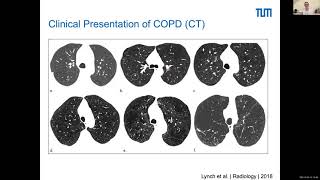
X-ray Darkfield Contrast for Improved COVID-19 Detection in Chest X-rays
Explore X-ray dark-field imaging for enhanced COVID-19 detection in chest X-rays. Learn about this novel, low-dose technique and its promising results in COPD and SARS-CoV-2 studies.

Norwegian Regional Stochastic Model of COVID-19 Epidemics
Explore Norway's stochastic SEIR model for COVID-19, including data collection, mobility tracking, and decision-making processes in public health management.
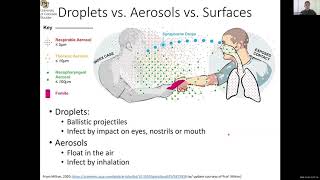
Airborne Transmission of SARS-CoV-2 and Protective Measures - Webinar
Explore SARS-CoV-2 airborne transmission, its impact on COVID-19 spread, and effective protection strategies. Learn about aerosols, WHO's stance, and misconceptions about transmission routes.

Epidemiology of COVID-19: Implications for Control
Explore COVID-19 epidemiology, data challenges, and control strategies with Harvard expert Marc Lipsitch. Gain insights on nowcasting, modeling, and key open questions in pandemic management.
Acute Renal Failure - Azotemia
Comprehensive overview of acute renal failure, covering causes, pathophysiology, and clinical implications of azotemia. Explores prerenal, intrarenal, and postrenal factors affecting kidney function.
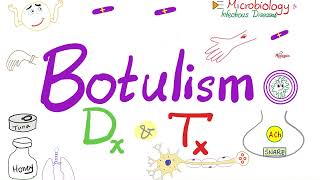
Clostridium Botulinum - Diagnosis and Treatment
Explore the deadly Clostridium botulinum, its diagnosis, and treatment. Learn about botulism sources, symptoms, and the potent botulinum toxin's effects on neurotransmission and muscle function.
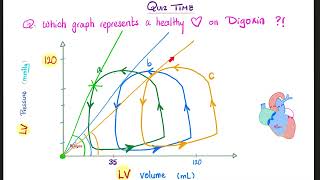
Pressure-Volume Loops and the Cardiac Cycle - Cardiophysiology
Comprehensive exploration of cardiac cycle mechanics, including pressure-volume loops, systole, diastole, and key physiological parameters affecting heart function and blood flow.
Introduction to Pathology - Cell Injury - A New Pathology Series
Explore reversible cell injury in pathology, covering causes, examples, and key concepts like iron and copper's role, and cellulitis as a clinical manifestation.
Nephrology & Biochemistry Cases for USMLE
Explore high-yield nephrology and biochemistry cases for USMLE, covering metabolic acidosis, nephrotic syndrome, and more. Enhance your understanding of key concepts for board exams.

Tetanus Disease - Microbiology and Infectious Diseases
Comprehensive overview of tetanus: causative agent, pathophysiology, clinical manifestations, diagnosis, treatment, and prevention strategies. Ideal for medical students and healthcare professionals.
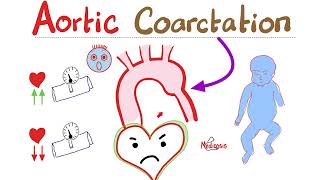
Coarctation of the Aorta - Cardiology Series - Types, Symptoms, Signs, Diagnosis & Treatment
Comprehensive overview of coarctation of the aorta, covering types, symptoms, signs, diagnosis, and treatment options. Ideal for medical students and healthcare professionals seeking in-depth cardiology knowledge.
Microbiology - Spirochetes, Syphilis, TORCH, Leptospira, Borrelia, Lyme Disease - Picmonic
Explore spirochetes, including syphilis, leptospirosis, and Lyme disease. Learn about their characteristics, transmission, symptoms, and treatment using animated mnemonics for better retention.
Cardiology Cases & Answers
Enhance your cardiology knowledge with expert-led case discussions and answers, improving diagnostic skills and clinical reasoning for medical professionals.
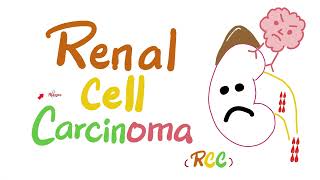
Renal Cell Carcinoma - Kidney Tumors - Neoplasms - Renal Pathology - Nephrology
Comprehensive overview of renal cell carcinoma, covering risk factors, symptoms, diagnostic methods, and treatment options for this kidney cancer type.
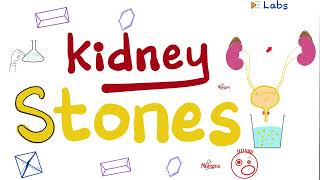
Urine Crystals & Kidney Stones
Comprehensive overview of urine crystals and kidney stones, covering types, causes, and clinical implications. Explores calcium oxalate, phosphate, and struvite stones, as well as associated infections and symptoms.
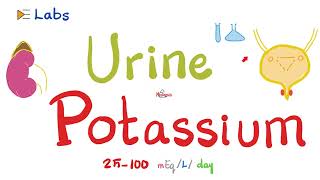
Urine Potassium - Urine Labs
Comprehensive overview of urine potassium analysis, covering hyperkalemia, hyperkaluria, hypokalemia, and hypokaluria. Enhances understanding of kidney function and electrolyte balance for medical professionals.
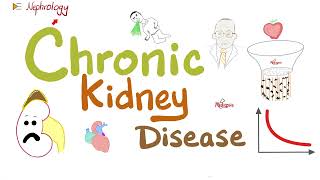
Chronic Kidney Failure - Nephrology Series
Comprehensive overview of chronic kidney failure, covering pathology, symptoms, diagnostic criteria, and key concepts like GFR, uremia, and acidosis in nephrology.

Serum Potassium - Hyperkalemia & Hypokalemia
Comprehensive overview of serum potassium disorders, covering hyperkalemia and hypokalemia, their causes, symptoms, and treatment options for improved patient care and management.