
Hacking Invisibly and Silently with Light and Sound
Explore innovative hacking techniques using light and sound, from C2 channels and exfiltration to disrupting motion detectors and speech jamming. Learn advantages, disadvantages, and mitigation strategies for these unconventional attacks.

Sleight of ARM- Demystifying Intel Houdini - Brian Hong - Ekoparty 2021- Hardware Hacking Space
Explore Intel's Houdini binary translator for running ARM on x86, its inner workings, security weaknesses, and potential exploits. Gain insights into cross-architecture execution and its implications for Android security.
The Mooltipass Open Source Hardware Authentication Ecosystem - Mathieu Stephan - Ekoparty 2021: Hardware Hacking Space
Explore the Mooltipass open-source hardware authentication ecosystem, its components, and innovative features for secure data management and web authentication.
Raiden Glitching Framework
Explore voltage glitching for hardware hacking, bypassing security mechanisms, and disclosing firmware secrets using the Raiden framework and Python API.
Chip.Fail - Glitching the Silicon of the Connected World
Explore fault injection attacks on popular IoT processors using affordable equipment. Learn about voltage glitching techniques and tools for breaking silicon security in connected devices.

So Many Pentesting Tools from a 4 Arduino
Explore Arduino-based pentesting tools for embedded devices, including logic analyzers, memory dumpers, and RFID snoopers. Learn to build and use these tools for security testing.
Jailbreaking the AppleTV3 - Tales From A Full Stack Hack
Explore the full stack hack of AppleTV3, uncovering vulnerabilities and jailbreaking techniques. Learn tricks for attacking restricted devices and gain insights into iOS security.

The Art of Bit Banging - Gaining Full Control of Nearly Any Bus Protocol
Learn to manipulate bus protocols through bit banging techniques, gaining control over hardware communication and exploring potential security implications in embedded systems.

Sweaters as a Service
Discover how engineers hacked a 1980s knitting machine, creating a computer-controlled system to knit custom patterns and even memes, blending retro technology with modern programming.

Pseudo-Doppler Redux
Explore modern pseudo-Doppler direction finding using SDR for locating radio devices. Learn about innovative techniques, challenges, and future developments in wireless security research.

Opening Closed Systems With GlitchKit
Explore GlitchKit, an open-source solution for fault injection in closed systems. Learn techniques to bypass firmware protection and extract secrets through hardware hacking and reverse engineering.

Chip Decapping on a Budget
Learn DIY integrated circuit decapping techniques to reveal hidden chip designs using budget-friendly methods. Explore mechanical and chemical removal processes, laser cutting, and more.

Adventures in Hardware Hacking or Building Expensive Tools on a Budget
Explore hardware hacking techniques like CT scanning and chip decapping for non-destructive device analysis, circuit reconstruction, and vulnerability identification in embedded systems and access control.

How to Find and Exploit Bugs in IoT Devices - Kelvin Wong
Explore in-depth IoT device security, including hardware hacks, forensic approaches, and exploitation techniques for routers, IP cameras, and smart TVs. Learn practical skills for conducting your own device hacking.

Minimum Failure - Stealing Bitcoins with Electromagnetic Fault Injection
Electromagnetic fault injection attack on Trezor Bitcoin wallet revealed, allowing seed extraction without physical tampering. Implications for embedded USB stacks and cryptocurrency security explored.
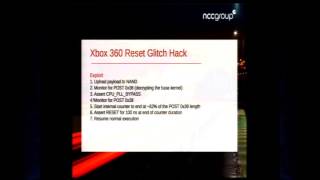
Implementing Practical Electrical Glitching Attacks
Explore non-invasive electrical glitching techniques to bypass software protections and create exploitable conditions in target devices, including clock and voltage manipulation methods.

Even More Tamagotchis Were Harmed in the Making of This Presentation
Explore Tamagotchi hacking techniques, code execution, and microcontroller internals. Uncover virtual pet secrets and discover innovative projects using modified Tamagotchis in this engaging presentation.
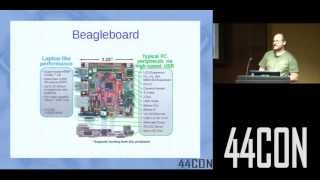
Hacking and Forensics on the Go
Explore mobile hacking and forensics techniques using BeagleBoard. Learn platform selection, OS building, compilation methods, and hardware accessories for on-the-go security operations.

GreatFET - Making GoodFET Great Again
GreatFET: An improved open-source hardware hacking tool with enhanced features, better maintainability, and cost-effective manufacturing, replacing the popular GoodFET project.

Breaking the Black-Box Security Coprocessor in the Nintendo Switch - A Story of Vulnerability After Vulnerability
Explore the process of exploiting vulnerabilities in the Nintendo Switch's security coprocessor, leading to arbitrary code execution at the highest security level.

How I Taught My Dog To Text Me Selfies
Discover how to use Arduino Yun for IoT projects, including teaching a dog to send selfies via text, in this engaging presentation on hardware hacking for web developers.