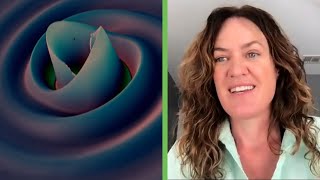
Numerical Relativity and the Next Generation of Gravitational Wave Detections
Explore numerical relativity's role in gravitational wave astronomy, its impact on understanding gravity, and future challenges as detectors improve. Insights into computational and data hurdles in this evolving field.
Introduction to Modelling Gravitational Waves from Compact Binaries
Explore gravitational wave modeling techniques for compact binary systems, covering inspiral, merger, and ringdown phases. Learn about semi-analytic models crucial for detection and analysis.
Seeing Through Space-Time - IPAM at UCLA
Explore inverse problems in spacetime structure, light observation sets, and cosmic microwave background, delving into mathematical challenges in gravitational wave astronomy.
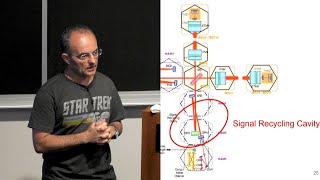
Characterization of Ground-Based Gravitational-Wave Detector Data - IPAM at UCLA
Explore techniques for distinguishing gravitational wave signals from noise in detector data, including traditional methods and innovative approaches to improve data quality and reduce search backgrounds.
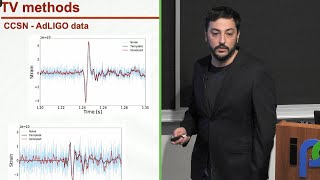
Variational Models and Algorithms for GW Denoising and Reconstruction
Explore variational models and algorithms for gravitational wave denoising and reconstruction, including applications to simulated and real detector data, signal classification, and glitch detection.
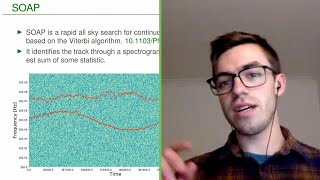
Rapidly Searching for Continuous Gravitational Waves
Explore challenges and solutions in detecting continuous gravitational waves from neutron stars, focusing on SOAP's rapid search method using neural networks for signal identification and parameter estimation.

Machine Learning in Low-Latency Electromagnetic Counterpart Inference
Explore machine learning applications in electromagnetic counterpart inference from gravitational waves, focusing on low-latency data products for efficient follow-up of gravitational wave candidates.
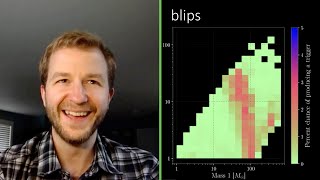
Nobody Likes a Glitch - IPAM at UCLA
Explore transient noise artifacts in gravitational wave astronomy, their impact on signal detection, and innovative approaches for understanding and mitigating these glitches in data analysis.
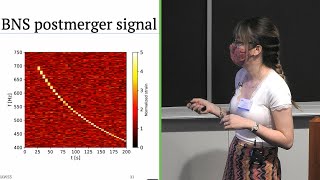
Power Spectral Density Uncertainty and Gravitational-Wave Parameter Estimation
Explore power spectral density uncertainty in gravitational-wave parameter estimation, its impact on Bayesian analysis, and methods to incorporate this uncertainty for more accurate results in compact binary coalescence detection.
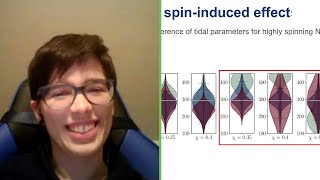
Waveform Systematics in the Gravitational-Wave Inference of Tidal Parameters
Exploración de sistemáticas en formas de onda para inferir parámetros de marea y ecuación de estado en señales de ondas gravitacionales de sistemas binarios de estrellas de neutrones.
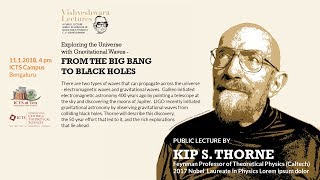
Exploring the Universe with Gravitational Waves - From the Big Bang to Black Holes
Nobel laureate Kip Thorne explores gravitational waves, from their detection by LIGO to their potential for unveiling cosmic mysteries like black holes and the birth of the universe.
Gravitational Waves from Neutron Stars - Lecture 1
Explore gravitational waves from neutron stars, covering detection methods, signal analysis, radiation mechanisms, and fluid dynamics in astrophysical contexts.
Black Holes - Lecture 4
Explore black hole physics, from stability of stars to Einstein's field equations, Schwarzschild geometry, orbits, gravitational capture, and particle motion near event horizons.
Tides in Binary Star Systems - Lecture 1
Explore gravitational waves, tides in binary star systems, and multipole moments in this advanced lecture on theoretical astrophysics and gravitational-wave astronomy.
Black Holes, Waves of Gravity, and Other Warped Ideas of Dr. Einstein
Explore Einstein's revolutionary theories, including black holes and gravitational waves, and their impact on science and culture. Learn about recent breakthroughs in detecting cosmic phenomena using advanced technology.
What Happens When Black Holes Collide - Expert Answers on Gravitational Waves
Explore the fascinating world of gravitational waves, black hole collisions, and the stretching of spacetime. Gain insights into cutting-edge physics research and its implications for our understanding of the universe.

Gravitational Waves and Particle Physics: From Detection to Future Prospects - Lecture
Explore gravitational waves and particle physics with Nobel Laureate Barry Barish and Brian Greene, discussing LIGO, detections, future prospects, and the intersection of these cutting-edge fields.
Discovering Gravitational Waves - LIGO's Latest Massive Source
Explore the latest gravitational wave discoveries with physicists Brian Greene and Gabriela González, discussing LIGO's groundbreaking findings and their implications for our understanding of the cosmos.
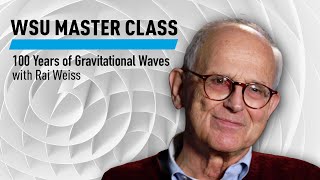
100 Years of Gravitational Waves - From Einstein to LIGO
Nobel laureate Rai Weiss explores the history of LIGO, from Einstein's theories to the groundbreaking detection of gravitational waves, highlighting the technology and challenges behind this remarkable scientific achievement.
Scattering Scoots in Gravity and Electromagnetism - Sam Gralla
Explore scattering phenomena in gravity and electromagnetism with Sam Gralla. Discover connections between field theory and classical relativity, and their implications for gravitational wave detection and analysis.
SUSY in the Sky with Gravitons - Gustav Mogull
Explore supersymmetry and gravitons in gravitational wave physics, connecting field theory and classical relativity for precision modeling and new physics searches in future experiments.