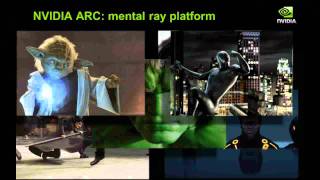
GPU Ray Tracing Techniques and Optimization - SIGGRAPH 2011
Explore cutting-edge GPU ray tracing techniques, including OptiX engine, iray, and custom renderers. Learn optimal hardware configurations and programming approaches for fastest results.
Dynamic Graphs on the GPU
Explore GPU-accelerated techniques for dynamic graph algorithms, focusing on efficient data structures and parallel processing for real-time graph updates and analysis.

Emission and Emissive Materials - Ray Tracing Series
Explore emission and emissive materials in ray tracing, enhancing your ability to create realistic lighting effects and improve the visual quality of rendered scenes.

Optimizing a Ray Tracer by Building a Bounding Volume Hierarchy (BVH)
Optimize ray tracing performance by building a Bounding Volume Hierarchy (BVH). Learn techniques like GPU-friendly data structures, iterative traversal, and surface area heuristics to render complex scenes efficiently.
Vendor-Neutral GPU Programming in Chapel
Explore Chapel's vendor-neutral GPU support for portable, parallel computing across diverse hardware. Learn to write GPU-enabled programs and discover opportunities for open-source involvement.
From Magic to Mechanics: Demystifying GPU Programming
Demystifying GPU programming: Learn parallel programming fundamentals, GPU architecture, and how to leverage WebGPU and Vulkan for high-performance computing across devices.
De/Re-Composition of Data-Parallel Computations via Multi-Dimensional Homomorphism - PLDI 2024
Explore a systematic approach for efficient (de/re)-composition of data-parallel computations using Multi-Dimensional Homomorphisms, applicable to various architectures and outperforming state-of-the-art solutions.
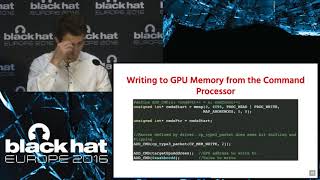
GPU Security Exposed
Explore GPU security vulnerabilities, including shared memory risks and privilege escalation issues, with insights on protecting popular devices from potential exploits.
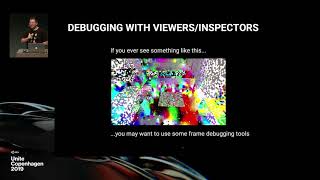
Optimizing HDRP with NVIDIA Nsight Graphics
Learn to optimize HDRP applications using NVIDIA Nsight Graphics for peak performance. Explore profiling tools, debugging techniques, and real-time ray tracing optimization strategies.
GPU Programming with Modern C++
Explore GPU programming with modern C++, covering parallelism fundamentals, heterogeneous computing, and SYCL for GPU dispatch. Learn to optimize performance and leverage multi-core architectures effectively.

Java and GPU - Are We Nearly There Yet?
Explore recent and proposed JDK features enabling Java-GPU collaboration, offering insights into the future of GPGPU in Java development.
Harvest the Power of the GPU for Awesome Special Effects
Explore GPU-powered graphics with OpenGL shaders in Python using the Arcade library. Learn shader basics, integration, and create stunning visual effects.

Haxe - An Understated Powerhouse for Software Development
Explore Haxe's versatility in software development, from GPU programming to cross-platform solutions. Learn its unique features, real-world applications, and potential drawbacks in this comprehensive overview.
Trace Me a River - Computing Stuff on GPU Using Rust
Explore GPU programming with Rust, uncovering the differences between GPUs and CPUs. Learn how to leverage GPU capabilities for efficient computing beyond image rendering.
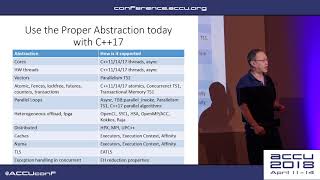
Heterogeneous Programming in C++ Today
Explore the evolving landscape of heterogeneous parallelism in C++, including standards, specifications, and future applications in IoT, self-driving cars, and machine learning.
Taskflow - A Heterogeneous Task Graph Programming System with Control Flow
Explore heterogeneous task graph programming with control flow using Taskflow, a C++ system for efficient parallel and GPU-accelerated computing with high productivity.
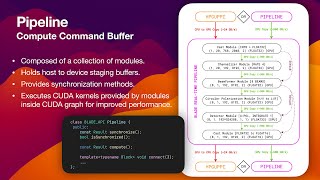
BLADE - The Allen Telescope Array CUDA-Accelerated Real-Time DSP Library
Explore GPU-accelerated real-time DSP for radio astronomy, focusing on BLADE software's innovative techniques for processing massive data streams from the Allen Telescope Array.
Exploit Your GPU Power with PyCUDA and Friends
Harness GPU capabilities using PyCUDA for high-performance computing in Python, exploring techniques to accelerate data processing and scientific calculations.
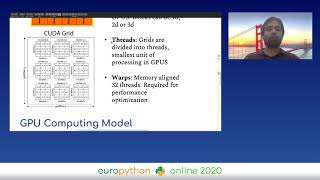
Writing Extensions and Bindings for GPU Made Easy
Learn to optimize deep learning computations by writing custom C and CUDA extensions for GPU, with a focus on image search across billions of items and seamless integration with Python codebases.
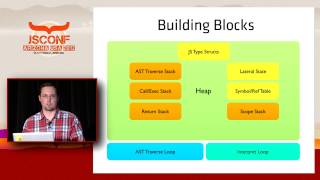
JavaScript on the GPU
Explore GPU-accelerated JavaScript programming techniques for enhanced performance and efficiency in web applications.
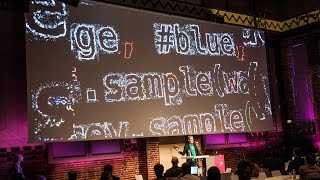
Beyond HTML and CSS - Fusing Javascript and Shaders
Explore OneJS, a JS superset with shader GLSL and reactive programming syntax, enabling GPU-powered UI design for enhanced performance and creative possibilities beyond traditional web technologies.