Modeling the Distributional Epidemic-Economic Effects of the Covid-19 Pandemic
Explore a data-driven Agent-Based Model simulating Covid-19's impact on industries, occupations, and income levels, revealing insights for effective and equitable interventions.
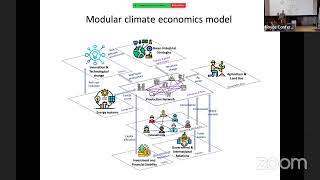
A Fast Green Energy Transition - Economic Benefits and Climate Impact
Explore how a rapid shift to green energy could lead to significant cost savings and reshape global climate policy incentives, based on validated forecasting methods.
A Cooperative Species: Why Policies Designed for "Wicked Men" Fail - Part 3
Explore how ethical dispositions and cooperative motivations impact societal challenges, challenging Machiavelli's approach and examining the interplay between policy and human behavior.
Will It Cost the Earth to Save the Planet?
Experts discuss the economic implications of addressing climate change, exploring strategies, costs, and potential returns on investment for mitigating global warming's impacts.
The Club of Rome and Limits to Growth - Achieving the Best Possible Future
Explore future challenges and solutions related to climate change and resource depletion. Learn about growth limits, their impacts, and potential regional initiatives for a sustainable future.
Conflict to Sustainable Development: The Complexities of Afghanistan's Future
Diplomat William Frej discusses new approaches to countering insurgency in Afghanistan, exploring how complexity science can guide policy decisions for sustainable development and positive change.
InterPlanetary Project - Challenges and Opportunities for Human Space Civilization
Experts explore challenges and requirements for becoming an interplanetary civilization, addressing Earth's problems, and overcoming barriers to achieve global cooperation and technological advancement.
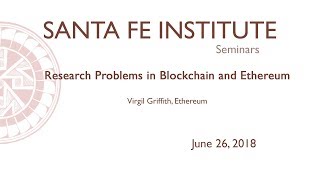
Research Problems in Blockchain and Ethereum
Explore cutting-edge research challenges in blockchain technology and Ethereum with insights from expert Virgil Griffith, delving into potential solutions and future developments.

The Global and Urban Energy Challenges - Principles of Complexity
Explore global energy challenges, urban energy use, and potential solutions with Sir Christopher Llewellyn-Smith in this comprehensive lecture on the complexities of our energy future.
Rethinking Economics for a Sustainable and Prosperous World - Episode 2
Exploring how digital technologies and big data transform economics, challenging traditional models and institutions. Discusses new approaches for sustainable prosperity and restoring societal trust in a complex world.

Complexities in Repair for Harm: Modeling Multi-Dimensional Reparations for Mass Human Rights Violations
Explore the multi-dimensional challenges of designing effective reparations for mass human rights violations, focusing on global and domestic mapping strategies to improve identification and evaluation.

Testing Our Way Out of COVID-19: A Bumpy but Possible Path Forward
Explore how frequent, widespread testing with lower sensitivity could dramatically reduce COVID-19 spread and potentially end the pandemic while reopening the economy.
Crime and Punishment: Stereotypes and Uncertainty in the Justice System
Explore how stereotypes influence criminal justice decisions, from offenders to jurors, and their impact on controversial issues, aiming for a more equitable society.

How to Govern Hyperdiverse Societies - Models, Challenges, and Approaches
Explore governance strategies for hyperdiverse societies, examining models from Japan, Europe, US, Singapore, and India. Analyze cultural pluralism, political expression, and optimal heterogeneity.

Value Capture and Legibility in Complex Systems - Paul Smaldino and C. Thi Nguyen
Exploring the challenges of measurement, governance, and social science in complex systems. Discusses value capture, legibility, and expert identification in the context of emergent political economies.
Plurality, Governance, and Decentralized Society - EPE 05
Exploring pluralistic approaches to governance and society, discussing links between plurality and quantum mechanics, and examining technological solutions for 21st-century sense-making challenges.
Jailbreaking the Captured Economy - Regulatory Capture and Economic Inequality
Exploring regulatory capture's impact on innovation, inequality, and societal violence. Nonpartisan approaches to balance economic power and democratic governance for healthier societal outcomes.
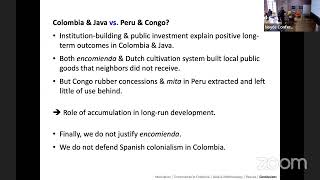
Encomienda, the Colonial State, and Long-Run Development in Colombia
Explore the impact of colonial institutions on Colombia's long-term development, focusing on the encomienda system and its lasting effects on state capacity and economic outcomes.
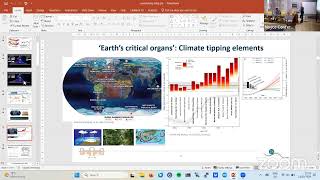
Overshooting Climate Targets - Increased Risks for Tipping Elements in Climate and Biosphere
Explore the risks of exceeding climate targets and their impact on tipping elements in Earth's systems, with insights on potential consequences for our planet's future.
Reconstructing the Social Cost of Carbon to Reflect Racial Disparities
Explores reforming the social cost of carbon calculation to account for disproportionate climate impacts on Black Americans, aiming to align climate policy with environmental justice goals.
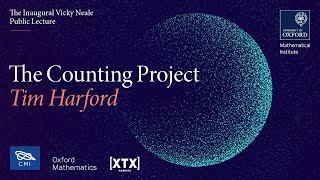
The Counting Project - How Data Built the Modern World
Explore how data shaped our world and its potential to create a better future with economist Tim Harford in this insightful inaugural lecture honoring Vicky Neale's contributions to mathematics education.