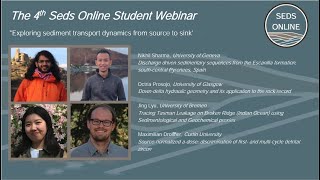
Exploring Sediment Transport Dynamics From Source to Sink
Explore sediment transport dynamics through case studies in Spain, hydraulic geometry, Tasman Leakage, and zircon analysis, offering insights into sedimentary processes and their applications.
Salty Tales of Diagenesis in Antarctica
Explore Antarctic brine's role in sediment cementation and its implications for climate history. Learn about groundwater composition, mineral precipitation, and ice sheet dynamics.
Linking Deltaic Distributary Morphodynamics Networks to Stratigraphic Connectivity of Channel Bodies
Explore synthetic stratigraphy creation from surface imagery and its application in predicting subsurface architecture in deltaic environments, focusing on channel network evolution and connectivity.
The 3D Geometry of Meandering Channels - Implications for the Stratigraphic Record
Explore 3D geometry of meandering channels, their migration patterns, and implications for stratigraphic records using Python-based visualization of subaerial and submarine flows.
What Is Left After Tsunami Disasters? – A Sedimentological Perspective
Explore tsunami deposits, their identification challenges, and new research methods. Gain insights into recent tsunamis and their geological impacts through sedimentological studies and innovative approaches like paleogenetics.
The Effect of Stress on the Acoustic Properties of Carbonate Rocks
Explore the impact of stress on carbonate rock acoustics, examining microstructural models and experimental methods to understand key observations and applications in geophysics.
Early Pleistocene Mud Tectonics and Sedimentation Within Mud-Withdrawal Basins, Bawdsey, Suffolk, UK
Explore early Pleistocene mud tectonics and sedimentation in Suffolk, UK. Discover implications for civil engineering and offshore projects, challenging previous assumptions about mud deformation causes.
How, When and Where Do Ocean Currents Control Sedimentation in Deep-Water Environments?
Explore ocean currents' impact on deep-sea sedimentation, focusing on contourites and their formation processes. Gain insights into oceanographic influences on seafloor morphology and sediment distribution.
Submarine-Channel Meandering and Salt-Basin Filling
Explore submarine channel evolution and salt basin filling through 3D seismic data analysis, comparing underwater patterns to river meandering and examining the impact of salt domes on channel migration.

Biotic, Abiotic, Pre-Biotic, Post-Biotic Controls on Carbonate and Phosphate Formation
Explore crystallographic textures in marine minerals using Electron Backscatter Diffraction to uncover their formation processes and biological origins in deep time.
An Archive of Glacial Seawater and Implications for Carbonate Platform Sediments
Explore ancient seawater preserved in Maldives sediment cores, revealing insights into glacial ocean circulation, carbonate systems, and sedimentary geochemistry from the Last Glacial Maximum.
A Microbial Ecosystem in the 3.48 Ga Dresser Formation, Pilbara, Australia
Explore ancient microbial ecosystems through sedimentary structures in the Archean Pilbara Block, revealing complex life forms from Earth's early history and their implications for astrobiology.
Mixed Siliciclastic-Carbonate Deposits - Scales and Heterogeneities
Explore mixed siliciclastic-carbonate deposits, their formation, characteristics, and importance in geological studies. Learn about scales, heterogeneities, and implications for research and industry.
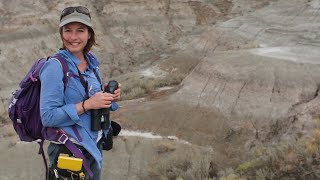
Using Trace Fossils to Reconstruct Palaeoenvironments
Explore ancient environments through trace fossils. Dr. Jenni Scott reveals how dinosaur activity records inform us about populations and evolution in Cretaceous coastal plains and rivers.
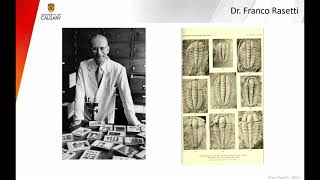
Trilobites from Mount Stephen, BC
Explore the Middle Cambrian Stephen Formation's trilobites, fossils, and scientific discoveries. Learn about historical research and recent findings in this paleontological treasure trove.
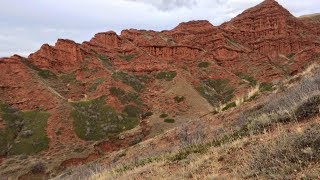
Changing Landscapes in the Tien Shan Mountains of Kyrgyzstan
Explore Central Asia's Tien Shan mountains: their rapid formation, seismic hazards, and impact on ecosystems over 10 million years. Discover ancient mammals and implications for modern cold-adapted organisms.
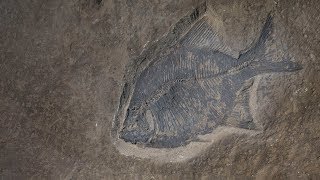
Fossil Fish from the Late Cretaceous of Alberta
Explore fossil fish from Late Cretaceous Alberta, challenges in identifying isolated elements, and new insights into teleost fish history using advanced technology like micro CT scanners.
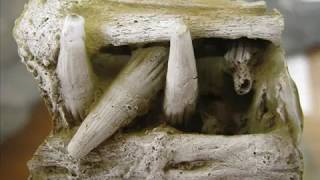
The Fossils of New Zealand: Remnants of a Lost Continent
Explore New Zealand's unique fossil record, from ancient marine reptiles to giant penguins, revealing the evolution of a lost continent over 83 million years.
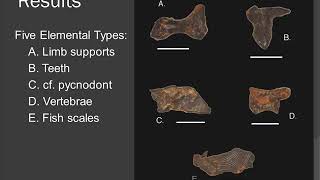
Bioclastic Conglomerates: Composition and Stratigraphic Significance
Explore bioclastic conglomerates at the Albian-Cenomanian boundary, examining their composition and stratigraphic importance in the Western Interior Sea through various geological sections and thin section analyses.
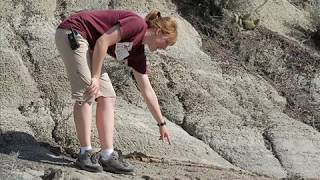
Reconstructing the Paleoenvironments of the Horseshoe Canyon Formation
Explore paleoenvironments of Alberta's Horseshoe Canyon Formation through soil analysis, revealing Late Cretaceous ecosystems and faunal changes in a subtropical forest setting.
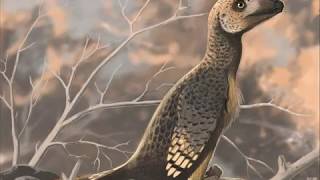
Air Giants- Launch, Flight, and Ecology of Cretaceous Pterosaurs
Explore the fascinating world of Cretaceous pterosaurs, their unique adaptations for flight, and their ecological roles in prehistoric ecosystems.