
Growing Optimism to Advance Women's Health
Experts discuss innovative approaches in women's healthcare, covering advancements in genetics, surgery, treatments, and therapies for various health issues, emphasizing holistic care and improved patient outcomes.

In Search of Disease - Opportunities and Risks in Early Detection and Diagnosis
Explore cutting-edge disease screening tools, their potential for early detection, and the ethical challenges they present. Discuss biomarkers, nanotechnology, and genetic tests in healthcare innovation.

The Next Century of Health - Predictions on the Future of Healthcare
Visionaries discuss healthcare's future, exploring technological advancements, data integration, genetic care, and patient-centric innovations to shape equitable and accessible healthcare over the next century.

Implementation of Serological and Molecular Tools to Inform COVID-19 Patient Management
Explore the GENCOV study's comprehensive analysis of COVID-19 patient outcomes, linking laboratory data and patient characteristics to understand factors influencing disease variability.
Genomic Testing and Prostate Cancer - The Role of the Urologist
Explore genomic testing's role in prostate cancer management. Learn about molecular drivers, genetic testing rationale, and how to incorporate this knowledge into urological practice.
Longitudinal Prediction of Ventricular Arrhythmic Risk in ARVC
Explore Dr. Rick Carrick's research on predicting ventricular arrhythmia risk over time in ARVC patients, offering insights into long-term cardiac health management.
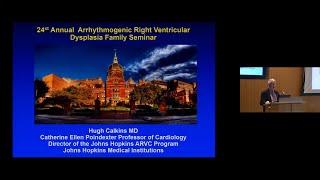
The Johns Hopkins ARVC Program: Then and Now
Explore the evolution of Johns Hopkins' ARVC Program, its historical significance, and current research focus with Dr. Hugh Calkins.

Leveraging Innovation to Improve the Identification of Patients with Hereditary Cancer
Explore innovative techniques in hereditary cancer detection, including RNA genetic testing and AI-powered risk assessment, to improve diagnostic yield and patient identification for genetic counseling.

Bioinformatics and Computational Terminology for the Clinic - Webinar - Ambry Genetics
Demystifying bioinformatics concepts in genetic testing reports, focusing on key terminology and underlying details for NGS panel and exome-sequencing tests to enhance clinicians' understanding and interpretation.
Genomics Education Projects: GENEtest-101, Pharmacogenomics, and Education Analysis - 2020-2022 ISCC-PEG Scholars
Discover groundbreaking genomics education projects presented by ISCC-PEG Scholars, covering GENEtest-101, pharmacogenomics in chemotherapy, and educational landscape analysis within partner organizations.

Polygenic Risk Scoring for Coronary Artery Disease
Dive into advanced genetic analysis methods for assessing coronary artery disease risk factors, focusing on polygenic scoring techniques and their clinical applications.

We Are All Mutants - With Alison Woollard
Explore genetic diversity, mutations, and their role in evolution. Discover how DNA changes shape life, from fruit flies to humans, and learn about modern genetic technologies and their implications.
Implementation Guidance for Non-Neoplastic Neuropathology
Guidance on handling non-neoplastic neuropathology specimens, covering challenges, infrastructure, diagnostic aspects, and technical considerations for various biopsy types.

Race, Ethnicity, and Clinical Utility in Cancer Genetics - Webinar - Ambry Genetics
Explores racial and ethnic differences in cancer genetic testing results for breast cancer patients, highlighting opportunities to improve testing utility in populations facing health inequalities.

Diagnosis, Management, and Genetics of hATTR Amyloidosis - Webinar - Ambry Genetics
Comprehensive overview of hATTR amyloidosis, covering diagnosis, management, and genetic aspects. Experts discuss clinical presentations, genotype-phenotype correlations, and genetic counseling challenges for patients and families.

Using Structural Biology to Support Variant Assessment - Webinar - Ambry Genetics
Explore structural biology's role in variant assessment, focusing on biophysical methods to evaluate protein function disruption and reclassify variants of unknown significance.

New Directions in Access to Genetic Counseling Information for Precision Medicine - Webinar
Exploring digital tools for efficient dissemination of genetic counseling information in precision medicine, addressing challenges in access and timely updates for clinicians and patients.

Validation of RNA Genetic Testing for Use in a Clinical Diagnostic Setting - Ambry Genetics
Explore advancements in RNA genetic testing for clinical diagnostics, covering molecular biology, targeted approaches, and case studies demonstrating increased diagnostic yield in tumor suppressor genes.

Gene Specific Cancer Associations and Sensitivity of Genetic Testing Criteria
Explore gene-specific cancer risks, prevalence of pathogenic variants, and sensitivity of testing criteria for BRCA1/2 and Lynch syndrome based on a large multigene panel cohort study.

A Systematic Framework for the Interpretation of Copy Number Variants - Webinar - Ambry Genetics
Explore a systematic framework for interpreting copy number variants in genetic testing. Learn about proposed updates to guidelines, evidence-based evaluation, and improving interlaboratory consistency.

Genetic Testing for Breast Cancer Susceptibility - Webinar - Ambry Genetics
Explore hereditary cancer genetics, testing technologies, and implications for breast and gynecologic cancers. Learn about key genes, risk factors, and the impact on medical management.