Mathias Characterizations for Generics in Variants of Namba Forcing
Explore Mathias characterizations for generics in variants of Namba forcing, delving into advanced set theory concepts and their applications in mathematical logic.
F# Fundamentals - Learn Functional Programming - Step-by-Step Guide
Comprehensive guide to F# programming, covering syntax, functions, types, pattern matching, collections, and error handling. Ideal for beginners seeking a solid foundation in functional programming.

TypeScript Full Course for Beginners - Complete All-in-One Tutorial
Comprehensive TypeScript tutorial covering fundamentals and React integration. Learn basic types, functions, classes, generics, and build projects to enhance web development skills.
Typescript Generics - Beginners Tutorial with Examples
Explore TypeScript generics with practical examples. Learn to create flexible, reusable code using type variables in functions, interfaces, and classes for improved type safety and versatility.

Move Deliberately and Don't Break Anything: Lessons from Java Evolution
Explore Java's evolution, challenges in language design, and future directions with insights on maintaining compatibility while adding new capabilities for millions of developers.
Generic Swift: Simplifying Protocols and Generics
Demystifying Swift generics: Learn to choose the right tools for protocol-oriented programming, avoiding common pitfalls and creating elegant, reusable code without fighting the compiler.
Catching Up with Swift - Current State and Future Prospects
Swift's evolution, advantages over Objective-C, and readiness for production use, presented by iOS engineer Ash Furrow based on real-world experience.
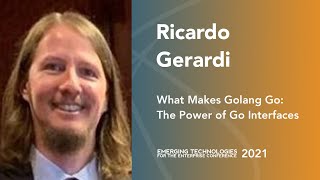
The Power of Go Interfaces - What Makes Golang Go
Explore Go interfaces: definition, implementation, and best practices. Learn to create flexible, reusable, and testable code through hands-on examples and practical applications.

Java's Future: Innovations and Enhancements - Interview with Brian Goetz
Explore Java's future with Brian Goetz: language innovations, JDK enhancements, new SDKs, VMs, and ongoing projects like Amber, Loom, and Valhalla. Discover how Java stays relevant for the next 25 years.
Intro to TypeScript Tutorial with Dylan Israel
Learn TypeScript fundamentals through interactive screencasts. Cover variable types, arrays, interfaces, generics, and more. Gain practical skills to start building TypeScript applications confidently.

Comprehensive Java Programming Tutorial
Comprehensive Java programming guide covering core concepts, data structures, OOP, file handling, and advanced topics for beginners to intermediate learners.
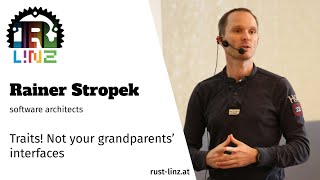
Traits in Rust: Beyond Traditional Interfaces - Fundamentals and Advanced Features
Explore Rust's powerful traits beyond interfaces, covering creation, implementation, and advanced features like default implementations, parameters, objects, and bounds for generics.
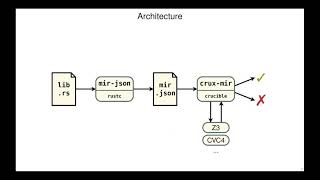
Symbolic Testing for Rust with crux-mir
Explore symbolic testing in Rust with crux-mir, covering features, architecture, memory model, generics, unsafe code, and Cargo integration.
Rust: Removing the Sharp Edges from Systems Programming
Explore Rust's safety features for systems programming, including memory management, type system, and error handling. Learn to integrate Rust into Yocto systems using meta-rust.
Type System Tips for the Real World - RustConf 2017
Practical insights into Rust's advanced type system features, including zero-sized types, recursive types, and generics, with real-world examples from Diesel.
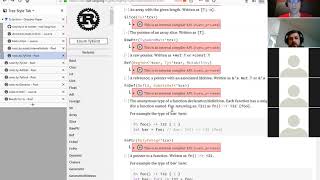
Representing Types in Rustc - Type System Internals
Explore rustc's type representation, covering Ty type, generics, substitution, and type folding. Gain insights into Rust's internal type system implementation.

Rust Lang Team Design Meeting: &T and Dereferenceable Optimizations - 2020.02.10
Explore Rust's &T and dereferenceable optimizations, discussing synchronization, parameters, function scope, and interactions with Arc drops. Delve into generics, unsafe cells, and ergonomic considerations.
Introduction to Structs, Traits, and Zero-Cost Abstractions in Rust
Explore structs, traits, and zero-cost abstractions in Rust. Learn to build efficient abstractions using generics and traits, enhancing code quality without compromising performance.
An Introduction to Rust
Comprehensive introduction to Rust programming language, covering basic syntax, ownership, borrowing, and advanced features like generics and traits. Suitable for experienced programmers.

Diving Headfirst into Rustland: A Primer for C++ Developers - Rust Linz August 2023
Experienced C++ developers get a quick orientation on Rust's unique features, focusing on memory management, safety, and functional programming concepts.
C# Generics Explained - Syntax, Usage, and Implementation
Explore C# generics: their purpose, syntax, and implementation. Learn when and how to use them effectively to write more flexible and reusable code.