
Research and Innovation in AI-Driven Interactive Entertainment
Explore how AI revolutionizes gaming development through enhanced design processes, autonomous testing, and the emergence of intelligent virtual characters, while addressing ethical considerations and practical applications.
Re-imagining Mobile Gaming Studios with Generative AI
Explore how generative AI revolutionizes mobile gaming studios, enhancing development processes and player experiences while driving innovation in game creation and design.
Gamified Reinforcement Learning: Mastering AI through Video Games
Dive into reinforcement learning through interactive game development, creating intelligent agents with neural networks while mastering fundamental AI concepts through hands-on, visual demonstrations.

Ongoing Challenges in the Raspberry Pi Graphics Driver Stack
Explore ongoing developments in Raspberry Pi 4 driver stack, including OpenGL 3.x implementation, Vulkan driver CPU job handling improvements, and global GPU usage statistics tracking.

Clustering Players' Strategies for Generation of Non-Player Characters in Mythic Legends
Discover how machine learning and clustering techniques streamline NPC development in gaming, focusing on army formations in Mythic Legends and practical solutions to complex distance function challenges.
Industrializing In-Game Machine Learning Solutions: From Prototypes to AAA Games
Discover how Ubisoft industrializes machine learning for AAA games through a modular framework, balancing cutting-edge ML capabilities with stable game development requirements.
Production-scale Containerized Game Platform Practice in ByteDance
Explore Bytedance's Kubernetes-based game platform leveraging CNCF frameworks for multi-cloud deployment, orchestration, and autoscaling of containerized game servers across global regions.
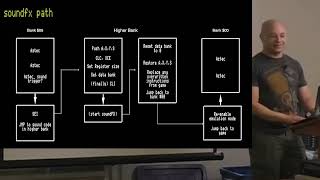
Enhancing an 8-Bit Classic Game with the Ensoniq Chip
Explore updating classic Apple II games with Ensoniq chip for improved sound, using a 1982 game as an example. Learn methods and potential applications.

Build a Mario AI Model with Python - Gaming Reinforcement Learning
Learn to create an AI model that plays Super Mario using Python and reinforcement learning. Set up the environment, preprocess data, build and train the model, and see the results in action.

Play Twenty Questions with GPT-3 - Full Game Coding Walkthrough
Step-by-step walkthrough of coding a Twenty Questions game using GPT-3, covering random word generation, prompt building, and bot creation for question answering and gameplay logic.
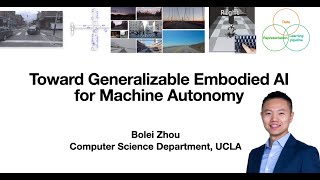
Toward Generalizable Embodied AI for Machine Autonomy
Explore recent advancements in machine autonomy, focusing on generalizable embodied AI through sequential decision-making, simulation environments, and human-AI collaboration.
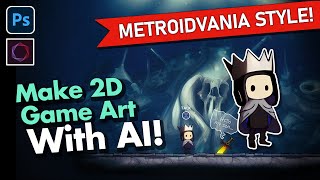
Designing a Metroidvania Game With AI - Stable Diffusion Walkthrough
Explore AI-powered game design using Stable Diffusion to create stunning Metroidvania-style visuals, from concept sketches to detailed environments and atmospheric effects.
OpenAI ChatGPT - The Future Is Here
Explore ChatGPT's capabilities in writing, design, problem-solving, and creative tasks. Learn about its potential applications and limitations in this comprehensive overview of the AI language model.

How to Save Game State with Databases
Learn to save game state using databases, create a backend, and connect it to the frontend. Practical tutorial on implementing data persistence in game development.

Generative AI in Game Development - From Art Assets to Industry Evolution
Explore the future of game development with AI-generated assets, industry changes, and the intersection of generative AI with science, biology, and human evolution.
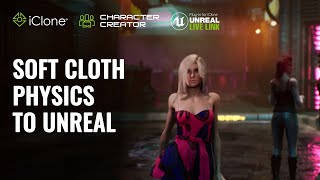
Cloth and Hair Simulations in Unreal with iClone - Part 1: Soft Cloth Physics
Learn to create realistic digital human animations using iClone Soft Cloth Physics and Unreal Engine, focusing on character setup, physics adjustments, and live linking for enhanced cloth simulations.
Mocap Editing Pipeline with Unreal Live Link - Webinar
Explore motion capture editing in iClone, from recording to refining and exaggerating motions, with live streaming into Unreal Engine using Live Link. Learn key tips for efficient mocap workflows.
Mocap Editing Pipeline with Unreal Live Link
Learn to combine motions from various sources into a customized character animation and stream it live into Unreal Engine 4 using iClone's Live Link plug-in. Covers motion import, editing, facial capture, and Unreal integration.
Creating Seamless Bitmap2Material Textures for iClone
Learn to create seamless textures using Bitmap2Material for iClone scenes. Explore texture map parameters and their effects on various texture types in this quick, practical tutorial.
Android Game Graphics - OpenGL ES vs. Vulkan Case Study
Explore OpenGL ES and Vulkan graphics APIs for Android games, comparing performance, power benefits, and use cases to help developers choose the best option for their projects.
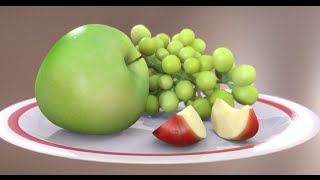
Separable Subsurface Scattering - Real-Time Rendering Technique
Explore a novel real-time rendering technique for translucent objects in computer games, enabling lifelike visuals of skin, marble, and more on standard hardware.