Disentanglement with Futures, State, and Interaction
Explore disentanglement in parallel programs with futures, examining its extension beyond fork/join parallelism and implications for functional, stateful, and non-deterministic code.
A Tale of Two Asyncs - Open Source Language Design in Rust and Node.js
Explore asynchronous programming in Rust and Node.js, comparing language design approaches, technical constraints, and governance models to understand open source language evolution.

Concurrency and Parallel Computing in JavaScript
Explore concurrency and parallel computing in JavaScript, covering actors, futures, and throughput computing in browsers. Learn techniques for leveraging modern parallel hardware in web development.

Concurrency Options on the JVM
Explore JVM concurrency options, from Java's ExecutorService to Scala's akka actors and Clojure's core.async. Learn design strategies for deadlock-free, efficient concurrent applications.
C++ Parallel Programming Models
Explore C++'s parallel programming models: unstructured, task-based, and data parallel. Learn key facilities, use cases, and recent features for efficient parallel programming in modern C++.
Reactive Machine Learning On and Beyond the JVM
Explore reactive machine learning techniques for building scalable, responsive AI systems using JVM languages and beyond, with real-world examples and cartoon animal guides.
Why Should Async Get All The Love - Advanced Control Flow With Threads
Explore advanced threading techniques in Python, inspired by asyncio, Go, and Node, for improved control flow and performance in concurrent programming.
Standardised Coroutine Concurrency in Python 3
Explore coroutine-based concurrency in Python 3, from building a simple framework to using async/await and asyncio. Learn practical applications and abstractions for efficient, easy-to-debug concurrent programming.

An Adventure in Race Conditions
Explore high-level abstractions for concurrent programming, avoiding common traps with locks and atomics. Learn strategies to prevent and detect race conditions in C++ development.

What I Learned From Sockets - Applying the Unix Readiness Model When Composing Concurrent Operations in C++
Explore Unix socket concepts for composing concurrent operations in C++. Learn to apply select/poll mechanisms to various concurrency problems and discover C++ solutions for multi-future and coroutine scenarios.

C++11 - High-Level Threading
Explore C++11's high-level threading capabilities, including locks, mutexes, and futures. Learn to solve common threadsafe programming challenges using these components.
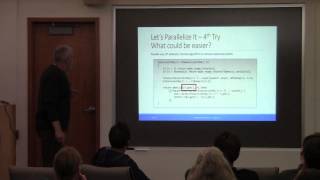
HPX - A C++ Runtime System for Parallel and Distributed Computing
Explore HPX, a C++ runtime system for parallel and distributed computing. Learn about its innovative approach to multi-core processing, asynchronous task execution, and scalable addressing for high-performance applications.
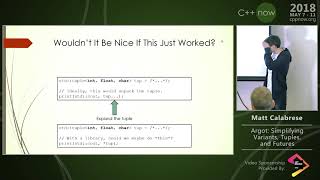
Argot - Simplifying Variants, Tuples, and Futures
Explore Argot, a library simplifying complex operations with tuples, variants, and futures in C++. Learn powerful techniques to enhance code readability and efficiency in handling these abstractions.

Parallelism on Ranges - Should We?
Explore parallelizing C++ ranges, discussing implementation challenges, algorithmic fusion, and potential benefits using HPX library examples. Insights on combining composability with performance in modern C++.
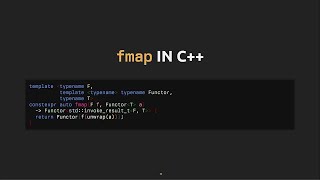
Applicative - The Forgotten Functional Pattern in C++
Explore the powerful applicative pattern in C++, its practical applications, and how it enhances code simplicity and composability across various programming scenarios.

Lessons Learned with Asyncio - Look Ma, I Wrote a Distributed Hash Table
Explore asyncio for concurrent programming in Python, focusing on event loops, coroutines, futures, and networking. Learn through a distributed hash table implementation example.
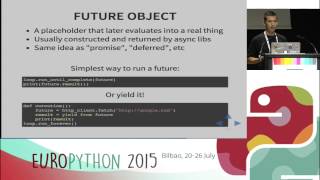
Better Asynchronous Code with Tornado and Python 3
Explore asynchronous programming with Tornado and Python 3.4's asyncio module. Learn about coroutines, futures, and ioloop concepts for efficient concurrent event-driven code in web development.

Python and Async Programming
Explore Python's async programming approaches, including Futures, asyncio, coroutines, and event loops. Learn best practices for efficient asynchronous code in Python 3.4 and 3.5.
Beyond the Buzzword - A Reactive Web Application in Practice
Practical exploration of building a reactive web application using Play Framework, covering key concepts like Futures, Actors, and Circuit Breakers through live coding and load testing.
Get to Grips with Asyncio in Python 3
Explore asyncio in Python 3: futures, tasks, event loops, and async/await syntax. Learn to solve concurrency problems and test asynchronous code effectively.

Coroutine Concurrency in Python 3 with asyncio
Explore coroutine-based concurrency in Python 3, from building a simple framework to using asyncio. Learn about futures, tasks, and asynchronous streams for efficient, cooperative multitasking.